




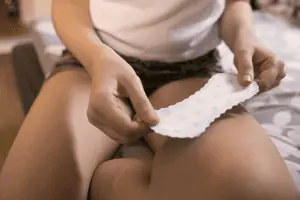
Woman with menstrual products

How to Deal With Period-Related Skin Problems

When we talk about menstrual skin, we’re talking about a whole range of skin problems women can encounter during their menstrual cycle each month.

Between the ages of 10-15, most girls begin to menstruate, i.e., they start getting their monthly period. This shedding of tissues and blood from the uterine lining occurs every month for the next 40-something years in most women.

Powerful hormones such as estrogen and progesterone, which help regulate your skin’s ongoing elasticity, circulation and appearance, also control menstruation. That means your period and your skin condition are intimately related, for decades.

The hormonal changes associated even with normal menstruation alone can wreak havoc on a woman’s skin. Added to that, some women also struggle with hormonal imbalances and menstrual cycle irregularities – adding to skin problems such as acne, dryness and flakiness, excessive facial and body hair.

So, what menstrual skin changes occur during your period? Are there special skin care tips for healthy, glowing skin at every stage of your monthly cycle? Here’s the lowdown on menstrual skin, and how to cope with it.

The Menstrual Cycle & Skin Changes

With the start of each monthly period and menstrual cycle, estrogen levels fall and tend to give your skin a dull, washed-out appearance. Then as if that’s not challenge enough, while you’re on your period, your skin is drier and more sensitive than usual.

But have the smartphone and selfie-stick ready for the days immediately after menstruation; because that’s when your skin is at its healthiest.

Then towards the end of the menstrual cycle, just before your next cycle and period begin, progesterone, testosterone and cortisol levels all go up, helping lead to excessive oil production and sending many women with acne-prone skin into an outbreak.

Menstrual Skin Care: What to do when?

For dull, flaky skin at the start of your period:

  • Moisturize with gentle skin care products that help retain moisture
  • Hydrate from the inside out by drinking plenty of water
  • Eat healthy fats, such as avocado, nuts, and fish

For dry, sensitive skin during your period:

  • Calm and soothe with gentle products containing Aloe Vera and chamomile
  • Use only a lightweight moisturizer, since the roller-coaster that is your menstrual cycle will have you overproducing oil within a couple of weeks
  • Improve circulation and nourish your skin with regular exercise
  • Eat vitamin-rich foods, such as broccoli, almonds, and fruit

To maximize skin benefits immediately after your period:

  • Go easy on make-up and let your skin breathe
  • Consider a HydraFacial to extract pore-clogging, acne-causing debris from your skin
  • Eat and drink foods rich in anti-oxidants, such as green tea

For oily, acne-prone skin in the premenstrual period:

  • Cleanse with gentle products containing salicylic acid
  • Exfoliate and moisturize with an oil-free moisturizer
  • Eat acne-fighting foods and avoid greasy foods

All-in-all, it can be daunting, trying to maintain healthy, glowing skin at each stage of your menstrual cycle. But it is entirely possible, and worth the effort. Plenty of sleep, a healthy diet, regular exercise and some basic skin care; these are the first steps. They should lay a solid foundation for maintaining healthy, attractive skin throughout your menstrual cycle.

And if you run into a menstrual skin problem persistently pestering you that you just cannot seem to solve; it’s time to consult with your professional partner in skincare – hopefully one of our outstanding ed providers located across South-Central Florida.


Doctor drawing the word acne on screen

Three Major Misconceptions & Myths About Professional Acne Treatment
We’ve heard more than our share of acne treatment myths in recent years; from how people get acne, to how they can get rid of it, and just about everything in between. Let’s look at three of the more common misconceptions about professional acne treatment.

Myth 1: Dermatologists are basically professional strength pimple-poppers

This is probably the biggest myth about what dermatologists bring to the table when treating acne here in 2018. If psychiatrists are sometimes referred to as “shrinks”, and chiropractors as “bone crackers”, maybe it's understandable that dermatologists are labeled by some (we forgive you!) as glorified “pimple poppers”. But, it's also inaccurate.

Popping pimples is what plenty of people choose to do for themselves already. Plenty more watch graphic videos of the process on YouTube.  But our Water’s Edge Dermatology acne experts and others will tell you, pimple-popping is perhaps the worst thing you can do to cystic acne.

This inflammatory act may satisfy an emotional need in the heat of an impulsive moment. But it traumatizes the pimple – both the clogged pore and the skin surrounding it. Your fingers may also be introducing bacteria to your skin and bloodstream that can actually worsen an acne outbreak.

Perhaps the worst part about giving in to frustration and impulsively popping a pimple (or carefully plotting the dark deed for days, either way!) is that it greatly increases your risk of developing an acne scar—either a permanent depression or bump.

So, no; professional acne treatment by a credentialed, qualified dermatology provider has nothing to do with pimple popping. The provider actually uses a very thin, sterilized needle to inject the pimple with medicine, usually an anti-inflammatory. Within minutes to hours, the pimple shrinks from the inside, which smooths the skin. No blood, pus, popping or scarring involved.

Myth 2: I had isotretinoin treatment, so I can’t have a facial

People with severe acne sometimes need a powerful oral medication called isotretinoin. Doctors used to caution patients to wait up to a year after stopping isotretinoin treatment before having cosmetic procedures and/or aesthetic treatments. Imagine just how frustrating that would be. You’re finally getting control of your acne with the right medication – but then hear you have to wait a year to have treatments that could rid you of acne scars and blemishes!

Thankfully, a panel of experts has concluded that there isn’t sufficient evidence to support such cautionary recommendations or restrictions any longer. While patients who have taken oral isotretinoin should still avoid mechanical dermabrasion and laser ablation procedures for 6-12 months, that’s all they need to avoid. There is no good reason to avoid manual dermabrasion, superficial chemical peels, laser hair removal, fractional laser procedures, or even some forms of facial surgery. If you have taken isotretinoin and want a cosmetic treatment or aesthetic procedure, discuss what for you with your cosmetic dermatology provider. 

Myth 3: Stronger (more highly concentrated) treatments are always better

While a “stronger” dose makes sense for many medications (e.g. extra strength pain relievers, maximum strength cold relief, etc.), a higher concentration on the label doesn’t necessarily mean an acne treatment is any better for treating acne, or better for you.

When you apply something to your skin for acne, there’s a delicate balance between effectiveness and irritation. Products like benzoyl peroxide do tend to work a little better at higher concentrations. But the maximum concentration isn’t the best for everyone. In fact, many skin products such as benzoyl peroxide can be highly irritating to the skin at higher concentrations.

The bottom line on “stronger” formulas is to proceed with caution, always doing spot tests of any topical ointment being introduced to your skin for the first time. The most foolproof way to be sure you’re getting the best possible treatment for your particular skin and acne, at the right concentration and strength, is to find a Water’s Edge Dermatology office near you and receive professional acne treatment and guidance from a licensed, credentialed and experienced dermatology provider.


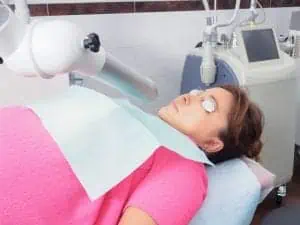
Woman in healthcare facility undergoing new acne treatments

What’s New & Effective in Acne Treatments?
For teenagers and adults alike, acne is a difficult condition to live with. Finding the right acne treatment for your unique skin can be even more challenging. Anyone who's struggled with acne will tell you it can flare up at any time, for no apparent reason. Being prepared with expert advice and effective treatment options is key to managing the most common skin problem on earth -- with about 80 percent of adults having suffered with acne issues at some stage of life.

For some people, using the same topical spot cream can work for years. Others try every new acne product that hits the market. The problem lies with not knowing which acne treatments really work, and which are actually inferior and/or ineffective products propped up by marketing spin . It’s also impossible to predict how your skin will respond to the newest gel, lotion, mask, or tablet.

That’s why you need the right professional partner in skincare to advise, guide, and provide you with an extra level of difference-making acne care when needed. To clarify the current situation, here’s a look at what’s new in acne treatments.

Online Dermatology Visits for Acne

A study published in JAMA, the Journal of the American Medical Association, has shown that photos taken by patients on a smartphone and submitted through a technology platform called NORA, can be as effective in monitoring and treating acne as in-office encounters with a dermatologist.

Another study with 8,000 participants is currently underway, and early findings are encouraging. They suggest that virtual dermatology services such as Water’s Edge Online Dermatology Visits can be a convenient, affordable, and effective way to consult board-certified dermatologists about acne and other skin problems.

Accutane Still Works for Many, and May Actually Help Depression

Isotretinoin (Accutane) is a medication that has been used for years to treat severe acne, providing much success for many patients. But it has long been thought that this highly effective acne drug might also trigger depression and other psychological problems for some people.

Now, however, a new meta-analysis of more than 30 studies has found that isotretinoin may actually help relieve depressive symptoms. The findings, which were published in the Journal of the American Academy of Dermatology, show that the incidence of depression is lower and depression scores actually improve following treatment with isotretinoin.

Laser & Light-Based Acne Treatments

While Laser skin resurfacing is beneficial in reducing acne scars and improving the overall appearance of the skin, new light-based treatments are an emerging alternative. These therapies for inflammatory acne have a solid safety profile, with no increased risk of bacterial resistance.

A couple of words of caution as you learn more about laser and light-based acne treatments. Home-use devices for light therapy can be far less effective than in-office treatments. There are countless such products for sale online, but none will match the strength and effectiveness of in-office procedures. Also, know that light therapy is usually most effective when used in combination with more proven treatments.

New Nitric Oxide Gel Acne Treatment

Researchers at Novan, Inc. have studied the physiology of acne and developed a new nitric oxide gel that has a different mechanism of action than traditional topical treatments. The SB204 gel stops the inflammatory process and treats acne in a completely new way.

Traditional acne treatment with retinoid drugs treats the condition by peeling and shedding the skin. The new nitric oxide gel is gentler on the skin. In terms of safety, the findings of a placebo-controlled trial show that the gel does not lead to an increase in the systemic level of nitrate. In addition, the gel does not affect the cardiovascular system. This new nitric oxide gel for acne is expected to hit the market by 2019.

All the above and other such upcoming advances in acne treatment can be quality-of-life-savers for teens seeking acne treatment, and for millions of adult acne sufferers as well. What’s most important is to find the right dermatology practice and professional skincare partner in your area. Because whether it’s teen or adult acne, it’s a confounding skin condition best managed in tandem with an experienced dermatology provider at your disposal.


Understanding Adult Acne

Acne vulgaris is an inflammatory skin condition that affects around 50 million Americans. Acne is typically associated with young adulthood. Indeed, in the throes of pubescence, angry, hormonal teenagers are expected to have unsightly acne. But come adulthood, your acne will disappear and your skin will become surreptitiously clear, right?

Wrong.

While acne typically begins in young adulthood, adults are susceptible to developing acne, too. Approximately 85% of people develop acne at some point in their lifetime; from your early 20s to your late 50s, acne in adults is developed for a number of reasons.

So why do adults suffer from acne? In truth, it could be for a number of reasons, but here are the two most common:

Hormones
Stress or changes in your hormone levels from menopause, menstruation, or birth control can incite acne for adult women.

Medications
Certain medications, such as antiseizure drugs, lithium, and corticosteroids. In addition to medication, adult acne can also be a symptom of other, more serious conditions.

Talk to your local dermatologist to better determine the cause of your adult acne.

Combating Adult Acne
Dealing with adult acne can have grave social and personal consequences regarding positivity and self-esteem. In tandem with a great dermatology clinic, the best skin treatment for acne is relatively simple and can be followed by anyone:

  1. Wash your face every day, but no more than twice a day.
  2. When washing your face, use warm water and a gentle cleanser. Avoid harsh exfoliators and extreme temperatures.
  3. Use a gentle washcloth or baby cloth when washing your face.
  4. When drying your face, pat it dry, as to avoid irritation.

Seek Help
As far as over the counter solutions go, look for gentle cleansers that won't strip your skin of essential oils. When looking for the best skin care treatments over the counter, look for creams with salicylic acid or retinoid, as well as benzoyl peroxide.

Above all, it is recommended to seek the help of a dermatologist clinic or a dermatologist online for help. Adult acne could be indicative of a more serious problem. For the best treatment possible, as well as the best medications, look to a dermatologist for help.


Adult Acne Treatment

Treating Adult Acne

Acne is frequently considered a skin disorder of adolescents and teens. Unfortunately, acne can affect adults in their 20s, 30s and beyond. Many factors can contribute to the appearance of acne, including hormones, disorders of the hair follicles and infections. While there is no cure for acne, there are many effective ways to control and treat adult acne.

Adult acne can be divided in two groups of patients. The common acne in children can also occur in an adult, which is known as acne vulgaris. Another form of adult acne is known as acne rosacea. Acne rosacea is commonly recognized by the inflammation and redness of the face, but most often lacks the appearance of blackheads or open comedones.

Acne can be controlled with over-the-counter products as well as prescription medications. Establishing a skin care regimen with a dermatology provider can be very helpful in treating acne. Many treatments are available, including cleansers, topical treatment, oral antibiotic therapy, oral isotretinoin courses and even blue light therapy.

Starting with a mild antibacterial cleanser or benzoyl peroxide wash twice daily keeps the face and body clean and keeps oil to a minimum. Do not scrub the face and body clean as friction can increase the acne lesions.

Prescription treatments available for acne can be topical creams, gels or solutions. The topical medications can include one or more medications. Topical medications should be used consistently and as prescribed by your provider for best results. Topical treatments can be drying, so it is important to speak with your provider about adding a moisturizer or decreasing the frequency of use if this occurs.

Oral antibiotics can be used to treat acne and acne rosacea in adult patients. Oral antibiotic therapy can be given for short-term or long-term treatments, depending on the response to treatment and the medication prescribed by your provider. Low dose, long-term antibiotic therapy is available and effective for many patients.

Oral Isotretinoin is an option for severe acne. It was previously marketed under the name Accutane but is available now in generic forms. This particular medication is available if other oral medications have failed. Isotretinoin is closely monitored by a program called iPledge. Blood work is monitored each month by your provider. Two forms of birth control must be in place for female patients as this medication can cause birth defects if pregnancy occurs during the time period the medication is being administered. This medication is generally given for a course of four to six months.

The most important key to the management of acne is to be consistent with your use of medication. Consistency is important.

Finally, even acne prone skin needs sunscreen each day. Finding a sunscreen that is oil-free and non-comedogenic is important. Please visit a Water’s Edge office for Elta MD Shield, which is a zinc sunscreen that is lightweight, absorbs completely and is great for oily skin types.

References: Acne (n.d.) American Osteopathic College of Dermatology. Retrieved from www.aocd.org.