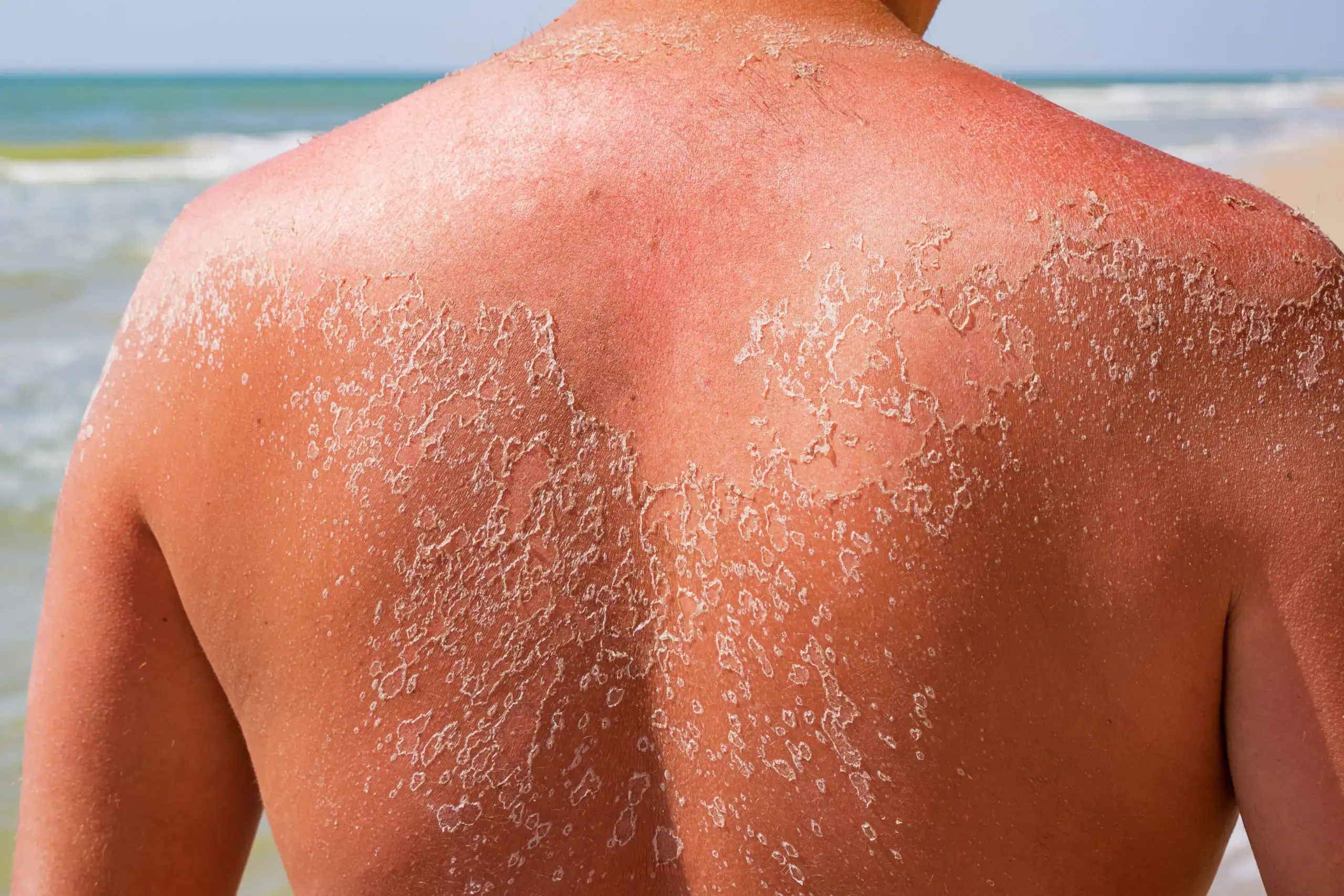
Sunscreen and other sun safety measures help prevent skin damage and wrinkles, and reduce the risk of developing skin cancer. Newer broad-spectrum sunscreens contain products to block both UVA and UVB rays. To be effective, sunscreen should be reapplied at least every two hours. The American Academy of Dermatology (AAD) recommends seeking shade when possible. Avoid sunbathing, and always wear a wide-brimmed hat, sunglasses and protective clothing.
A typical white T-shirt has an SPF of 3. Colorless dyes that increase the SPF of fabrics to an SPF of 30 are available as laundry products. If you must be in the sun, use a broad-spectrum sunscreen with an SPF of at least 30, even on cloudy days. Even when you are wearing sunscreen, be aware that some ultraviolet light may still get through, so do not prolong your sun exposure.
Sunscreen FAQs
Sunscreens work by absorbing, reflecting or scattering the sun’s rays on the skin. They are available in many forms, including ointments, creams, gels, lotions, sprays and sticks. All are labeled with SPF numbers. The higher the SPF, the greater the protection from sunburn caused mostly by UVB rays; however, this does not increase the length of time for sun exposure.
Broad-spectrum sunscreens protect against both UVA and UVB rays. They do a better job of protecting skin from other effects of the sun, including photodamage, photodermatitis and rashes from sun exposure.
Sunscreens that block UVB rays are composed of some or all of the following chemicals: padimate O, homosalate, octyl methoxycinnamate, benzophenone, octyl salicylate, phenylbenzimidazole sulfonic acid and octocrylene.
Broad-spectrum sunscreens add oxybenzone or avobenzone (Parsol 1789) to block UVA rays. Mexoryl is a chemical that blocks UVA; its broad-spectrum characteristics allow sunscreens to be made with very high SPF factors. Physical sunscreens/blocks or chemical-free sunscreens contain titanium dioxide and/or zinc oxide, which reflect UVA and UVB and are especially useful for people allergic to chemical sunscreens.
Sunscreen should be applied 30 minutes before exposure to the sun. Even water-resistant sunscreens should be reapplied often, about every two hours or after swimming, drying off or sweating.
Sunscreen should be applied generously and evenly so as not to miss any areas of exposed skin. It should be kept out of the eyes, and UV light-blocking sunglasses should be worn. Read our sunscreen facts file for more helpful information.
Self-tanning lotions and sprays are a safe alternative to tanning. They contain dihydroxyacetone, which interacts with proteins in the skin to produce an orange/tan color that does not wash off. However, the color of self-tanners only has an SPF of 4. This is not enough protection from the sun; therefore, sunscreen with an SPF of at least 15 must be used and reapplied every two hours.
Tips for Sun Protection
Sun exposure is the most preventable risk factor for all skin cancers, including melanoma. You can have fun in the sun and limit your risk of developing skin cancer.1,2
Stay safe in the sun with these basic tips, and see our sun safety page for more.
- Generously apply a water-resistant sunscreen with an SPF of at least 30 that provides broad-spectrum protection from both ultraviolet A (UVA) and ultraviolet B (UVB) rays to all exposed skin. Reapply approximately every two hours, even on cloudy days, and after swimming or sweating. Look for the AAD SEAL OF RECOGNITION™ on products that meet these criteria.
- Wear protective clothing, such as a long-sleeved shirt, pants, a wide-brimmed hat and sunglasses.
- Seek shade when appropriate. Remember, the sun’s rays are strongest between 10am and 4pm. If your shadow is shorter than you are, seek shade.
- Protect children from sun exposure by playing in the shade, using protective clothing and applying sunscreen.
- Use extra caution near water, snow and sand because they reflect the damaging rays of the sun, which can increase your chance of sunburn.
- Get vitamin D safely through a healthy diet that may include vitamin supplements, not the sun.
Your sun protection plan isn’t complete without a dermatology team. Find the Water’s Edge location nearest you and call today.
[1] American Cancer Society. 2016 Cancer Facts and Figures.
[2] Robinson, JK. Sun Exposure, Sun Protection and Vitamin D. JAMA 2005; 294:1541-1543.