
Litfulo, a New Alopecia Areata Treatment, Expands Options for Teens and Adults
Medical review by Daniel Gutierrez, PA-C
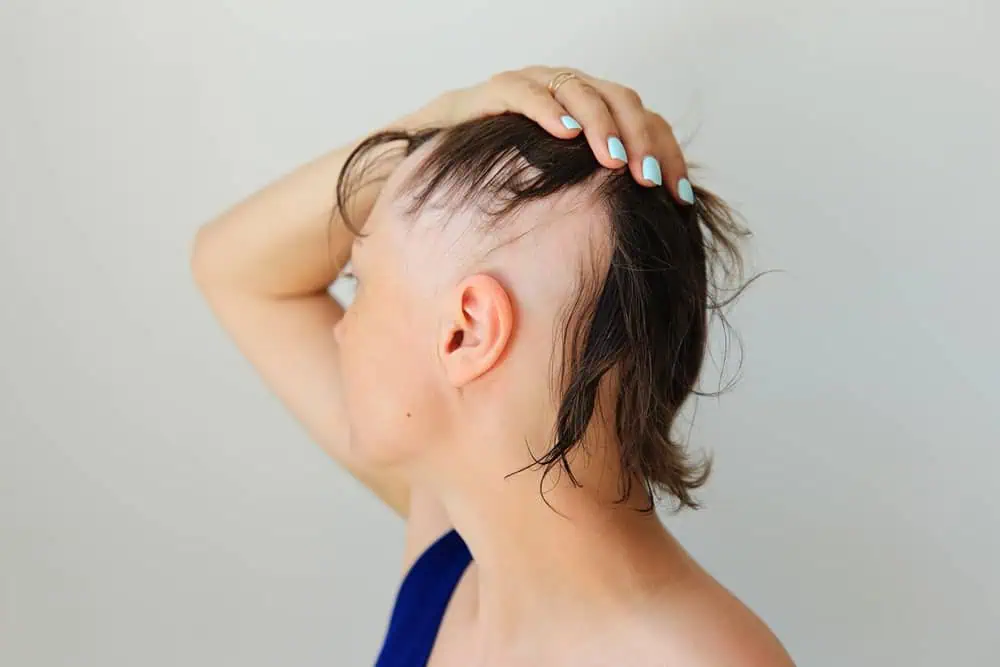
Alopecia areata typically isn’t physically painful, but the emotional effects of this autoimmune disease can be devastating. The main symptom, patchy or complete hair loss, often makes people embarrassed and self-conscious, and it can be challenging to treat. Now there’s a new drug for alopecia areata from Pfizer, approved by the FDA, called Litfulo (ritlecitinib). It’s an oral medication that can help people ages 12 and up with severe alopecia areata regrow hair—and regain confidence.
“Litfulo is a game-changer for alopecia areata patients, particularly those in their teens,” said Daniel Gutierrez, PA-C, of Water’s Edge Dermatology. “Before Litfulo, the only oral alopecia areata treatment for severe disease was approved for people 18 and older, but most alopecia areata patients are much younger than that.”
With Litfulo, severe alopecia areata in children 12 and older can be treated orally.
Challenges in alopecia areata treatment
Living with alopecia areata can be difficult for anyone. The condition occurs when the immune system mistakenly attacks the hair follicles, leading to inflammation that causes hair loss. Most people who have alopecia areata develop a few circular bald patches, and in most cases the hair grows back without treatment, though it may fall out again later. Dermatologists can encourage hair regrowth by prescribing treatments such as topical corticosteroids and a 5% minoxidil solution.
For people with severe alopecia areata, however, the effects can be more disfiguring, and stronger treatments are required. Until now, the only oral medication available was Olumiant (baricitinib). While effective—some people in clinical trials experienced hair regrowth after 36 weeks—Olumiant is approved for adults only.
“The most common alopecia areata treatment for teens has been multiple corticosteroid injections in the scalp administered once a month,” Gutierrez explained. “But teens and parents don’t necessarily volunteer for uncomfortable treatments, even for hair loss.” Patients who do opt for injections don’t always keep up with their appointments, which limits the effectiveness, he added.
How Litfulo works
Like Olumiant, Litfulo is a Janus kinase (JAK) inhibitor, a type of immune-modifying drug used to treat certain inflammatory diseases. It works by binding with certain proteins on immune cells, called receptors. This blocks signals that direct the cells to attack the hair follicles.
Results vary, but Litfulo can make a major difference for some patients. In clinical trials, nearly 25% of adults and teens taking the drug experienced hair growth that covered 80% or more of their scalp in six months. All the patients started with 50% or more scalp hair loss, and some had alopecia totalis (complete loss of scalp hair) or alopecia universalis (complete loss of scalp and body hair).
Litfulo side effects
The most common side effects of Litfulo include headache, diarrhea, itching, dizziness and eczema. Like other immune-modifying drugs, Litfulo can lower the body’s ability to fight infections and slightly increases the risk for certain cancers. It also increases cardiovascular risks for people ages 50 and over who have at least one heart disease risk factor.
That said, Litfulo may be safer than other JAK inhibitors because it targets one specific receptor. “This level of precision allows the medication to have fewer potential side effects,” said Gutierrez. Your dermatologist will discuss the risks with you.
If you’re taking another JAK inhibitor, a biologic drug, cyclosporine or other strong immunosuppressant drug, your dermatologist won’t recommend Litfulo. It is also not appropriate for anyone who is breastfeeding or has severe liver problems. Your doctor will order blood tests to check for medical issues that can make you a poor candidate for Litfulo, including platelet count abnormalities.
More hair, better mental health
Large bald patches in the hair are more than a cosmetic issue. Successfully treating severe alopecia areata could potentially reduce the psychological effects of the disease. In adults, these include a higher risk of depression, anxiety, attention deficit hyperactivity disorder (ADHD) and certain psychotic disorders. Children and teens with alopecia areata are vulnerable to bullying, and in one small study, more than half of participants ages 12 to 19 reported that their hair loss made them limit their activities.
For people with the most hair to gain, the new FDA-approved drug for hair loss offers a chance at fewer, smaller bald patches—and a better mental outlook.
Written by Jessica Brown, a health and science writer/editor based in Nanuet, New York. She has written for Prevention magazine, jnj.com, BCRF.org, and many other outlets.

Swimmer's Itch: How to Treat It Now and Avoid It Next Time
Medical review by Jennifer Wong, DO
You take a dip in a cold, sparkling lake on a hot summer day, expecting to come out feeling cool and refreshed. But within minutes of wading out of the water, you find yourself with itchy legs and perhaps, small red spots. It could be swimmer’s itch, a reaction to parasites in water.
Swimmer’s itch is common throughout the world. For most people, it isn’t serious and goes away on its own. Until it does, however, it can be unpleasant.
What is swimmer’s itch?
Swimmer’s itch, or cercarial dermatitis, is an allergic reaction to cercariae, the tiny larvae of parasites called trematodes. They are typically found in fresh water, though they can be present in ocean water, too.
The larvae infect aquatic snails, then multiply and develop in them. When they are released by the snails, they infest the surrounding water looking for certain water birds or mammals to infect as part of their lifecycle. If a human happens to bump into them, the larvae may burrow into their skin by mistake. It’s unfortunate for the larvae, which can’t survive in humans and die soon after taking up residence. But until that happens, the person who’s hosting them will likely have to contend with a bout of swimmer’s itch.
Little kids are especially prone to developing swimmer’s itch since they can play for hours in shallow waters by the shoreline. It’s more common to see larvae there than offshore.
What does swimmer's itch look like?
Swimmer's itch symptoms include itching and a rash that often appears on the legs, since they get the most exposure during swimming or wading.
Symptoms appear in two stages:
- Tingling, burning, tenderness and itching can occur within minutes after a person exits the water.
- A rash made of small reddish pimple-like bumps appears within 12 hours. The rash may appear in a matter of minutes if you’ve been exposed to the larvae before. The bumps may increase in size and turn into small blisters.
Unlike certain other rashes, the swimmer’s itch rash doesn’t spread to other areas of the skin, and it’s not contagious.
How long does swimmer’s itch last?
Swimmer’s itch typically lasts several days to a week or even two weeks.
Swimmer's itch treatment: Home remedies
Wondering how to get rid of swimmer’s itch? There’s no medication designed specifically to treat it. Treating swimmer’s itch comes down to soothing the irritation and itching so you aren’t tempted to scratch. (Aggressive scratching can lead to an infection.) These home remedies can help:
- Soothe it with a cold compress. Apply a cold, wet washcloth or an ice pack covered in a dish towel to itchy skin for 5 to 10 minutes at a time.
- Smooth on a cooling, calming lotion. Lotions that contain calamine or menthol have a cooling effect on skin, especially if you store them in the fridge between applications.
- Try a therapeutic soak. Add Epsom salts or colloidal oatmeal to a lukewarm bath. Colloidal oatmeal is available in drugstores, the pharmacy sections of supermarkets and big box stores and online.
- Apply an anti-itch paste. Create a thin paste with water and baking soda and apply it to the rash.
- Medicate it. Apply an over-the-counter corticosteroid cream or a product that contains a topical anesthetic such as pramoxine.
See your dermatologist if the rash does not resolve or the itching is not controlled well with at-home treatments. The dermatologist can prescribe a stronger itch-fighting medication.
How to prevent swimmer’s itch
Given the possibility of parasites in water, you may be wondering, is it safe to swim in lakes (or ponds)? If your concern is swimmer’s itch the answer is yes—sometimes. There are signs of possible cercariae infestation you can look out for when choosing where to swim, and things you can do to lower the risk of swimmer’s itch if you swim or wade in water that may be infested.
- Steer clear of lake or pond water that’s murky, scummy, weedy or cloudy.
- Avoid swimming in water where waterfowl live, and don’t swim if signs are posted that warn about the presence of snails or parasites.
- Don’t feed birds in areas where people swim. Seagulls, geese, ducks and other birds may have parasite eggs in their excrement.
- Stay away from marshes, which snails love.
- Dress small children in swimwear that includes swim tights or pants.
- If you’re a strong swimmer, get out of the shallows and head to deeper water.
- After swimming, wading or walking in water that might have larvae in it, rinse with fresh water and dry off with a clean towel to brush off any larvae that may be trying to burrow into your skin.
If you don’t manage to protect yourself from swimmer’s itch and you wind up with the telltale itchy bumps, do what you can to prevent others from getting it by alerting your local health department.
Written by Maura Rhodes, a writer and editor specializing in health and well-being.

Rosacea Self-Care Tips to Help Keep Redness Away
Medical review by Daniel Gutierrez, PA-C
Even with treatment, rosacea often comes and goes like thunderstorms in summer. You can’t control the weather, but you can reduce your rosacea flares by making tweaks to your daily routines. Rosacea self-care measures can also help your rosacea treatment work better.
Here are the tips dermatologists recommend for practicing rosacea self-care while you’re undergoing treatment. (Word to the wise: Don’t try to tackle rosacea on your own. Without treatment, it may get worse and become harder to tame.)
Avoid your rosacea triggers
Avoiding your triggers as much as possible is the best thing you can do to keep facial flushing and rosacea rashes away. Common rosacea triggers include:
- Sunlight
- Heat
- Wind, cold and humidity
- Stress and anxiety
- Spicy foods
- Other foods
- Hot beverages
- Alcohol
- Menopause
- Exercise
- Some cosmetics
- Chemical sunscreens
- Certain medications, such as vasodilators
- Excessive use of topical steroids
Keep a diary to figure out what triggers your rosacea flares. Some triggers, such as menopause, may be out of your control, but avoid the ones you can steer clear of. If you can’t sidestep the stress in your life, manage it with a stress-reducing habit such as yoga, meditation or deep breathing.
Use gentle, fragrance free skin care products
If you have rosacea, you probably have sensitive skin, so you’ll want to treat it with TLC. That means using gentle, non-irritating skin care products. To further reduce the chances of skin irritation, practice skinimalism: Use only a few basic skin care products instead of cramming your medicine cabinet with a dozen products all designed to do different things.
Best face wash for rosacea
Wash your face morning and night, and choose a non-soap face wash that is pH balanced and designed for sensitive skin. Good picks include:
- EltaMD Foaming Facial Cleanser
- Cetaphil Gentle Skin Cleanser
- Vanicream Gentle Facial Cleanser
- Cerave facial cleansers (these come in different types for dry, very dry or normal-to-oily skin)
Use your fingertips, not a washcloth, to work in the cleanser. Rinse thoroughly with lukewarm water and gently blot your skin dry with a soft towel.
Best moisturizer for rosacea
Whether you have dry or oily skin, using moisturizer is a must. It helps keep your skin properly hydrated, which can reduce irritation. It can also counteract dryness caused by some rosacea treatments.
Choose a moisturizer that’s formulated for your skin type and doesn’t contain fragrances or parabens. Bonus ingredients to look for that reduce redness and irritation include green tea and niacinamide (vitamin B3). Ceramides help repair a damaged skin barrier.
Dermatologist-approved moisturizer choices include:
- Vanicream Daily Facial Moisturizer for Sensitive Skin
- Eucerin Redness Relief Night Crème
- Cetaphil Redness Relieving Night Moisturizer or Daily Facial Moisturizer
- La Roche-Posay Toleriane Double Repair Face Moisturizer
Use sunscreen without fail
Sun exposure is one of the most common rosacea triggers. Stay in the shade when possible, wear a broad-brimmed hat to shield your face and always put on a broad-spectrum sunscreen before heading outside. If you use a topical rosacea medicine, apply it first, then apply the sunscreen.
Some people with rosacea find that ingredients in chemical sunscreens irritate their face, so the best sunscreens for rosacea are mineral sunscreens, which contain zinc oxide and/or titanium dioxide. Sunscreens dermatologists recommend include:
- Elta MD UV Clear SPF 46
- Paula’s Choice Redness Relief SPF 30 Mineral Moisturizer
- CeraVe 100% Mineral Sunscreen SPF 50
- Skinceuticals Physical UV Defense SPF 30
There is no permanent cure for rosacea, but with the right treatment for your type of rosacea coupled with smart rosacea self-care, you reduce your flares and the frustration and embarrassment that may come with them.
Written by Marianne Wait, an award-winning health and wellness writer based in New Jersey.
Cutaneous Candidiasis: Treating Yeast Infections on the Skin
Medical review by Elizabeth Leen-Burns, APRN
Did you know you can develop a yeast infection on your skin? These infections happen when yeast that normally lives on the skin grows too aggressively, leading to an itchy rash that’s hard to ignore. A yeast infection on the skin, known medically as cutaneous candidiasis, can be embarrassing because it tends to appear in areas with skin creases, such as the armpits and groin—not body parts you want to be caught scratching. A yeast infection under the breasts can be equally embarrassing.
Cutaneous candidiasis is typically easy to treat, but how do you if know you have it, and why did you develop it in the first place? Read on to learn more.
What is cutaneous candidiasis?
Cutaneous candidiasis is a common infection caused by an overgrowth of a yeast, which is a type of fungus. The yeast in this case is Candida. Small amounts of it live on your skin as well as in your digestive system and, in women, the vagina. Normally, “good” bacteria keep the yeast in check, but when the balance of good bacteria and yeast on the skin is disrupted, a yeast infection rash can result. Most Candida skin infections are caused by a species of Candida called Candida albicans.
Cutaneous candidiasis symptoms
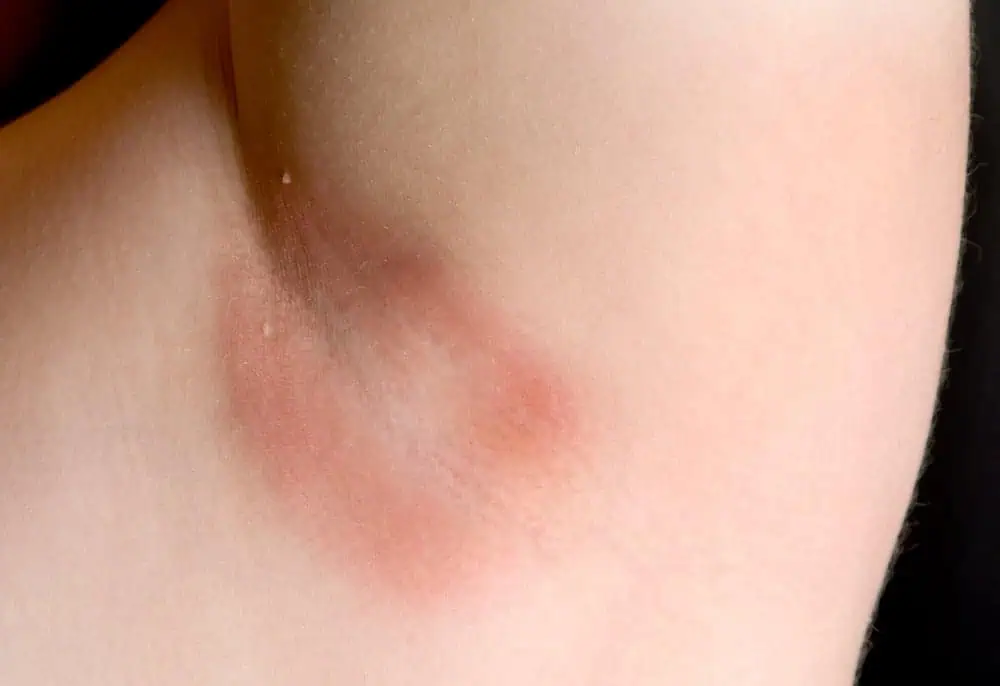
Symptoms of cutaneous candidiasis include a red rash, small, pimple-like bumps (caused by infection of the hair follicles) and itching or burning, which can be intense.
Where the rash occurs is a tip-off that you may be dealing with cutaneous candidiasis. The infection often strikes in warm, moist, creased areas of the body, such as the armpits, groin, anus, stomach folds and under the breasts. Once an infection develops, it can spread beyond these locations.
What causes a yeast infection on the skin?
There’s no shortage of reasons you might develop a fungal skin infection, and some of the contributing factors are hard to avoid. They include:
- Hot, humid weather
- Wearing tight synthetic clothing
- Poor hygiene
- Pregnancy
- Obesity
- Changing underwear infrequently
- Failing to thoroughly dry damp or wet skin
- Taking antibiotics, which kill “good” bacteria along with “bad” bacteria
- Diabetes
- A weakened immune system due to HIV/AIDS or medications that suppress the immune system, such as corticosteroids and chemotherapeutic drugs
- Skin conditions such as psoriasis and intertrigo
Cutaneous candidiasis treatments
See your dermatologist for an accurate diagnosis if you have a rash that matches the description of cutaneous candidiasis. Mild cases may go away on their own if you follow the prevention measures outlined below. Over-the-counter topical antifungal treatments such as clotrimazole or miconazolem, which kill the Candida, can ease the symptoms and help prevent the rash from spreading.
If you have a severe or stubborn case, your dermatologist will write you a prescription for a more powerful antifungal cream such as nystatin or ketoconazole.
Use antifungals for as long as directed, even if you see improvement early on. If you stop taking them too soon, the infection may linger, and the rash may return.
Preventing a yeast infection rash
Keeping your skin folds clean and dry is the secret to avoiding a yeast infection rash. These measures will reduce your risk.
- Wear loose, breathable clothing to prevent your skin from becoming damp with sweat.
- Change out of wet bathing suits and sweaty workout clothes right away.
- Bathe as often as necessary, and wash and dry your skin thoroughly.
- Change your undergarments daily (more often if you sweat).
- Apply an absorbent body powder to moist areas, after drying them thoroughly.
If you have diabetes, keeping your blood sugar within the target range can reduce the risk of a yeast infection on the skin. If you are significantly overweight, losing weight may help.
Written by Jessica Brown, a health and science writer/editor based in Nanuet, New York. She has written for Prevention magazine, jnj.com, BCRF.org, and many other outlets.

What Causes Itchy Skin at Night?
Medical review by Marianne Pineda, PA-C
How many times has this happened to you: You’re in bed, trying to wind down and drift into sleep, and suddenly your skin starts itching — maybe so much so that it’s hard to fall asleep or stay asleep.
You’re not alone. Itchy skin at night, which doctors call nocturnal pruritus, is fairly common. The causes are not completely understood, but these factors play a role.
Circadian rhythm
You can blame nocturnal itching in part on your body’s circadian rhythms. These are cycles that repeat every 24 hours, controlled by a “master clock” in the brain. Circadian rhythms influence sleepiness and wakefulness, hormonal activity, hunger, digestion and body temperature, among other things.
In the evening, the body releases more heat, and blood flow to the skin increases, which may contribute to nighttime itching. In addition, skin loses water at night, resulting in dryness that can make you itchy. That water loss is likely due to nighttime changes in the skin’s barrier function, which could also let in more irritants.
Inflammation may also play a role. At night, the body releases more cytokines, which are immune system proteins that create inflammation. This can cause itching or make itching worse. At the same time, the body’s production of corticosteroids, which tame inflammation, declines.
It’s also possible that you simply notice itching more when you’re in bed trying to sleep than when you’re busy and distracted during the day.
Health conditions
Itching related to certain health conditions can be worse at night.
Common skin conditions. These include psoriasis, eczema and dry skin. Older people are more susceptible to nighttime itching in part because the skin tends to dry out with age.
Mental health issues. Stress and anxiety can contribute to nighttime itching, as can depression and schizophrenia.
Infestations. Bed bugs, lice and scabies all cause itching, especially at night. Bed bugs feast when you’re in bed. Lice and scabies mites are also more active at night.
Hormones. Pregnancy, menopause and hyperthyroidism (too much thyroid hormone) or hypothyroidism (too little thyroid hormone) can contribute to nighttime itching.
Allergies. A food allergy could cause skin to itch at night.
Iron deficiency anemia. Some people with iron deficiency anemia have itchy skin. Other symptoms include tiredness, pale skin, shortness of breath and fast heartbeat.
Chronic idiopathic pruritus. This condition, whose name means chronic itching with no known cause, can be especially challenging because it can significantly worsen a person’s quality of life, and yet the best treatments remain unknown. A team that includes an allergist, an immunologist and a dermatologist can work together and order lab tests, such as blood tests and even chest X-rays, to identify possible underlying triggers.
In some cases, itching, including nighttime itching, can be a sign of a serious condition such as liver or kidney disease, HIV or certain cancers such as leukemia and lymphoma. It can also stem from nerve problems, such as diabetic neuropathy (nerve damage from diabetes), multiple sclerosis or shingles.
Opioids, used to treat serious pain, can also cause itching.
Home remedies for nighttime itching
Oftentimes, simple home remedies can ease the itching.
- Avoid caffeine and alcohol in the evening, since they widen blood vessels, which sends more blood to the skin.
- If you use a scented soap or deodorant soap, switch to a gentle, fragrance-free moisturizing soap or non-soap cleanser.
- Apply a fragrance-free, alcohol-free moisturizing lotion such as Cetaphil, Eucerin or CeraVe during the day and after bathing.
- Before bedtime, taking a lukewarm shower or bath (try adding colloidal oatmeal) or applying cool compresses to your skin can be helpful.
- Consider running a fan in your bedroom to distract you from the itch. Keep your bedroom cool (below 70°F), and use a humidifier if the air is too dry.
- Wear loose pajamas made of a soft material such as cotton or silk.
- If you think stress might be contributing to your itching, try yoga, meditation, stretching, deep breathing or progressive muscle relaxation before bed.
Scratching can make itching worse, but the urge to scratch can be hard to resist. If you can’t keep yourself from scratching, trim your fingernails and consider wearing cotton gloves to bed.
When to see a doctor
If your nighttime itching lasts longer than two weeks and home remedies don’t help, talk to your doctor. Itching that interferes with your sleep, affects your entire body or is accompanied by other symptoms such as fever, tiredness or weight loss should be evaluated.
Treatment depends on the cause of the itching. Your doctor may recommend over-the-counter medications such as corticosteroid cream, allergy medication or melatonin to help you sleep.
In some cases, prescription medication may be necessary. Options include stronger corticosteroid creams and pills, antidepressants that have a sedative effect, immunosuppressants (to reduce inflammation), hormone replacement therapy and various drugs that help treat insomnia and reduce anxiety or itching.
Written by Jessica Brown, a health and science writer/editor based in Brooklyn, New York. She has written for Prevention magazine, jnj.com, BCRF.org and many other outlets.

4 Surprising Times You Need to Wear Sunscreen
Medical review by Tanya Sperber, APRN
You know you’re supposed to wear sunscreen every day, even on cloudy days and in winter, but there are times when you probably wouldn’t think to bother with it. For example, what’s the point if you’re going to spend most of your day in your office?
Surprise! You can be exposed to ultraviolet (UV) rays in some common places that aren’t exactly outdoors. Over time, this exposure may contribute to an increased risk of wrinkles and skin cancer.
Prepare to slather on sun protection when you find yourself in the following situations.
Sitting by a window
Windows protect you from the sun’s rays, right? Yes and no. Glass blocks most UVB rays, the ones that cause sunburn. That’s why many people assume it’s fine to sit by a sunny window without wearing sunscreen. But according to the Skin Cancer Foundation, more than 50% of UVA rays, which are the main cause of premature aging and also contribute to some skin cancers, pass through glass.
If you’re sitting next to a window, or even if you’re a few feet away from it, it’s a good idea to wear sunscreen. For maximum protection, choose a broad-spectrum sunscreen with an SPF of 30 or higher.
"The best way to incorporate sunscreen in your regimen is to find one you love," said Tanya Sperber, APRN, a board-certified advanced practice registered nurse with Water's Edge Dermatology. "Elta MD Elements is a lightweight tinted sunscreen women can apply everyday prior to applying makeup. This sunscreen provides all the benefits of a physical barrier sunscreen without feeling heavy on the skin, apply makeup over or just apply sunscreen and go. A great non-tinted option for men is Elta MD Sheer - it works well for men with facial hair, rubs in completely and if you’re not sweating or swimming, you’re protected all day with a barrier zinc sunscreen."
If your desk or favorite perch is near a window, consider installing UV-blocking window film for extra protection. These block up to 99.9% of UV radiation and are available in a variety of tints. You can have window film professionally installed or buy it at a home improvement store and install it yourself.
Driving your car
Does the left side of your face have more wrinkles or age spots than the right? Driving may be the reason.
While the windshield of your car blocks most UVA (and UVB) rays, your side windows may provide less protection. A 2016 study found that while windshields in a car blocked an average of 96% of UVA radiation, the side windows blocked an average of just 71%.
The difference is due to the types of glass. Windshields are made of two plates of glass with a layer of plastic between to make them shatterproof. Side windows don’t have that plastic layer, which is what provides most of the windshield’s UVA protection.
Experts suspect that weaker UVA protection from side windows may help explain why skin cancer is more common on the left side of the body. So, if you have a daily commute or spend long periods of time in a car, wear sunscreen. Do so even if the side windows are tinted, since the level of UVA protection that tinted windows provide varies. Remember to apply it to your arms, hands, and face.
Keep the sunscreen handy, but don’t store it in the car. The heat that gets trapped in the car can break down the chemicals in sunscreen and make it less effective.
You can also protect yourself by installing UV-blocking window film on your car’s side windows.
Traveling by plane
If you find yourself in a window seat on your next flight, you’ll need more than your boarding pass before takeoff: You’ll need a thorough application of sunscreen, too.
At 30,000 feet, the sun is much stronger than at ground level, and windows on planes (and buses and trains) may not provide adequate protection from UVA rays.
While the risk of sun damage and skin cancer appears to be higher for pilots and flight crew members than passengers, it’s still smart to wear sunscreen when you fly. Just remember that the Transportation Safety Administration currently allows no more than 3.4 ounces of sunscreen in a carry-on.
Getting a gel manicure
Love gel manicures? You’re not alone. Gels make manicures last longer compared to nail polish, but they have to be set using nail lamps that emit high-intensity UVA light.
The risk of UV damage and skin cancer from the lamps, if any, is probably low. A recent review of medical literature did not find evidence of an increased risk of skin cancer in people under 40 who’ve had gel manicures. Still, the American Academy of Dermatology suggests applying sunscreen to your hands protect yourself. If you prefer, you can wear dark, opaque gloves with the fingertips snipped off.
If you get gel manicures regularly, consider saving them for special occasions.
Written by Jessica Brown, a health and science writer/editor based in Brooklyn, New York. She has written for Prevention magazine, jnj.com, BCRF.org and many other outlets.

A Melanoma Warning for Millennials and Gen Z
Medical review by Alissa O'Brien, MD
Whether you’re in your 30s, 20s or teens, chances are you think of skin cancer as a vague and distant threat, if you think of it at all. But the statistics may surprise you.
It’s true that melanoma, which can be fatal, is most often seen in older adults. The average age at diagnosis is 63. But that doesn’t mean it can’t happen earlier in life — it can, and more and more often, it does. In fact, melanoma is the most diagnosed age-related cancer among people ages 25 to 29. In people ages 15 to 29, it’s the third most common age-related cancer for males and fourth most common for females.
Young women get melanoma more often than young men. Before age 50, women are more likely to develop melanoma than any other cancer except breast and thyroid cancer.
But men should wake up and smell the sunscreen, too. Cases of melanoma on the head and neck increased by 51% among children, teens and young adults in the U.S. and Canada between 1995 and 2014 according to a 2019 study; and in the U.S., most of the increase was driven by melanoma in white males.
A deadlier threat in men
Melanoma is deadlier in men, including young men, than women. One study found that while teen and young adult males were less likely than females of the same age to develop melanoma, they were 55% more likely to die of it, regardless of tumor thickness.
Experts don’t understand all the reasons men face worse melanoma survival rates than women, but they do know that men’s skin and women’s skin are structurally different. Women are also more likely to wear sunscreen — and are less hesitant to see a doctor when they suspect something’s wrong.
An ounce (or two) of prevention
Sun protection is the key to preventing most cases of melanoma. That means staying out of the sun when its rays are strongest and protecting yourself from head to toe with clothing, hats and broad-spectrum sunscreen (SPF 30 or more). Don’t skimp on the sunscreen, either. Imagine filling a shot glass, which holds 1.5 ounces, with sunscreen. That’s about how much you need to cover your face and body.
Guys: If you are bald or balding and choose not to wear a hat, put sunscreen on your head. Men are more prone to skin cancer on the scalp (and ears) than women. A gel or spray sunscreen works well on hairy areas. If you wear a hat, you still need to apply sunscreen to your face, ears and neck.
If you go shirtless, apply sunscreen all over, including under your arms. But even if you keep your shirt on, it’s smart to apply sunscreen underneath. If you can see light through your shirt when you hold it up to the sun, UV rays can get to your skin through it.
No such thing as a healthy tan
In 2019, Blue Cross Blue Shield published results of a survey showing that among millennials:
- 58% think a tan makes you more attractive
- 53% believe a tan makes you look healthy
- 31% use tanning beds to get a base tan
Attractiveness is objective, so you should ask yourself if you’d rather have a tan or skin cancer. As far as “base tans” go, there’s no such thing. And tanning bed use before the age of 35 increases the risk of melanoma by 75%.
Male or female, light skinned or dark, melanoma prevention should be on everyone’s radar, especially those of us living in Florida. In addition to protecting yourself from UV rays, it’s also important to heed the warning signs of melanoma. The reason is simple: Early diagnosis and treatment just may save your life.
Written by Ann Pietrangelo, an author and freelance writer specializing in health and wellness.

Vitamin C Serum Benefits: Yes, They’re Real
Medical review by Gioconda “Gio” Boaz, PA-C
Vitamin C serum has become one of the most popular skincare products for the face, and for good reason. Who wouldn’t want a serum that can improve the appearance of fine lines and wrinkles, fade dark spots, prevent and treat sun damage and give skin a healthy glow? The claims may seem too good to be true, but the benefits are real according to one skin care provider.
“Vitamin C has been known to improve skin for years, but it didn’t get the same amount of attention that other skin care ingredients did until recently,” said Gioconda “Gio” Boaz, PA-C, a board-certified physician assistant at Water’s Edge Dermatology.
“I think vitamin C serum is popular now because more information is surfacing on how it boosts the skin’s natural protection against sun damage, fights inflammation and produces a great cosmetic advantage.”
How vitamin C serum works
Vitamin C improves skin’s appearance in several ways. As an antioxidant, it protects against damage caused by unstable molecules called free radicals. Sun exposure increases free radical production. While your diet provides some vitamin C, using a vitamin C serum increases the concentration of the vitamin in your skin. And unlike sunscreen, it can’t be rubbed off. In fact, once vitamin C is absorbed, the protection it offers seems to last for days.
The vitamin also helps the body synthesize collagen and increases skin cell turnover. This means that dead and damaged skin cells are replaced by new ones more quickly, making skin look brighter.
Vitamin C serum can help address:
- Hyperpigmentation. Increasing cell turnover can lighten sun spots (also called age spots), dark spots caused by acne, and dark patches caused by melasma. “One of the great things about vitamin C is that it’s safe for pregnant women, who are vulnerable to developing melasma,” Boaz said.
- Fine lines and wrinkles. Faster cell turnover combined with increased collagen can make wrinkles less noticeable.
- Sun damage. By neutralizing free radicals, vitamin C reduces and helps prevent sun damage. It also works to prevent the sun’s rays from suppressing the immune system. This immune suppression is thought to play a role in the development of melanoma and non-melanoma skin cancers.
Choosing the best vitamin C serum
Vitamin C serums range in price and the amount of vitamin C they contain. You don’t have to choose one of the pricier options if it’s not in your budget.
“Any vitamin C serum, as long as it’s a “stabilized” vitamin C, is going to be beneficial, and expensive doesn’t always mean better,” Boaz explained.
The amount of vitamin C in serums typically ranges from 5% to 20%. While vitamin C is generally well tolerated, it is acidic and can therefore irritate sensitive skin. Boaz recommends starting off with a lower concentration. Move to a higher concentration if you’re not seeing results and if your skin can tolerate it.
Packaging is also key. Vitamin C degrades quickly, particularly when it’s exposed to light. So, an opaque container is a must.
Application and storage tips
If you have sensitive skin, start by using vitamin C once a day. Apply it in the morning to take advantage of the added protection against sun damage. (Sunscreen is always a must.) For people with sun-damaged skin, Boaz recommends gradually switching to a twice-a-day routine.
Apply vitamin C serum after washing your face and before applying moisturizer and sunscreen. Don’t apply too much serum or you’re wasting your money — three to five drops are plenty.
“It’s normal to feel a brief tingling sensation when you use it. This usually dissipates after a couple of weeks,” said Boaz. “Anything beyond that may mean the serum is too strong for you. It’s also possible that you’re allergic to one of the ingredients.”
To prevent vitamin C serum from degrading, keep it stored in a dark place and replace the cap tightly after use. You can tell when it has degraded by its color. Most serums are pale yellow and turn orange or brown when they spoil. If yours has degraded, it’s time to throw it out.
For best results, apply vitamin C serum every day, Boaz advised. “The protective antioxidants immediately shield your skin. It can take about two months of regular use to start seeing cosmetic results, but it’s definitely worth the wait.”
Written by Jessica Brown is a health and science writer/editor based in Brooklyn, New York. Her work has appeared in Prevention, Johnson & Johnson, the Breast Cancer Research Foundation and many more.
5 Common African American Skin Conditions
Medical review by Rachelle Lacey, MD
Everyone’s skin is different — dry versus oily, thick versus thin, light versus dark. African American skin is different from Caucasian skin in that the top layer contains more pigment, called melanin. But the differences don’t end there. Certain gene mutations more common in African American people mean that certain skin conditions are more common, too.
Rachelle Lacey, MD, a dermatologist at Water’s Edge Dermatology and an expert in treating conditions in skin of color, reveals some of the skin problems she sees most in African American patients.
Atopic dermatitis (eczema)
"Atopic dermatitis is something I see more in African American populations, and the reasons are both environmental and genetic,” said Dr. Lacey. “One major cause is due to the change in the filaggrin in the skin.” Filaggrin is a protein in the top layer of skin that’s essential to maintaining the skin’s barrier function and keeping skin hydrated. A mutation in the gene that codes filaggrin causes a filaggrin deficiency.
African Americans are not only more prone to eczema, but they’re also more prone to severe cases of eczema. In dark skin tones, an eczema rash may appear darker brown, purple or grey instead of red.
Read about eczema treatments here.
Keloids and hypertrophic scars
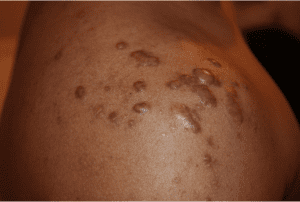

African American skin may contain gene mutations that increase the expression of fibroblasts in scar tissue. Fibroblasts are cells that create collagen. An excess of collagen makes skin much more vulnerable to scar-like formations, including keloids and hypertrophic scars.
Keloids are raised, firm growths of tissue that form over and beyond a wound, such a burn, cut, incision, acne blemish, injection site or ear piercing. They can occur anywhere on the body, but they often develop in less fatty areas, such as on the face, neck, earlobe, chest or shoulders. They can grow much larger than the original wound and may be painful or itchy.
Hypertrophic scars are similar but they don’t typically grow beyond the site of the injury. They may continue to thicken for several months, but they may slightly flatten over a long period of time.
Read about keloid and hypertrophic scar treatments here.
Hidradenitis suppurativa
In hidradenitis suppurativa, also called acne inversa, cyst-like bumps develop in hair follicles in areas where the skin rubs together, such as the underarms, groin, between the buttocks and under the breasts. The bumps can grow deep into the skin. “A lot of times, they can be very painful, and they can drain fluid onto clothing,” said Dr. Lacey. Deep scars can form as the bumps heal.
Tunnels, known as sinus tracts, may develop under the skin between bumps, and they may produce foul-smelling pus if the skin breaks. Sinus tracks also contribute to scarring.
Hidradenitis suppurativa is chronic, but your dermatologist can develop a treatment plan to reduce and help manage flares.
Read about hidradenitis suppurativa treatments here.
Melasma
Melasma, which mostly affects women, causes dark patches, usually on the face. “It’s definitely more noticeable in darker skin types. Often, you can have even more darkening of the cheeks and the forehead because of the increased pigmentation that is naturally found in skin of color,” said Dr. Lacey. “And it can be harder to treat as well.”
Melasma can run in families. Triggers include pregnancy, birth control pills, hormone therapy and sun exposure. In dark-skinned people, skin irritation is another possible trigger, so choosing gentle skin care products is important.
Read about melasma treatments here.
Hyperpigmentation
African American skin contains more melanosomes, tiny structures within melanocytes that make pigment. Melanosomes are also less clustered together within melanocytes and there is also increased transmission of melanin to the surface of the skin. That’s the reason the skin of color appears darker.
As a result, said, Dr. Lacey, “rashes and other skin issues can look a little different. They may also resolve and heal differently. You may have leftover hyperpigmentation that lasts for months once the issue resolves.” In hyperpigmentation, darker patches or spots develop.
“In African American patients, hyperpigmentation is one of the most common issues I see,” said Dr. Lacey.
One type of hyperpigmentation, known as post-inflammatory hyperpigmentation (PIH), can occur as a result of inflammatory acne or even harsh products used to treat it. “You can also get hyperpigmentation as a result of atopic dermatitis, bug bites and even psoriasis,” said Dr. Lacey.
Read about hyperpigmentation treatments here and treating acne in dark skin here.
Whatever skin problem you face, it is important to consult a dermatologist who has experience treating patients with your skin tone to avoid creating new problems, including scarring, hyperpigmentation and hypopigmentation (areas of lighter skin). An experienced, knowledgeable provider can also suggest products and procedures to help your skin look and feel its best.
Written by Marianne Wait, an award-winning health and wellness writer based in New Jersey.