
When it comes to common skin conditions that require treatment from a dermatologist, the average person will likely think of problems like acne and skin cancer. Indeed, these conditions are very common, with nearly 85% of people suffering from acne at some point in their lives, and an estimated one in five people being diagnosed with skin cancer. Likewise, both problems will likely require several visits to a dermatologist clinic, whether a patient is seeking acne treatment products or looking to discuss skin cancer treatment options. However, there is another common skin condition that gets less attention these two problems and will likely need to be treated by a dermatologist specialist: seborrheic dermatitis.
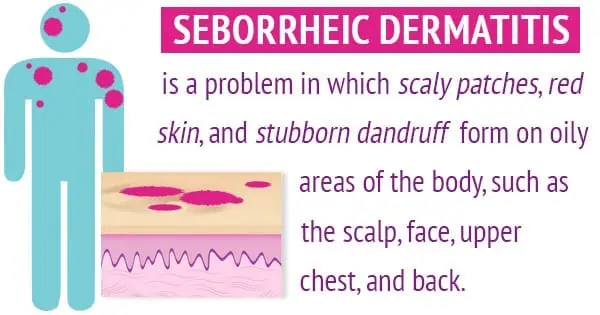
Seborrheic dermatitis is a problem in which scaly patches, red skin, and stubborn dandruff form on oily areas of the body, such as the scalp, face, upper chest, and back. Though long-term, the condition does not threaten the patient’s overall health and can be managed with good skin care. However, seborrheic dermatitis is often both uncomfortable and embarrassing, causing many patients to wonder what the best seborrheic dermatitis treatment could be.
Home Treatments
If you have seborrheic dermatitis and are considering talking to dermatologist about your condition, you should first try a number of skin care techniques; you may find that the best seborrheic dermatitis treatment is easier than you thought. Try to avoid scratching your skin, wear smooth, cotton clothing, wash your skin regularly, and avoid skin care products that contain alcohol. Next, if the patches are on your scalp, try using shampoos that contain pyrithione zinc, selenium, salicylic acid, and other anti-dandruff measures. Meanwhile, if the condition affects your skin, try a mild corticosteroid cream or a mineral oil to help soften and remove scales.
Dermatologist Treatments
If you have had no luck with the skin care treatments suggested above, the best seborrheic dermatitis treatment for you may be found at a dermatologist clinic instead. Depending on your unique condition, a specialist will likely prescribe a corticosteroid cream or an antifungal treatment, which may be used as a shampoo, a cream, or a pill. In more serious cases, dermatologists may recommend that you use a medication that affects your immune system, or even a combination of light therapy with medication. Unfortunately, the latter may not work for patients with thick hair.
If you have seborrheic dermatitis, you know exactly how uncomfortable and embarrassing it can be to live with this common condition. Fortunately, by taking steps to find the best seborrheic dermatitis treatment for you, you can find the relief you’re looking for. Try out the suggestions above today!