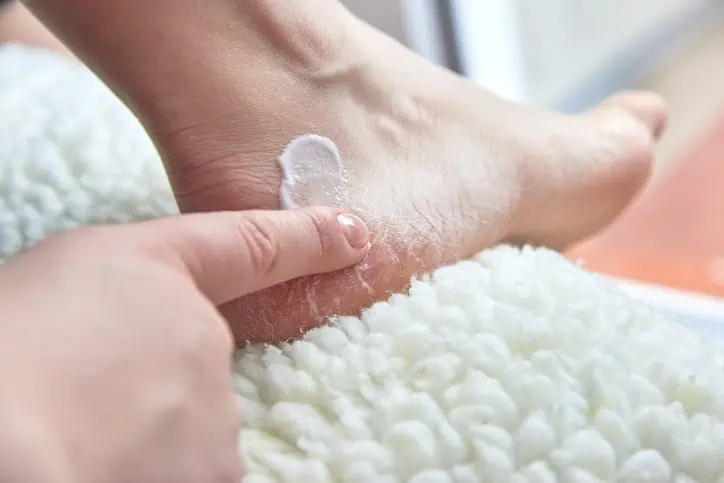
Dry skin can occur at any age, and for many reasons. Skin becomes dry when it loses too much water or oil. This is why skin generally becomes drier as we age, during the winter and in low-humidity climates. Restoring moisture can make skin softer, smoother and less likely to crack.
In some people, areas of seriously dry skin can lead to other skin conditions. While keeping skin well-moisturized typically improves dry skin, certain ingredients, such as urea or lactic acid in creams and lotions can irritate other conditions, such as eczema. Additionally, moisturizers generally do not clear the rough, red bumps associated with keratosis pilaris. This is one reason it’s important to see your Water’s Edge dermatologist for any dry skin condition that doesn’t improve with the use of moisturizers.
Dry Skin FAQs
Our Water’s Edge Dermatology providers are experts at helping you find relief from dry skin. Explore the links below to learn about some of the most common conditions related to dry skin:
Skin becomes dry when it loses too much water or oil. This is why skin generally becomes drier as we age, during the winter, and in low-humidity climates such as Arizona. Restoring lost moisture can make the skin softer, smoother, and less likely to crack. Below are some tips that can diminish dry skin.
- Shaving: It is best to shave after bathing when hairs are soft. To minimize the irritating effects of shaving (face or legs) on dry skin, make sure you use a shaving cream or gel. Allow the product to remain on the skin for about 3 minutes before starting, and shave in the direction that the hair grows. Changing blades often, most certainly after five to seven shaves, also will help minimize the irritating effects of shaving.
- Avoid hot water: Hot water removes your natural skin oils more quickly; warm water is best for bathing.
- Use a mild soap: Deodorant bars, strong fragrances in soaps, and products containing alcohol can strip natural oils from the skin, which dries the skin. Look for a mild, fragrance-free soap or cleanser that moisturizes.
- Moisturize immediately after baths and showers: A 5- to 10-minute bath or shower adds moisture to the skin. Spending more time in the water often leaves your skin less hydrated than before you started. To retain moisture from a bath or shower, apply an ointment or cream while the skin is still moist, within three minutes of bathing. Keeping your skin well-moisturized should improve dry skin. If the dryness worsens despite following these measures, contact your Water’s Edge Dermatology practitioner.
In some people, areas of seriously dry skin can lead to eczema or dermatitis. (Dermatitis means inflammation of the skin.) When dermatitis is present, your Water’s Edge Dermatology practitioner may prescribe medication such as a corticosteroid (cortisone-like) or an immunomodulator (tacrolimus, pimecrolimus). Applied to the affected skin for a prescribed time, these medications tend to be very effective. Regularly using a moisturizing lotion or cream can help avoid eczema flares.
A related skin condition, keratosis pilaris, is an inherited condition that develops in up to 40% of the population. The tiny, flesh-colored to slightly red bumps of keratosis pilaris give the skin a sandpaper-like texture. The bumps are most often found on the upper arms and thighs. In children, they also are common on the cheeks and can be mistaken for acne.
Dry Skin Treatment
While dry skin is harmless, people often seek treatment to alleviate the itch or to improve their skin’s appearance.
Moisturizers may help with the dryness and associated itch. For severely dry skin, a moisturizer that contains urea or lactic acid may be helpful. Both ingredients help the skin hold water. These ingredients are so effective that over-the-counter and prescription moisturizers contain them. The one drawback is that these ingredients can be irritating if you have eczema or cracked skin.
A mild chemical peel can effectively remove excess skin if needed. Topical retinoids also may be used. Your Water’s Edge Dermatology practitioner can provide both of these treatments.
If you have dry skin, call today to schedule an appointment with one of our highly skilled dermatologists. Our skin care experts will examine your skin and recommend a treatment to help relieve your dry skin.