Awareness Is the First Step of Sun Safety
The sun is good for many things. It makes flowers grow, warms the earth and provides light. The sun also can harm your skin because it emits ultraviolet radiation. The sun’s ultraviolet A (UVA) rays are called the “aging” rays. UVA can cause wrinkles and age spots. Ultraviolet B (UVB) rays are known as the “burning” rays because UVB rays cause sunburn. Both types of UV rays reach the earth every day. Even on a cloudy day, UV rays can damage your skin. There is no safe UV light, and there is no such thing as a “safe” tan.
In the past, sun exposure was thought to be a healthy benefit of outdoor activity. Modern scientific information, however, has shown many unhealthy effects of sun exposure, such as skin cancer, for adults and children.
Sun Safety FAQs
Part of the sun’s energy that reaches earth is composed of rays of invisible ultraviolet (UV) light. When UV light rays (UVA and UVB) enter the skin, they damage the skin cells, causing visible and invisible injuries. Without protection, the following can occur:
Heightened Risk of Skin Cancer
Most skin cancers develop on areas of the skin that get years of sun exposure, like the face, neck, ears, forearms, hands and trunk. Basal cell carcinomas and squamous cell carcinomas are the most common, but melanomas are the deadliest.
- Squamous cell carcinoma (SCC) can look like a red scaly patch, raised, firm bump or a sore that heals and re-opens. People who have light skin are most likely to develop SCC, but it can develop in dark-skinned people, especially those who have scarring. With early detection and proper treatment, SCC has a high cure rate. Left untreated, SCC can be disfiguring. In rare cases, untreated SCC can spread to other areas of the body and can be fatal.
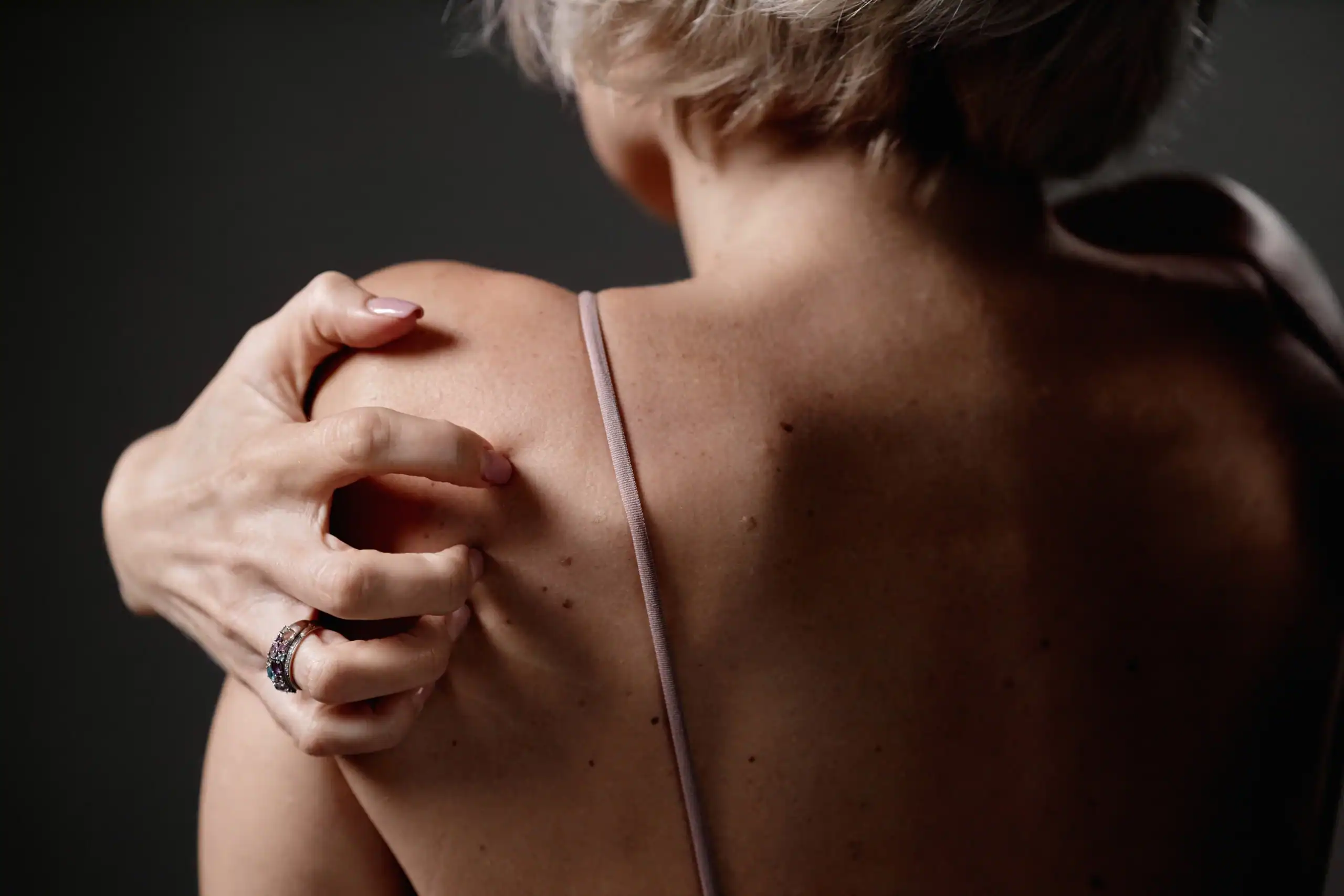
- Melanoma may develop in a mole or it can appear on the skin as a new, dark spot. Sometimes melanoma contains shades of red, blue or white. When found early, melanoma often can be cured. Left untreated, melanoma can spread to other areas of the body and can be fatal. One person dies of melanoma every hour.
- Actinic Keratosis (AKs) are dry, scaly, rough-textured patches or lesions that form on areas of the body that have received long-term exposure to sunlight, such as the face, ears, lip, scalp, neck, forearms and back of the hands.
Sunburn
Sunburn is the most visible type of damage, which appears just a few hours after sun exposure. In many people, this type of damage also causes tanning of the skin. Freckles, which occur in people with fair skin, are usually due to sun exposure. Freckles are nearly always a sign that sun damage has occurred.
Too many sunburns and sunburns that blister increase your risk of developing skin cancer. Avoiding sunburn is important. If you do get sunburned, find relief from cool, wet compresses, cool baths and soothing lotions. When a fever, chills, upset stomach or confusion develops, you may need to seek immediate medical attention.
Tanning
Tanning is often mistaken as a sign of good health. What a tan actually means is the skin has been injured and scarred. A tan develops when the skin tries to protect itself from harmful UV rays. Indoor tanning is not a safe alternative to sun exposure. Indoor tanning equipment, including tanning beds and sun lamps, emit harmful UV radiation. This radiation can be stronger than that given off by the sun. Whether radiation comes from indoor tanning or the sun, it increases a person’s risk of developing skin cancer, including melanoma. There is no such thing as a “safe” tan.
Aging
Constant exposure to UV rays makes skin age more quickly than normal, and can cause it to become tough and leathery. Skin exposed to the sun can also develop large freckles, age spots, wrinkles and scaly growths or AKs, which are considered an early stage in the development of skin cancer.
Allergic Reactions and Other Conditions
For some people, sun exposure causes an allergic reaction. Common signs of a sun allergy are bumps, hives, blisters and red blotches on the skin. People taking certain medications can develop a rash after being in the sun. Medications that interact with UV light and can cause this reaction include birth control pills, antibiotics and medications for treating blood pressure, arthritis and depression.
Sun exposure can also worsen some diseases. People who have lupus erythematosus or cold sores should protect their skin from the sun. If a flare-up occurs, be sure to consult a dermatologist.
Teach your children to follow the ABCs for fun in the sun.
A = AWAY. Stay away from the sun in the middle of the day. (10 a.m.-4 p.m.)
B = BLOCK. Always use a sunscreen with SPF 30 or higher.
C = COVER UP. Cover as much skin as possible when in the sun. Wear a T-shirt and a hat.
S = SPEAK OUT. Talk with family and friends about sun protection.
Sun protection should begin at infancy and continue throughout life. It is estimated that we get about 80% of our total lifetime sun exposure in the first 18 years of life. Therefore, sun prevention in childhood is very important to prevent skin cancer later in life.
Stay away from the midday sun and its intense rays. Schedule play times and outdoor activities before 10 a.m. and after 4 p.m. (Daylight Savings Time: 9 a.m. to 3 p.m.). The sun’s energy is greatest when it travels through less atmosphere at midday. Sun exposure is more intense closer to the equator, in the mountains and in the summer. The sun’s damaging effects are increased by reflection from water, white sand and snow, so use extra caution in these scenarios.
Avoid long periods of direct sun exposure. Sit or play in the shade, especially when your shadow is shorter than you are tall. Avoid sunburn. Be aware of the length of time you are in the sun. It may take only 15 minutes of midday summer sun to burn a fair-skinned person.
If you take care to be sun smart, you can safely work and play outdoors without increasing skin cancer risk or aging prematurely. It’s never too late to start protecting your skin. Here’s how to stay safe in the sun:
- Generously apply a broad-spectrum, water-resistant sunscreen with a sun protection factor (SPF) of 30 or more to all exposed skin. Broad-spectrum provides protection from both ultraviolet A (UVA) and ultraviolet B (UVB) rays. Reapply approximately every two hours, even on cloudy days, and after swimming or sweating.
- Wear protective clothing, such as a long-sleeved shirt, pants, a wide-brimmed hat and sunglasses.
- Seek shade when appropriate. Remember, the sun’s rays are the strongest between 10am and 4pm. TIP: If your shadow is shorter than you are, seek shade.
- Protect children from sun exposure by playing in the shade, wearing protective clothing and applying sunscreen.
- Use extra caution near water, snow and sand because they reflect and intensify the damaging rays of the sun, which can increase your chance of sunburn.
- Get vitamin D safely through a healthy diet that may include vitamin supplements, not the sun.
Yes! Block sun damage by applying a broad-spectrum UVA and UVB sunscreen lotion, gel or sunstick with an SPF of 30 or higher and reapply approximately every two hours, even on cloudy days. If swimming or participating in intense physical activity, sunscreen may need to be applied more often.
Choose a sunscreen with an SPF 30 or higher. The protective ability of sunscreen is rated by sun protection factor (SPF); the higher the SPF, the stronger the protection. SPF numbers indicate the length of time one can spend in the sun without risk of burning.
When using an SPF 30 sunscreen, a fair-skinned person who normally sunburns in 20 minutes of midday sun exposure may tolerate 15 x 20 minutes (300 minutes) without burning. Apply as much sunscreen as you would a lotion for dry skin. Spread it evenly over all exposed skin, including ears and lips, but avoid the eyelids. Apply sunscreen 30 minutes before sun exposure. Reapply after swimming or excessive sweating.
Invisible sunscreens work by trapping the ultraviolet energy and preventing that energy from damaging the skin. Visible, opaque white or colored sunblock creams prevent all light from entering the skin. They often contain zinc oxide or titanium dioxide (chemical-free sunscreens). They are useful for high-risk areas such as the nose, lips and shoulders.
Infants under 6 months old should be kept out of direct sun and covered by protective clothing. Apply sunscreen beginning at six months. Children under 6 months old should not have prolonged sun exposure, but if this cannot be prevented, sunscreen should be used.
Cover your skin with a hat and light-colored clothing when outdoors. Don’t play or work outside without a shirt. Wear a T-shirt while swimming and a hat after swimming. In addition to filtering the sun’s damaging rays, tightly woven clothing reflects heat and helps keep you cool. Sunglasses that block ultraviolet rays protect the eyes and eyelids.
Get vitamin D safely through a healthy diet that may include vitamin supplements.
Speak out about sun protection now. Do your part to protect others from sun damage. Show your family how to apply a sunscreen by spreading it evenly over your skin. Remember to keep babies out of the sun and use an umbrella over the stroller.
Talk to your child’s coach, camp counselor, scout leader, gym teacher and others about the ABCs for fun in the sun. Ask them to help you with the simple changes that can prevent sun damage. Start preventing sun damage now.
If you notice a mole differs from another or a spot on your skin changes, itches or bleeds (even if it is small), you should immediately contact your Water’s Edge Dermatology provider. These changes can be signs of skin cancer. With early detection and treatment, skin cancer has a high cure rate.
Years of sun exposure also accelerate the signs of aging, such as freckles, sun spots and wrinkles. If you dislike signs of aging that appear on your skin, you also may want to see a Water’s Edge dermatologist to learn about options to treat or help reduce the signs of aging skin.