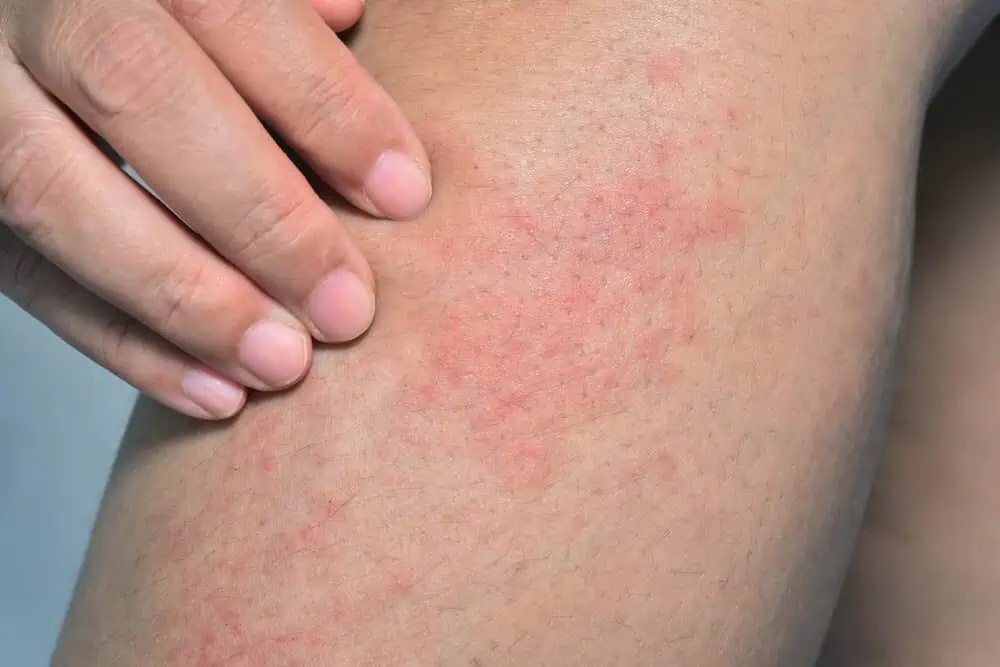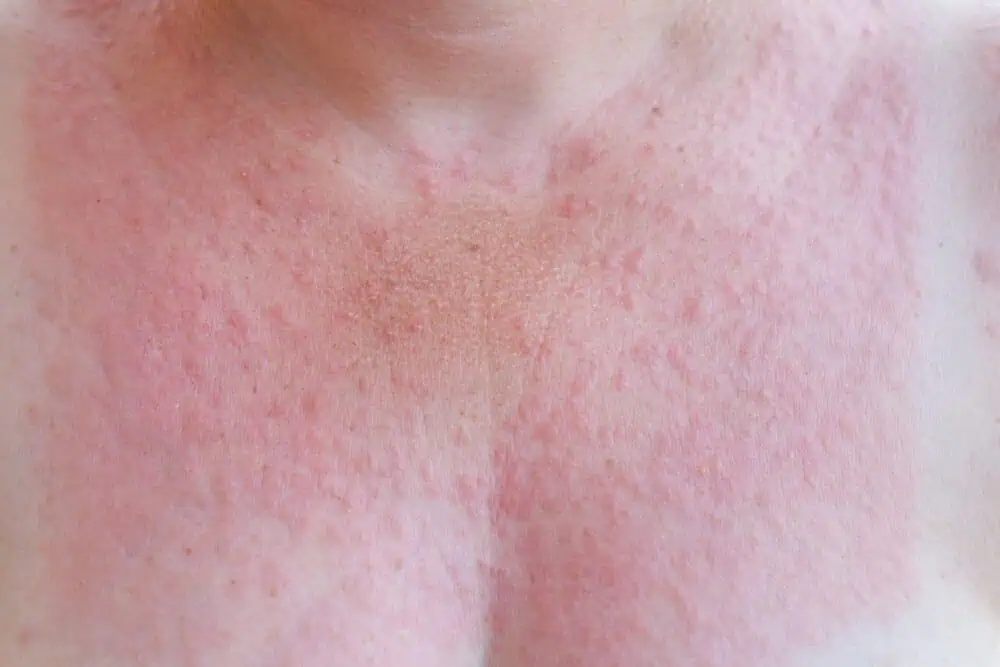
Urticaria (hives) are localized, pale, itchy, pink wheals (swellings) that can burn or sting. They may occur singularly or in groups on any part of the skin. They are part of an allergic reaction and are very common.
About 10-20% of the population will have at least one episode of hives in their lifetime. Most episodes of hives disappear quickly in a few days to a few weeks. Occasionally, a person will have them for many months or years. New hives may develop as old ones fade. Hives can vary in size and can form as small as a pencil eraser to as large as a dinner plate, and may join to form even larger swelling patches.
Hives are produced by blood plasma leaking through tiny gaps between the cells lining small blood vessels in the skin. Histamine is a chemical released from cells in the skin called mast cells, which lie along blood vessels.
Allergic reactions, chemicals in foods, or medications may cause hives. Sometimes it is impossible to find out the cause. When hives form around the eyes, lips, or genitals, the tissue may swell excessively, a condition known as angioedema. Although frightening, the swelling usually goes away in less than 24 hours. Severe cases of hives may cause difficulty in breathing or swallowing and emergency room care is required.
Urticaria - Hives FAQs
- Acute urticaria: Acute urticaria lasts less than six weeks. An underlying cause can be frequently identified and eliminated. The most common causes for acute urticaria are foods, drugs, or infections. Insect bites, internal diseases, pressure, cold, or sunlight also may be responsible.
- Chronic urticaria: Chronic urticaria lasts more than six weeks. The cause of chronic urticaria is more difficult to identify and is found only in a small percentage of patients. The dermatologist reviews a patient’s medical history, asks extensive questions, and conducts a thorough physical examination. Testing, such as blood work or a biopsy, may be necessary.
- Physical urticaria: Physical hives may be caused by sunlight, heat, cold, water, pressure, vibration, or exercise. Solar urticaria forms within minutes of sun exposure and typically fades within one to two hours. Cold urticaria appears when the skin is warmed after exposure to cold. Urticaria, which forms in response to the cold or the water when swimming, for example, can produce wheezing, flushing, generalized hives, and fainting.
- Dermatographic urticaria: Dermatographic urticaria or dermatographism forms after firmly stroking or scratching the skin, and can often occur with other forms of urticaria. It affects about 5% of the population. Most people with this condition are otherwise healthy. Dermatographism may last for months or even years.
Foods: The most common foods that cause hives are nuts, chocolate, shellfish, tomatoes, eggs, berries, and milk. Fresh foods cause hives more often than cooked foods. Food additives and preservatives can also cause hives.
Hives may appear within minutes to several hours after eating, depending upon the site within the digestive tract where the food is absorbed.
Drugs: Almost any prescription or over-the-counter medicine can cause hives. Antibiotics, pain medications, sedatives, tranquilizers, diuretics (water pills), diet supplements, antacids, arthritis medication, vitamins, herbal supplements, eyedrops and eardrops, laxatives, vaginal douches, or any other non-prescription item can be a potential cause of urticaria.
It is important to inform your Water’s Edge dermatologist of ALL prescription and over-the-counter medications you use to help uncover the cause of your urticaria outbreak.
Infections: Many infections can cause hives. Viral upper-respiratory tract infections (colds) are a common cause in children. Other viruses, including hepatitis and a number of bacterial and fungal infections, may cause urticaria.
Hives Treatment Options
The best hives treatment is to find and eliminate the cause whenever possible. Antihistamines are prescribed to provide relief and work best if taken on a regular schedule to prevent hives from forming.
There are many antihistamines available. No one antihistamine works for everyone. Your Water’s Edge Dermatology practitioner may use combinations of antihistamines and treatments to control hives. In severe cases, an injection of epinephrine (adrenaline) may be needed. Cortisone may also bring dramatic relief, but its use must be limited to short periods of time.