

How to Embrace Skinimalism, the ‘Less Is More’ Beauty Trend
Medical Review By: Heather Brew, PA-C
Sometimes less is more. Maybe we don’t need to hide our skin under makeup or follow a complicated skin care regimen involving a dozen different products. That’s the thinking behind skinimalism, a minimalist approach to skin care and makeup.
What exactly is skinimalism?
“I think it's about going back to the basics when caring for your skin, but also loving your skin and how it is in everyday life,” said Heather Freeman, PA-C, a board-certified physician assistant at Water’s Edge Dermatology. “I think it's avoiding multiple products and layers of makeup, and being true to your authentic self."
That all sounds well and good, and easier on the piggybank to boot, but how can you feel comfortable enough in your skin to pare down your beauty routine and kiss the heavy foundation goodbye? Freeman offered these tips.
Go back to the big three
Start by going back to basics. A basic skincare routine involves exactly three products: a facial cleanser, a moisturizer and sunscreen.
The cleanser removes dirt, makeup and oil and helps keep breakouts at bay. The moisturizer minimizes water loss, which protects skin from irritants in the environment. Broad-spectrum sunscreen guards against UV damage that can lead to premature aging and skin cancer. (Freeman likes zinc and titanium as active ingredients.)
To fight free radicals caused by sun exposure, also consider a cream or serum containing vitamin C. “I personally like to use a vitamin C serum first and apply my moisturizer on top, then sunscreen,” said Freeman. When it comes to vitamin C, she noted, “You don’t need much.”
From there, you can add products designed to address specific issues that bother you — but there’s value in not going overboard.
“With too many skin care products, we worry about ingredients interacting, and we worry about irritation,” said Freeman.
Signs your skin care routine might be overly elaborate include dryness, redness or burning. “Often, patients come in and I say, ‘You're really irritated, what are you using?’ and they list 20 things. I say, ‘Let's start from the basics again. Let's start with one product at a time to figure out what works best for you.”
Freeman likens using too many skin care products to taking too many medications: Not only are interactions an issue, but some people get overwhelmed and use them incorrectly.
In other cases, she noted, using a multitude of products does work. “Some people do great with a lot of products, as long as they know what they're used for and how to use them.”
Zero in on your skin issues
If you’re concealing your skin because of acne, rosacea, discoloration or some other issue, talk to a qualified skin care provider about what products and treatments to try.
The provider can suggest over-the-counter or prescription topicals that gradually smooth the skin’s texture and improve acne, acne scars and hyperpigmentation (dark spots), three common reasons women wear foundation.
A vitamin C serum, for example, may be ideal for overall texture issues, hyperpigmentation, age spots and fine lines. Prescription glycolic acid or hydroquinone products are used to fight more serious hyperpigmentation. Creams, cleansers, wipes and sprays containing salicylic acid can make pores appear smaller. Certain topicals work to tamp down rosacea symptoms.
A provider can also suggest in-office treatments to help your skin look better bare. A chemical peel, for example, makes skin smoother and softer while minimizing the look of fine lines and brown spots. “Chemical peels have come a long way in the last few years,” said Freeman. Multiple strengths let you choose how aggressive you want to be.
Laser treatments are another option for diminishing wrinkles, discoloration and scars and reducing the appearance of pores. Laser treatment for rosacea is often effective for persistent redness and visible veins.
Get a natural glow
Why use makeup that gives you the look of glowing skin when you can have glowing skin for real?
Start by keeping your skin well moisturized and choosing your moisturizer wisely. A moisturizer that contains hyaluronic acid can plump the skin and give you a fresh, dewy look. Or add a few drops of a hyaluronic acid serum to your regular moisturizer.
Vitamin C, green tea and caffeine are other go-to ingredients. This soothing green tea and witch hazel mist can refresh tired-looking skin and soothe irritation, including irritation from wearing a face mask (wash your face after removing the mask). This multitasking moisturizer, which contains green tea, caffeine and the antioxidant resveratrol, is helpful for calming inflammation as well as diminishing the look of fine lines and pores.
If a healthy glow is your main objective, also consider a chemical peel.
Remember, the goal of skinimalism isn’t flawless skin, it’s natural-looking skin you feel good about.
“People do have imperfections, but we can work through them,” said Freeman. “There are ways to make you feel better about your skin besides covering it with makeup.”
Finally, resist the urge to try every product getting raves on social media. “There are many influencers suggesting different products, and a lot of times they're getting paid to do it,” said Freeman. “Just because a product is trending doesn't mean it's right for everyone.”
Article Written By: Marianne Wait, an award-winning health and wellness writer based in New Jersey.

What Causes Itchy Skin at Night?
Medical review by Marianne Pineda, PA-C
How many times has this happened to you: You’re in bed, trying to wind down and drift into sleep, and suddenly your skin starts itching — maybe so much so that it’s hard to fall asleep or stay asleep.
You’re not alone. Itchy skin at night, which doctors call nocturnal pruritus, is fairly common. The causes are not completely understood, but these factors play a role.
Circadian rhythm
You can blame nocturnal itching in part on your body’s circadian rhythms. These are cycles that repeat every 24 hours, controlled by a “master clock” in the brain. Circadian rhythms influence sleepiness and wakefulness, hormonal activity, hunger, digestion and body temperature, among other things.
In the evening, the body releases more heat, and blood flow to the skin increases, which may contribute to nighttime itching. In addition, skin loses water at night, resulting in dryness that can make you itchy. That water loss is likely due to nighttime changes in the skin’s barrier function, which could also let in more irritants.
Inflammation may also play a role. At night, the body releases more cytokines, which are immune system proteins that create inflammation. This can cause itching or make itching worse. At the same time, the body’s production of corticosteroids, which tame inflammation, declines.
It’s also possible that you simply notice itching more when you’re in bed trying to sleep than when you’re busy and distracted during the day.
Health conditions
Itching related to certain health conditions can be worse at night.
Common skin conditions. These include psoriasis, eczema and dry skin. Older people are more susceptible to nighttime itching in part because the skin tends to dry out with age.
Mental health issues. Stress and anxiety can contribute to nighttime itching, as can depression and schizophrenia.
Infestations. Bed bugs, lice and scabies all cause itching, especially at night. Bed bugs feast when you’re in bed. Lice and scabies mites are also more active at night.
Hormones. Pregnancy, menopause and hyperthyroidism (too much thyroid hormone) or hypothyroidism (too little thyroid hormone) can contribute to nighttime itching.
Allergies. A food allergy could cause skin to itch at night.
Iron deficiency anemia. Some people with iron deficiency anemia have itchy skin. Other symptoms include tiredness, pale skin, shortness of breath and fast heartbeat.
Chronic idiopathic pruritus. This condition, whose name means chronic itching with no known cause, can be especially challenging because it can significantly worsen a person’s quality of life, and yet the best treatments remain unknown. A team that includes an allergist, an immunologist and a dermatologist can work together and order lab tests, such as blood tests and even chest X-rays, to identify possible underlying triggers.
In some cases, itching, including nighttime itching, can be a sign of a serious condition such as liver or kidney disease, HIV or certain cancers such as leukemia and lymphoma. It can also stem from nerve problems, such as diabetic neuropathy (nerve damage from diabetes), multiple sclerosis or shingles.
Opioids, used to treat serious pain, can also cause itching.
Home remedies for nighttime itching
Oftentimes, simple home remedies can ease the itching.
- Avoid caffeine and alcohol in the evening, since they widen blood vessels, which sends more blood to the skin.
- If you use a scented soap or deodorant soap, switch to a gentle, fragrance-free moisturizing soap or non-soap cleanser.
- Apply a fragrance-free, alcohol-free moisturizing lotion such as Cetaphil, Eucerin or CeraVe during the day and after bathing.
- Before bedtime, taking a lukewarm shower or bath (try adding colloidal oatmeal) or applying cool compresses to your skin can be helpful.
- Consider running a fan in your bedroom to distract you from the itch. Keep your bedroom cool (below 70°F), and use a humidifier if the air is too dry.
- Wear loose pajamas made of a soft material such as cotton or silk.
- If you think stress might be contributing to your itching, try yoga, meditation, stretching, deep breathing or progressive muscle relaxation before bed.
Scratching can make itching worse, but the urge to scratch can be hard to resist. If you can’t keep yourself from scratching, trim your fingernails and consider wearing cotton gloves to bed.
When to see a doctor
If your nighttime itching lasts longer than two weeks and home remedies don’t help, talk to your doctor. Itching that interferes with your sleep, affects your entire body or is accompanied by other symptoms such as fever, tiredness or weight loss should be evaluated.
Treatment depends on the cause of the itching. Your doctor may recommend over-the-counter medications such as corticosteroid cream, allergy medication or melatonin to help you sleep.
In some cases, prescription medication may be necessary. Options include stronger corticosteroid creams and pills, antidepressants that have a sedative effect, immunosuppressants (to reduce inflammation), hormone replacement therapy and various drugs that help treat insomnia and reduce anxiety or itching.
Written by Jessica Brown, a health and science writer/editor based in Brooklyn, New York. She has written for Prevention magazine, jnj.com, BCRF.org and many other outlets.
Lotion vs. Cream vs. Ointment: Which to Use When
Medical review by Jennifer Rivera, APRN
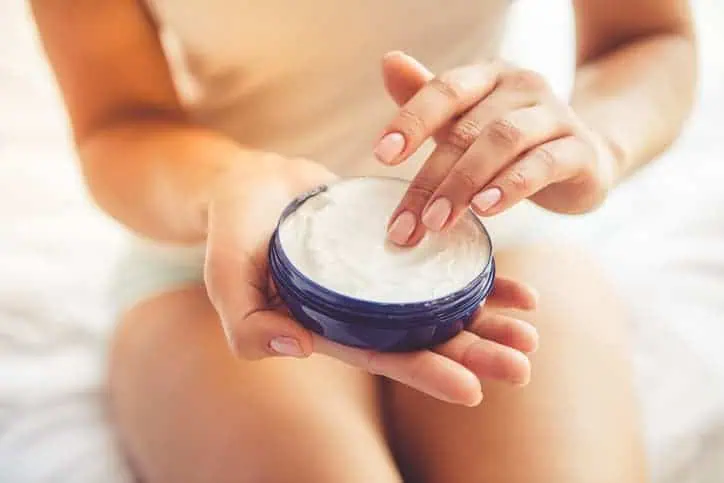
Creams, lotions, ointments — they’re all more or less the same, right? Wrong. If you use one moisturizing product for everything, you could be missing out on more effective treatment, whether you’re battling dry skin, oily skin, cracked heels, chapped lips, psoriasis, or other skin challenges.
To know when to use a lotion vs. a cream vs. an ointment helps to understand the differences. The ingredients vary, but all three are ultimately a combination of water and oil in different ratios. Those ratios determine how moisturizing they are, how well they prevent the body’s own moisture from evaporating from the skin, and how light or heavy they feel.
Lotion vs. cream
The main difference between a lotion and a cream is the water content, which also dictates the thickness.
Lotions
Lotions contain more water than creams and are, therefore, thinner. They are typically formulated with lightweight ingredients such as hyaluronic acid, which is hydrating and skin-plumping without leaving a residue or clogging pores, resulting in more frequent applications.
Uses: Lotion is best for people with normal to oily skin and those who live in warm, humid climates. Some lotions are oil-free. Lighter moisturizing ingredients, such as glycerin and hyaluronic acid, are used instead. These can be a good choice if you have acne-prone skin.
Tip: Because they contain more water, lotions require more preservatives. If your lotion irritates your skin, it could be the preservative. Try another brand, or switch to a cream. For best absorption, apply within 5 min of showering on slightly damp skin.
Recommended products:
- Elta MD UV Clear with Broad-Spectrum SPF 46 (Face: acne/rosacea/oily)
- Elta MD UV Daily Broad-Spectrum SPF 40 (Face: Normal/Combination)
- Wederm 15% Glycolic Body Lotion (body)
- Vanicream Moisturizing Lotion (face and body)
- Aveeno Daily Moisturizing Sheer Hydration Lotion (body)
- Eucerin Advanced Repair Lotion (Body and face)
Creams
Creams are thicker than lotions because they contain more oil — typically, they are composed of about half oil and half water. They also contain heavier ingredients, such as lanolin and shea butter. Creams absorb into the skin less rapidly than lotions. Most creams come in a jar or a squeeze tube versus a pump bottle.
In addition to emollients (fats and oils that soften skin) and/or humectants (substances that hydrate the skin by attracting water from deeper layers), some creams contain occlusives, heavy ingredients that form a film, or barrier between the skin and the environment, which prevents moisture from escaping.
Uses: Reach for cream if you have dry skin, sensitive skin or you live in a cold or dry climate. Creams are also helpful for rough spots such as the elbows and heels and for dry hands. Because the skin produces less natural oil with age, many anti-aging face moisturizers come in cream formulas. Products intended to treat skin conditions such as rashes and eczema are also often creams.
Tip: Creams that contain ceramides, such as CeraVe Moisturizing Cream, help shore up the skin’s barrier function. If you’re developing irritation from wearing a face mask, try applying a cream that contains a ceramide before you put your mask on.
Recommended products:
- Wederm Restorative Lipid Replenishing Cream (face)
- Olay Regenerist Ultra Rich Moisturizer (face)
- Eucerin Original Healing Cream (body)
- CeraVe Moisturizing Cream (body)
- Eucerin Advanced Repair Hand Cream (hands)
Balms
Balms are thicker than creams but not quite as thick as ointments. Unlike creams, they don’t contain water. Their texture is typically paste-like or waxy. Beeswax is a common ingredient.
Uses: Lip and foot balm are among the most common balms. Many anti-chafing and blister-blocking products are available as balms.
Tip: For men with dry skin, beard balm is a great way to keep the skin under a beard moisturized.
Recommended products:
- Aveeno Cracked Skin Relief CICA Balm
- Aveeno Eczema Therapy Itch Relief Balm
Ointment vs. cream
Creams are thicker than lotions, and ointments are thicker still, and greasier. An occlusive such as mineral oil or petrolatum (petroleum jelly) is the main ingredient. Medicated products such as topical antibiotics often come in ointment form because ointments stay on the skin longer.
Uses: Ointments are beneficial for very dry, chapped or cracked areas of skin, such as dry heels and psoriasis patches. The ointment is also a good choice for people whose hands are very dry and chapped due to frequent hand-washing. For dry, chapped lips, ointments keep moisture sealed in longer than waxes or balms do. An ointment may be applied to a minor wound before a bandage is placed on it to help seal in moisture, which aids in healing.
Tip: If you find ointments too greasy to use during the day, use a cream during the day and an ointment at night, under a pair of cotton gloves or socks. For extreme hydration, an ointment can be applied under occlusion with the guidance of your healthcare professional.
Recommended products:
- Aquaphor Healing Ointment
- Vaseline Healing Jelly Original
- Vanicream Moisturizing Ointment
- CeraVe Healing Ointment
- Vaseline Lip Therapy
- Neosporin Lip Health Overnight Renewal Therapy
Written by Jessica Brown, a health and science writer/editor based in Brooklyn, New York. Her work has appeared in Prevention, Johnson & Johnson, the Breast Cancer Research Foundation, and many more.
6 Home Remedies for Dry Skin on Feet
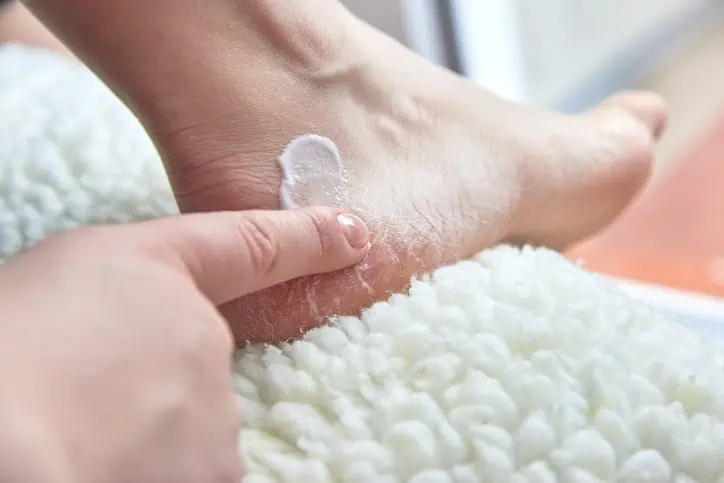
Why does it seem like no matter how much moisturizer you slather on your feet, they still look and feel as if you’ve been living in a desert? The skin on the feet has fewer oil glands to keep them hydrated, so it’s no wonder that trying to keep them soft and smooth can be rough going. That goes double if you suffer from hard, dry, cracked heels.
Dry, cold weather, standing for long periods, walking a lot, wearing shoes that are too tight and using harsh soaps can contribute to dry, cracked feet and heels. But so can skin conditions such as athlete’s foot, eczema and psoriasis. Diabetes can also cause changes in the feet that lead to dry, cracked foot skin.
For many people, the following six home remedies can help turn the skin on the feet from rough, dry and uncomfortable to smooth, hydrated and soft.
1. A Pumice Stone or Foot Scrub
Exfoliation gets rid of dry, dead skin, revealing the softer, smoother skin underneath. You can exfoliate using a pumice stone or an over-the-counter foot scrub, preferably after a shower, bath or foot soak in warm water (add a little Epsom salt for good measure), when the skin is soft. If you use a pumice stone, don’t be overly aggressive. Apply a moisturizing cream when you’re done.
Do not exfoliate your feet if you have sores or open wounds.
2. A Foot File or Rasp
A foot file is a tool with a handle and an abrasive metal surface that mechanically exfoliates the skin. Some foot files look like cheese graters. These may be too rough on the feet and in most cases should only be used on calloused heels, if at all.
Like pumice stones, foot files are best used after a bath, shower, or foot soak, when the skin has been softened. An electronic foot file with a head that spins is another option, especially for removing hard, dead skin from the heels. These are typically used on your feet when they are dry, but some waterproof models can be used in the shower.
3. Foot Cream or Heel Balm
For seriously dry feet, skip the lotion. Lotions contain a lot of water and aren’t as moisturizing as creams and ointments. Consider buying a cream or balm designed specifically for feet or heels. These are typically thicker and may contain softening and exfoliating ingredients such as alpha hydroxy acid, salicylic acid, hyaluronic acid, lactic acid or urea. Regular use helps prevent cracked heels.
At night, apply a heavy moisturizing cream, a foot cream or a thin layer of petroleum jelly to your feet and wear cotton socks to lock in the moisture and keep your sheets clean.
4. Moisturizing Gel Socks or Heel Socks
Available online, moisturizing foot socks or heel socks, also called heel sleeves, can give you the effects of moisturizer-plus-cotton-socks without the mess. They’re designed with a hydrating gel lining. Wear them for a few hours a day or while you sleep.
5. Foot Peel Masks
Foot peel masks are the latest internet sensation. These bootie-shaped sheet masks are worn for an hour, then discarded. In a week or more, dead skin will begin peeling off in large patches, revealing baby-soft skin beneath.
6. Liquid Bandage
If you have deep cracks in your heels, consider applying a liquid bandage, which is not a bandage at all, but a spray. These products form a seal over cracks, making walking less painful and closing the entryway for dirt and bacteria.
If these home treatments for dry, cracked skin on your feet aren’t working, see a Water's Edge dermatologist or podiatrist. The provider can examine your feet, determine whether any health conditions may be playing a role and develop an effective treatment plan.
ADVISORY: If you have diabetes, avoid home remedies until speaking with your doctor about the dry skin on your feet. If you suspect you may have athlete’s foot, see a dermatologist or your primary care physician. In addition to dryness on the bottoms or sides of your feet and cracking of the skin, symptoms of athlete’s foot include itching, burning, stinging, and flaking between the toes.
Article Written By: Jessica Brown is a health and science writer/editor based in Brooklyn, New York. Her work has appeared in Prevention, Johnson & Johnson, the Breast Cancer Research Foundation, and many more.

New Aging Hands Treatment at Water’s Edge Dermatology
Ever meet someone with enough "youthful glow", to be shocked when you see they have very visibly aging hands? Fact is, when you see noticeably aging hands on a middle-aged or younger person… it raises questions.
The cause could be genetic inheritance, too much sun exposure, dry skin, other skin problems, or a combination of all.
The key question is:
What's the most effective new treatment for aging hands?
Let’s face it. You can turn back the clock and get your youthful glow on with a variety of FDA-approved dermal fillers and injectable treatments. From Juvaderm and Scupltra, to Radiesse and Botox, you can shave years off the age showing in your face.
But then you reach out to shake someone’s hand, or give a wave. And your aging hands just do not match the face. In fact, they look almost as sunken, wrinkly and veiny as Grandma’s… ouch.
That’s why our Director of Cosmetic Services Kimberly Van Keuren (R in photo) and Aesthetic Medicine specialist Dr. Bebe Pajo (center-photo) are so excited. They're excited for Water’s Edge Dermatology patients. Kimberly explains, “This new treatment for aging hands, Restylane Lyft, is a dream come true for many of our longtime cosmetic dermatology and aesthetic patients. It's just the kind of help with their aging hands that they’ve been longing and waiting for.”
That wait ends now, with Water's Edge Dermatology (WEderm), among the first dermatology practices nationwide chosen to perform Lyft treatments for aging hands. This new FDA-approved hyaluronic acid (HA) dermal filler has been carefully tested and approved for the correction of volume loss in aging hands.
Giving those aging hands an anti-aging LYFT
Restylane Lyft is the first and only hyaluronic acid dermal filler to receive FDA approval for treating an area other than the face. Dr. Pajo, WEderm’s nationally renowned “Top 20 Sculptra Injector”, elaborates:
“As we age, our hands begin to lose volume, resulting in the appearance of wrinkles, bones, bulging veins and visible tendons. Many of my patients ask what they can do about their aging hands, and I am pleased that we can now offer them an injectable hyaluronic acid treatment that works wonders. Now, their hands can complement rather than clash with the youthful beauty of their face.”
The best thing about getting Restylane Lyft treatments for your aging hands at one of our many Water’s Edge Dermatology offices across South and Central Florida? As with all our cosmetic procedures and aesthetic treatments, your Lyft treatment for aging hands will be performed in a safe, comfortable medical setting.
If you’re ready to book an appointment, great! And if you have questions, please don’t hesitate to contact Cosmetic Director Kimberly for more information, at kvankeuren@wederm.com.
Latest Eczema Treatments Offer Hope for a Cure
Anyone searching for effective eczema treatments and dreaming of a cure knows, it can be an emotional roller coaster ride. When scientists identify a previously unknown outbreak trigger for what textbooks call atopic dermatitis, hopes rise. But it's hard to stay positive when the next painfully itchy flare-up strikes.
Although there are a number of eczema treatments already available and giving relief to many people, too many people still suffer. So researchers and scientists keep searching for new treatments, and better understanding of this common but still incurable skin disease.
The good news is that recent research does offer eczema sufferers hope for a future with itch-free, unbroken, healthy skin. In fact more than 40 studies are currently underway to find a cure. In the meantime, a couple of promising new eczema treatments are finally available.
Crisaborole: New Ointment for Eczema
Crisaborole (brand name Eucrisa) is a topical (locally applied), non-steroidal ointment. It’s meant to control the symptoms (itching, redness, inflammation, skin cracking/bleeding) of mild-to-moderate eczema, allowing skin to heal.
Being non-steroidal is a big plus for this promising new eczema treatment. While topical corticosteroid ointments can offer symptomatic relief, they can also have potentially dangerous side effects for some people after 3+ months of use.
After being proven safe and effective with less side effects in clinical trials, Crisaborole received FDA approval. This eczema treatment is intended for mild to moderate cases of the skin disorder, for patients aged 2 and older. It’s the first new topical eczema treatment that has been approved in more than a decade. Hopes are high that it will ease the suffering of millions worldwide.
Dupilumab: New Eczema Injection
Dupilumab (brand name Dupixent) is another promising new eczema treatment. It’s given by weekly or biweekly injection to individuals with uncontrolled, moderate-to-severe atopic dermatitis. This is a treatment only for adults, not for pediatric cases.
The hope is that people who have had no luck with topical treatments may now be able to benefit from these injections. And clinical trial results were promising. A large majority of trial participants saw a 50 percent or greater reduction in the severity of their eczema. Even more encouraging is that a healthy number of them are now enjoying almost completely clear skin.
Time will tell, but just the availability of an alternative to topical creams and ointments is a major step forward in eczema treatment.
New Understanding, New Hope for a Cure
Efforts to finally find a cure for atopic dermatitis have been in progress all over the world for years. Still no cure. But a big breakthrough last year can only help the cause moving forward.
Researchers at Newcastle University in England appear to have found a causative factor to explain why people get eczema in the first place. It seems to come down to a deficiency in levels of the human protein called fillagrin.
According to a Newcastle team spokesman, "We have shown for the first time that loss of the filaggrin protein alone is sufficient to alter key proteins and pathways involved in triggering eczema. This research reinforces the importance of filaggrin deficiency leading to problems with the barrier function in the skin and predisposing someone to eczema."
Needless to say, that discovery is lighting a fire under researchers around the globe. Much of their work can now thankfully focus on addressing the root cause of the disease, and finding a cure. Experts agree that as a result, prospects for a cure have never been better.
The maddening question that nobody can answer is of course...When?
Until we have an answer, know that the new (and some of the older) eczema treatments can still provide great symptomatic relief for many people. It’s just a question of partnering with a great dermatologist near you, and finding out what will work best for your particular skin, and your specific case of atopic dermatitis.