
What Is a PRP Facial and What Can it Do For Your Skin?
Medical review by Emmanuel Loucas, MD
Is your skin in need of a little rejuvenation? If you’re looking to brighten a dull complexion, tighten sagging skin or lessen the appearance of scars, wrinkles or sun damage, a relatively new treatment called a PRP facial, popularly known as a vampire facial, could be just the ticket.
What is a PRP facial?
PRP stands for platelet-rich plasma. In a PRP facial, plasma is taken from your own blood and then injected into your skin. That plasma is rich in platelets that contain proteins called growth factors.
“These growth factors stimulate fibroblasts, which are cells in the skin that produce collagen,” said Emmanuel Loucas, MD, a board-certified dermatologist at Water’s Edge Dermatology. “When you get PRP therapy, new collagen forms and plumps the skin, making it smoother and minimizing the appearance of fine lines, wrinkles and scars.” PRP therapy also boosts production of elastin, which increases skin’s elasticity.
PRP injections have been used for decades to help athletes heal from injuries. Only more recently have skin care providers begun using PRP injections for facial rejuvenation.
“Patients really like PRP therapy because it’s so natural,” said Dr. Loucas. “You’re being treated with platelets taken from your own blood.”
What to expect
When you arrive at your appointment, the doctor will draw 1 to 2 ounces of blood by placing a needle in your arm. The needle contains a small amount of anticoagulant to prevent the blood from clotting, so it may sting a little, Dr. Loucas said.
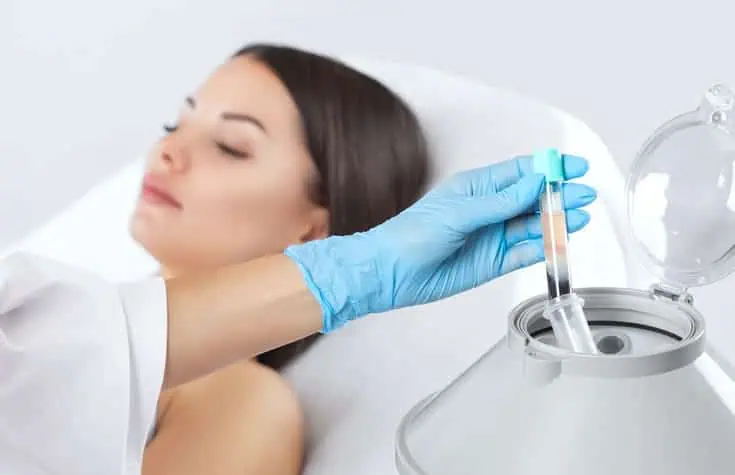
The blood is placed in a centrifuge to separate it into various components. The plasma rises to the top, and the lower part of the plasma layer, which is especially rich in platelets, is what is used for the injections.
The number of injections depends on the size of the area treated, but at least a couple of dozen injections with a small needle are typically needed for best results. Don’t worry, topical and injectable anesthetics can be used to minimize any discomfort.
Microneedling with PRP
In some cases, your provider may recommend adding microneedling to your treatment. Microneedling with PRP is performed by spreading the PRP on the skin and using a dermaroller (which resembles a mini paint roller coated with tiny needles) to create shallow pricks in the skin. The PRP enters the skin through these pricks. Microneedling on its own also boosts collagen production.
Some doctors use both injections and microneedling. “Combining the two approaches can lead to better results because you’re triggering collagen production in both the dermis [the thick layer of skin beneath the epidermis] and the epidermis,” Dr. Loucas explained.
PRP facial downtime
Recovery from a PRP facial is brief. The treated areas of skin may be a little red at first, but the redness fades in a few hours. You may experience minor swelling for a couple of days. Microneedling may also cause slight bruising, which clears up within four or five days.
How many treatments are needed?
A full course of PRP therapy is three treatment sessions spaced eight weeks apart. Improvement builds over time as collagen production increases. You’ll see the most improvement several weeks after you’ve had all three sessions, but many patients say they can see a difference after just one session, according to Dr. Loucas.
To maintain optimal results, consider undergoing maintenance treatments every six to 12 months.
The best candidates for PRP therapy
PRP facials work best when the skin still has a fair amount of collagen in it, said Dr. Loucas. “PRP isn’t very effective once the skin is very thin and has lost elasticity.”
Most people can safely undergo PRP treatments. Those who have severe inflammation in the area to be treated from a condition such as eczema or psoriasis should wait until the inflammation is cleared. People with a severe immune system disorder should talk with their doctor before undergoing treatment.
Possible risks and side effects
Because it uses your own plasma, PRP treatment is generally safe and well-tolerated. While there’s a risk of infection whenever you puncture the skin, the provider takes steps to minimize it. Other risks include injury to the blood vessels or nerves, calcification at the injection site and development of scar tissue.
When it comes to choosing a provider for your PRP facial, training and experience counts.
“There is an art to performing PRP therapy, so you really want to see a knowledgeable provider who won’t administer it robotically,” Dr. Loucas. “That way, you’ll get the best results for your money.”
Written by Jessica Brown, a health and science writer/editor based in Brooklyn, New York. She has written for Prevention magazine, jnj.com, BCRF.org and many other outlets.
Microneedling + Dermaplaning: Learn Why, When & Where
You may have heard the buzz about microneedling and dermaplaning. These are two terrific beauty treatments we perform with great regularity and success at all our Water’s Edge Dermatology locations that offer aesthetic treatments. The most common questions about these amazing aesthetic services are Why? and When?
Why choose microneedling and dermaplaning, as opposed to other aesthetic services? Why choose one vs. the other? And when is the right time to choose them?
To answer these and other questions, let’s take a closer look at both microneedling and dermaplaning. There are some very good reasons why they’re trending so heavily days, and not only with women.
Addressing an 'Age-Old' Problem with Microneedling & Dermaplaning Treatments
Do you feel a twinge of envy when you see someone with flawless, baby-smooth skin? Do you sigh when you look in the mirror? Fine lines, wrinkles, blemishes, scars, spots – almost everyone has them. With age, uneven texture and signs of sun damage are common. The skin loses collagen and elastin proteins, giving it the characteristic aged appearance. But smoother skin doesn’t have to remain a dream. Here are two minimally invasive procedures that can give you smoother, brighter, more youthful skin.
Microneedling To Turn Back Time
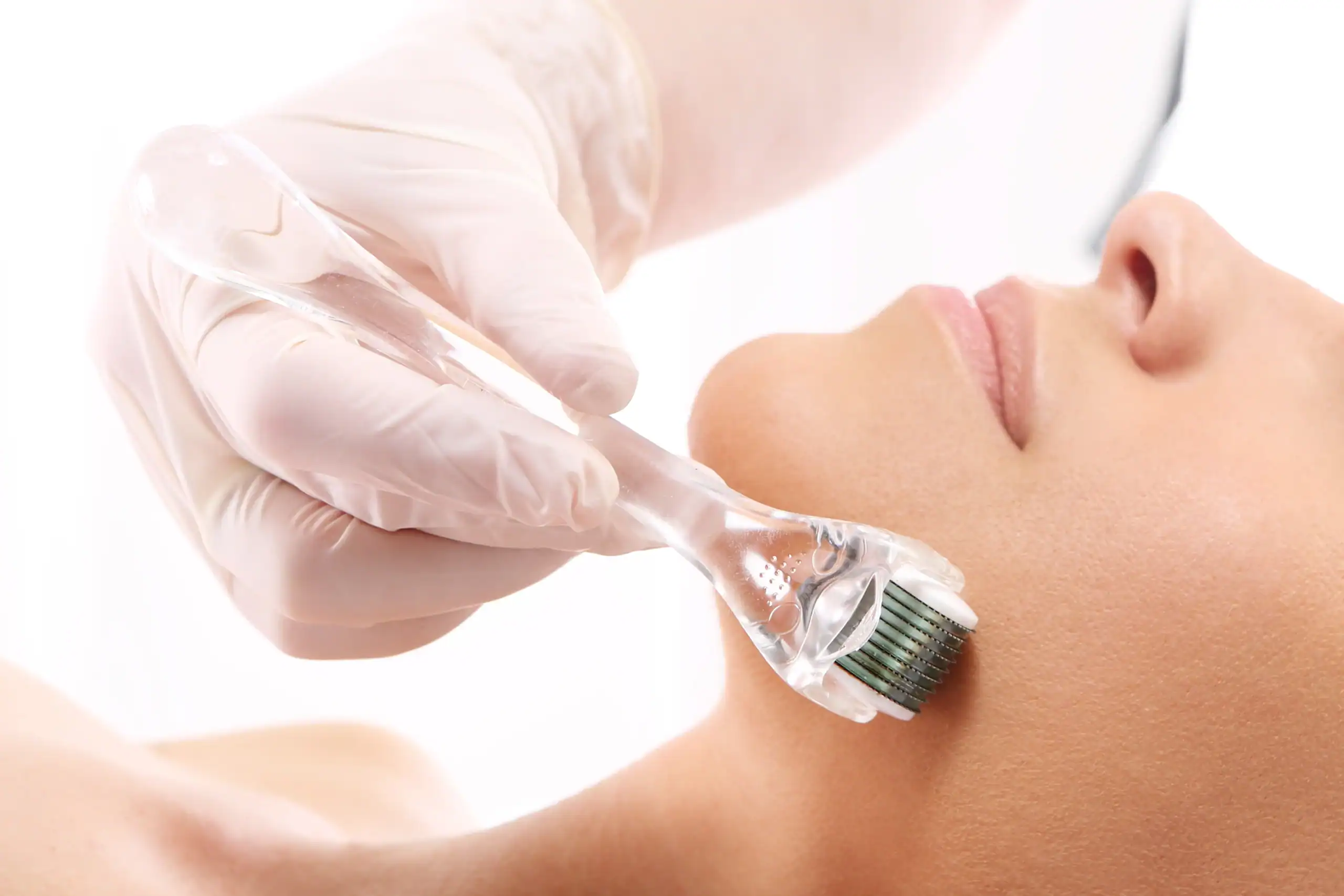
Microneedling involves piercing the top layer of your skin with a dermaroller. This small hand-held instrument is like a paint roller coated with tiny needles. It creates hundreds of little invisible punctures that jump-start the skin’s natural healing mechanisms.
That may sound a bit scary, but this in-office, minimally invasive procedure is virtually painless. Afterwards, you may have some mild swelling and slight bruising. If so, that all resolves within 2-3 days…revealing the beautiful new you underneath.
You’re probably wondering how puncturing the skin can be a good thing. Well you see, we know for sure that aging skin lacks collagen. And the microneedling punctures stimulate collagen production. That’s why it’s also called “collagen induction therapy”. An added benefit is that your skincare products penetrate and are absorbed better, after a microneedling session.
At a microneedling treatment session or two, you’ll notice a reduction in fine lines, deep wrinkles, and crow’s feet. Studies show that nearly 100% of people report excellent results on the anti-aging front.
And, microneedling treatments are also showing outstanding results in reducing the severity of acne scars following treatment. So whether it’s turning back the clock, helping clear old acne scars (or maybe both) … microneedling may be right for you.
Dermaplaning for Healthy, Radiant Skin
Have you ever wondered why your favorite exfoliating cleanser makes your skin look smoother? It’s because it scrapes off that lurking outer layer of dull, dead cells on the skin surface. Dermaplaning is essentially the same thing – exfoliation – but it’s extra-effective because it’s performed by a licensed, trained skincare professional using a sterile surgical-grade scalpel (if that sounds scary, think of it as a fancy razor!).
Dead skin cells and fine hairs need to go, because they make your complexion dull and flaky. They clog pores and predispose your skin to breakouts. Removing dead skin with dermaplaning can benefit all skin types (except people with active inflammatory acne), and restore that youthful glow you long for.
This is a noninvasive in-office procedure that gently shaves the skin surface. You’ll notice improved tone and texture – how does silky smooth skin sound? There’ll be a reduction in acne scars and hyperpigmentation. You’ll have less peach fuzz and your makeup will go on super smooth. Your skincare products will penetrate and work better. Periodic follow-up sessions will keep you glowing.
A dermaplaning treatment at one of our Water’s Edge Dermatology offices is painless and there’s virtually no downtime, other than some slight redness. So, you could get a treatment during your lunch break and head straight back to the office.
When it comes to beauty treatments such as dermaplaning and microneedling, remember that these are precision procedures. You don’t simply want to find "the best deal" and take your chances. You want to find the best facility.
Dermaplaning and microneedling treatments are best done by highly trained, experienced, licensed and insured aestheticians or dermatologists trained in cosmetic dermatology. That's how we do it at Water’s Edge Dermatology. For proper peace of mind, cosmetic procedures are best performed in the safety of a medical office setting.