
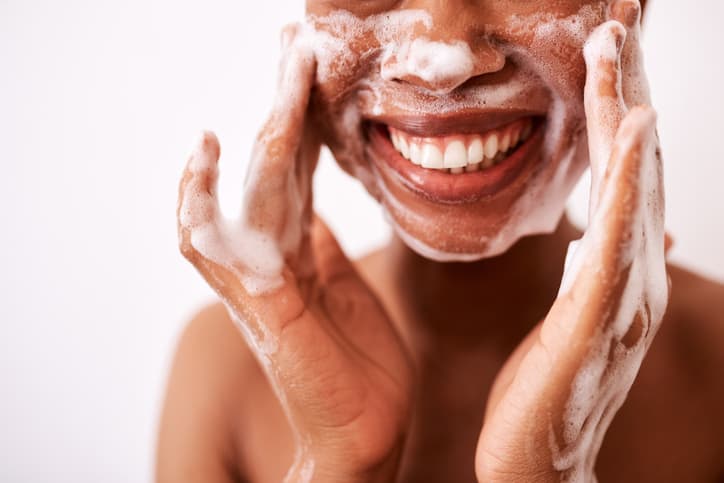
The Best Face Wash and Moisturizer for Oily Skin
Medical review by Beth Mitchell, PA-C
If your skin is oily and you’re constantly fighting shine, it can be tempting to go to extremes to get oiliness under control. Maybe you buy the most drying face wash you can find, or you’ve convinced yourself that you should never use moisturizer, regardless of how light it is. Your skin is already producing more than enough oil, so isn’t extra moisture the last thing you need?
Unfortunately, getting over-aggressive in the battle against oil can make skin even greasier.
“When you over-strip the oils from your skin, the skin tries to repair itself by producing more oil,” said Beth Mitchell, PA-C, a certified physician assistant at Water’s Edge Dermatology. “So you end up in a never-ending cycle in which your skin is either too oily or too dry.”
For many people with oily skin, skipping moisturizer is also a bad idea. Well-hydrated skin provides more protection against infections, chemicals, and everyday pollutants.
Keeping skin shine-free yet clean, well-hydrated, and free of blemishes and irritation takes the right face wash in combination with the right moisturizer.
Best face wash for oily skin
First things first: If you’re still buying the same oil-fighting cleanser you used when you were a teenager, it’s probably time to stop. Many of the cleansers marketed to teens to treat acne contain benzoyl peroxide, which is too harsh for adult skin.
“Benzoyl peroxide works well, but it’s very drying,” Mitchell said. “The typical adult patient who just has some oiliness in their T zone doesn’t need such an aggressive cleanser.”
Gentler ingredients that remove excess oil from pores include salicylic acid and glycolic acid. Salicylic acid is the more drying of the two, and it does a great job of killing some of the bacteria that can cause acne, Mitchell said. Glycolic acid is milder and is particularly effective at promoting cell turnover, which helps keep pores clear and discourages blemishes from forming. Many face cleansers for oily skin contain both of these acids.
To avoid over-drying your skin, look for a cleanser that contains 2% salicylic acid, which is the most common strength available over the counter. The ideal amount of glycolic acid a cleanser should contain ranges from 10% to 20%, and the percentage you should choose depends on what your skin can tolerate.
“Glycolic acid can cause some dryness and irritation, so if your skin isn’t accustomed to it or you have sensitive skin, I wouldn’t recommend buying a cleanser with 15% or 20% glycolic acid,” Mitchell said.
Signs your cleanser is too harsh include redness (particularly around the eye area) and flaking. If washing your face with an acid cleanser twice a day makes your skin a little too dry, consider using it only once a day and switching to a gentler option for the second wash.
Top face wash picks
Mitchell like these face washes for oily skin:
- Wederm Exfoliating Cleanser with salicylic acid and glycolic acid (available in two glycolic acid strengths)
- Neutrogena Oil-Free Acne Wash with salicylic acid
- CeraVe Acne Control Cleanser with salicylic acid
- La Roche-Posay Effaclar Medicated Gel Cleanser with salicylic acid
Gentler options she recommends if those are too drying:
- La Roche-Posay Toleriane Purifying Foaming Cleanser
- Cetaphil Pro Dermacontrol Oil Removing Foam Wash
Best moisturizer for oily skin
Does oily skin need moisturizer? In some cases, no. If you have very greasy skin, you may not need to use moisturizer, or at least not every day. But if you have combination skin or your skin is only mildly or moderately oily, it’s important to use a light moisturizer to keep your skin healthy. And if you’re using a harsh cleanser or an acne product that dries your skin, or you’re using makeup wipes throughout the day to combat oiliness, you may need a moisturizer to combat the dryness and irritation that can result.
Another benefit of using moisturizer: “Newer moisturizers contain a lot of ingredients that are really healthy for your skin, such as those that fight free radicals and UV damage,” said Mitchell.
The first rule of buying a moisturizer for oily skin: “Make sure the words ‘non comedogenic’ are on the label, which means the product won’t clog pores,” Mitchell said. “Don’t buy a moisturizer that just says ‘oil free’ because it may contain other ingredients that could cause breakouts.”
The right moisturizer for you depends on how oily you are. If your skin is moderately oily, look for a serum or water-based cream that contains hyaluronic acid, which is a very lightweight humectant. Humectants work by drawing moisture from the air into the upper layer of skin.
“People with oily skin are often nervous about putting anything on their face, but hyaluronic acid is very light,” Mitchell said. “It helps protect and repair your skin, which is particularly important for those with oily skin who may be using potentially irritating cleansers and scrubs.”
If your skin is less oily, choose a light lotion that contains ceramides. These are naturally occurring fats found in the skin that prevent moisture from evaporating.
“Ceramides help repair the skin barrier, which is what prevents invaders such as bacteria and viruses from entering the underlying structure of your skin and your organs,” Mitchell explained. “When the barrier is compromised, you’re more susceptible to infections and skin breakdown in general.”
Most moisturizing serums and lotions for oily skin are designed to be absorbed quickly, typically in about 10 minutes, so you don’t have to worry about looking shiny, she added.
Keep in mind that your skin may have different needs in different seasons. If you usually use a serum, for example, you might find you need to switch to a lotion in winter, when the air is drier.
Top moisturizer picks
Mitchell likes these face moisturizers for very oily skin:
- Wederm Pure Hydration Serum with hyaluronic acid
- La Roche-Posay Hyalu Pure Hyaluronic Acid Serum
- Neutrogena Hydro Boost Hydrating Serum with hyaluronic acid
For people with mildly or moderately oily skin, Mitchell recommends these moisturizers:
- CeraVe Daily Moisturizing Lotion with hyaluronic acid and ceramides
- Cetaphil Daily Oil-Free Hydrating Lotion with hyaluronic acid
Written by Jessica Brown, a health and science writer/editor based in Brooklyn, New York. She has written for Prevention magazine, jnj.com, BCRF.org, and many other outlets.
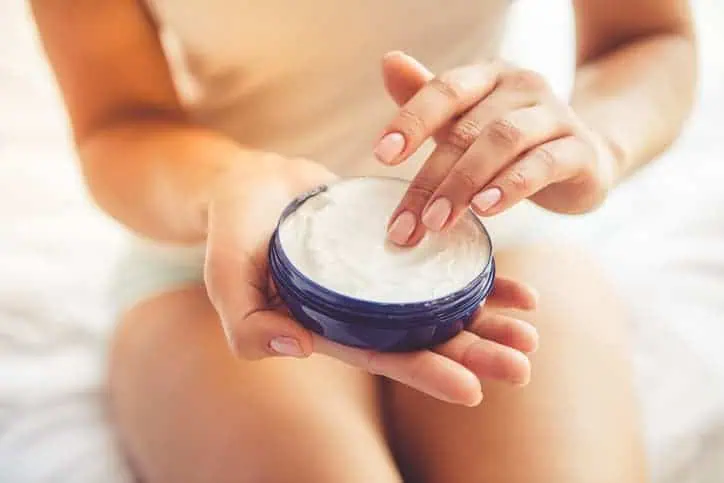
Lotion vs. Cream vs. Ointment: Which to Use When
Medical review by Jennifer Rivera, APRN
Creams, lotions, ointments — they’re all more or less the same, right? Wrong. If you use one moisturizing product for everything, you could be missing out on more effective treatment, whether you’re battling dry skin, oily skin, cracked heels, chapped lips, psoriasis, or other skin challenges.
To know when to use a lotion vs. a cream vs. an ointment helps to understand the differences. The ingredients vary, but all three are ultimately a combination of water and oil in different ratios. Those ratios determine how moisturizing they are, how well they prevent the body’s own moisture from evaporating from the skin, and how light or heavy they feel.
Lotion vs. cream
The main difference between a lotion and a cream is the water content, which also dictates the thickness.
Lotions
Lotions contain more water than creams and are, therefore, thinner. They are typically formulated with lightweight ingredients such as hyaluronic acid, which is hydrating and skin-plumping without leaving a residue or clogging pores, resulting in more frequent applications.
Uses: Lotion is best for people with normal to oily skin and those who live in warm, humid climates. Some lotions are oil-free. Lighter moisturizing ingredients, such as glycerin and hyaluronic acid, are used instead. These can be a good choice if you have acne-prone skin.
Tip: Because they contain more water, lotions require more preservatives. If your lotion irritates your skin, it could be the preservative. Try another brand, or switch to a cream. For best absorption, apply within 5 min of showering on slightly damp skin.
Recommended products:
- Elta MD UV Clear with Broad-Spectrum SPF 46 (Face: acne/rosacea/oily)
- Elta MD UV Daily Broad-Spectrum SPF 40 (Face: Normal/Combination)
- Wederm 15% Glycolic Body Lotion (body)
- Vanicream Moisturizing Lotion (face and body)
- Aveeno Daily Moisturizing Sheer Hydration Lotion (body)
- Eucerin Advanced Repair Lotion (Body and face)
Creams
Creams are thicker than lotions because they contain more oil — typically, they are composed of about half oil and half water. They also contain heavier ingredients, such as lanolin and shea butter. Creams absorb into the skin less rapidly than lotions. Most creams come in a jar or a squeeze tube versus a pump bottle.
In addition to emollients (fats and oils that soften skin) and/or humectants (substances that hydrate the skin by attracting water from deeper layers), some creams contain occlusives, heavy ingredients that form a film, or barrier between the skin and the environment, which prevents moisture from escaping.
Uses: Reach for cream if you have dry skin, sensitive skin or you live in a cold or dry climate. Creams are also helpful for rough spots such as the elbows and heels and for dry hands. Because the skin produces less natural oil with age, many anti-aging face moisturizers come in cream formulas. Products intended to treat skin conditions such as rashes and eczema are also often creams.
Tip: Creams that contain ceramides, such as CeraVe Moisturizing Cream, help shore up the skin’s barrier function. If you’re developing irritation from wearing a face mask, try applying a cream that contains a ceramide before you put your mask on.
Recommended products:
- Wederm Restorative Lipid Replenishing Cream (face)
- Olay Regenerist Ultra Rich Moisturizer (face)
- Eucerin Original Healing Cream (body)
- CeraVe Moisturizing Cream (body)
- Eucerin Advanced Repair Hand Cream (hands)
Balms
Balms are thicker than creams but not quite as thick as ointments. Unlike creams, they don’t contain water. Their texture is typically paste-like or waxy. Beeswax is a common ingredient.
Uses: Lip and foot balm are among the most common balms. Many anti-chafing and blister-blocking products are available as balms.
Tip: For men with dry skin, beard balm is a great way to keep the skin under a beard moisturized.
Recommended products:
- Aveeno Cracked Skin Relief CICA Balm
- Aveeno Eczema Therapy Itch Relief Balm
Ointment vs. cream
Creams are thicker than lotions, and ointments are thicker still, and greasier. An occlusive such as mineral oil or petrolatum (petroleum jelly) is the main ingredient. Medicated products such as topical antibiotics often come in ointment form because ointments stay on the skin longer.
Uses: Ointments are beneficial for very dry, chapped or cracked areas of skin, such as dry heels and psoriasis patches. The ointment is also a good choice for people whose hands are very dry and chapped due to frequent hand-washing. For dry, chapped lips, ointments keep moisture sealed in longer than waxes or balms do. An ointment may be applied to a minor wound before a bandage is placed on it to help seal in moisture, which aids in healing.
Tip: If you find ointments too greasy to use during the day, use a cream during the day and an ointment at night, under a pair of cotton gloves or socks. For extreme hydration, an ointment can be applied under occlusion with the guidance of your healthcare professional.
Recommended products:
- Aquaphor Healing Ointment
- Vaseline Healing Jelly Original
- Vanicream Moisturizing Ointment
- CeraVe Healing Ointment
- Vaseline Lip Therapy
- Neosporin Lip Health Overnight Renewal Therapy
Written by Jessica Brown, a health and science writer/editor based in Brooklyn, New York. Her work has appeared in Prevention, Johnson & Johnson, the Breast Cancer Research Foundation, and many more.