
Sunscreen Facts for Smarter Sun Safety
Medical review by Evelina Ingersoll, APRN
Most of us know enough to pack sunscreen before hitting the beach, spending the day at the lake or pool or working outdoors. But which sunscreen should you choose? How should you apply it and how much should you apply? And does it expire?
Read on for answers to frequently asked questions that will help you get the maximum protection from sunscreen.
Does everyone need to use sunscreen?
Yes. Overexposure to ultraviolet (UV) rays from the sun can cause sunburn, dark spots, leathery skin and skin cancer. The risk of developing skin cancer is higher if you have fair skin and burn easily, but anyone can get it, regardless of their skin tone or age. Even young people get melanoma, one of the deadliest types of skin cancer.
Many men are resistant to wearing sunscreen, but they need it too.
How does sunscreen work?
There are two basic types of sunscreens: chemical and mineral.
Chemical sunscreens sink into the skin and absorb the sun’s rays. Those rays are converted into heat, which is released from the body. Mineral sunscreens, also known as physical sunscreens, contain zinc oxide and/or titanium dioxide. They sit on top of the skin and work by deflecting the sun’s rays.
What is SPF and what SPF do I need?
SPF stands for sun protection factor. It’s a measure of how well the product protects against UVB rays (the burning rays). The higher the SPF, the more protection the product offers.
According to the FDA, it’s a common misconception that SPF relates to how much time it takes to get burned (for example, that SPF 15 means you can stay in the sun 15 times longer than you could without sunscreen before you get burned). It’s actually a measure of how much UV radiation it takes to produce a sunburn on protected skin.
The American Academy of Dermatology suggests using sunscreen with an SPF of at least 30, which blocks 97% of UVB rays. You can buy sunscreen with higher SPF, but no sunscreen blocks 100% of the sun’s rays. Also, a higher SPF doesn’t mean you can use less or reapply less often.
When do I need to use sunscreen?
Use it every day that you’ll be outside, however briefly. Sun damage can start after as little as 10 minutes, and the effects are cumulative. Even walking from the car to the office or store without sunscreen can add to the damage.
You’ll also want to wear sunscreen when you’re sitting indoors next to a window, when you’re in the car and when you’re on a plane or train if you have a window seat. Window glass filters some, but not all, UVA rays, which cause premature skin aging as well as skin cancer. (UVB rays, the “burning” rays, don’t pass through windows, which is why you can’t get sunburned through a window.)
RELATED: 4 Surprising Times You Need to Wear Sunscreen
Don’t save the sunscreen for warm, sunny days. Most of the sun’s UV rays pass through clouds. Snow, sand and water all reflect those rays.
How much sunscreen should I use on my body?
Squeeze strips of sunscreen along the lengths of your index finger and middle finger. This should be about the right amount to cover your face, neck and ears.
Don’t rely on the SPF in your moisturizer or makeup for sunscreen protection if you’ll be outside for any significant length of time. It’s unlikely that you can use enough or reapply often enough to get the benefit you’d get from a sunscreen with the same SPF.
Remember that lips get sunburned, too. Use a lip balm with an SPF of 30 or higher.
When should I apply sunscreen?
Chemical sunscreens don’t work until they have been absorbed into the skin, which can take 10 minutes or more. That’s why experts recommend applying sunscreen at least 15 minutes before going outside. Mineral sunscreen stays on top of the skin and starts working right away.
Apply sunscreen after applying your moisturizer, not before.
How often should I reapply sunscreen?
If you’re spending the day outdoors, reapply every two hours or after swimming, sweating or toweling off. Even water-resistant sunscreens can wear off or rub off; there are no totally waterproof sunscreens. Chemical sunscreens are typically more water-resistant than mineral sunscreens.
The FDA requires that sunscreen labels indicate when to reapply, after either 40 or 80 minutes when swimming or sweating.
How do I choose the best sunscreen?
The American Academy of Dermatology recommends that everyone choose sunscreen with:
- Broad-spectrum protection
- SPF 30 or higher
- Water resistance
Sunscreens labeled “broad spectrum” protect the skin from both UVA and UVB rays. Both rays can cause skin cancer.
Beyond these three factors, choosing the best sunscreen is a matter of personal preference. When it comes down to it, the best sunscreen is the one you’re most likely to use.
Lotions, creams and gels all work well. Creams are best for people with dry skin. Because they are thicker, they may be better for the face than lotions. You can also choose sunscreen made specifically for children, for sensitive skin or for faces. You can even use different types of sunscreen for different parts of the body.
Men may prefer a gel sunscreen for hairy areas such as the scalp or chest.
Does sunscreen spray work?
Sprays work only if you’re able to get full coverage, which can be tricky. Follow these tips:
- Hold the can close to your skin and spray generously.
- Rub the spray in, even if the label says you don’t need to. You can’t always tell where you’ve sprayed and where you haven’t.
- When using spray sunscreen for your face, spray it into your hands first, then apply it to your face. Spray sunscreen can irritate the eyes and the lungs if inhaled.
- Be careful when using spray sunscreen on a windy day. Even a slight breeze can redirect the spray, and you’ll end up unprotected.
- There’s also a greater chance of inhaling it or getting it in your eyes. (People nearby may also inhale it.)
- Don’t spray while smoking or near a grill or other source of fire. Aerosol sprays can be flammable.
Does sunscreen expire?
Yes, but it has a long shelf life. The FDA requires sunscreens to post an expiration date unless testing shows that the product will remain stable for at least three years.
Go by the expiration date. If there’s isn’t one, discard the product after three years. If you notice color or consistency changes, it’s best to replace it.
Does sunscreen interfere with vitamin D absorption?
Our bodies produce vitamin D from sunlight that strikes our skin, so daily use of sunscreen may result in decreased vitamin D production. More studies are needed, but most research to date shows no association between sunscreen use and vitamin D deficiency in healthy people.
If you’re concerned about getting enough vitamin D, have a conversation with your doctor. You can get more vitamin D through your diet or dietary supplements.
Does it matter where I store my sunscreen?
Yes. Keep it out of direct sun. If you’re on the beach or by the pool, wrap it in a towel or keep it in the shade. On the hottest days, keep it in your cooler if you have one.
Written by Ann Pietrangelo, an author and freelance writer specializing in health and wellness.

Why EltaMD Sunscreen Is One of the Best Sunscreens for Your Face
Medical Review By: Evelina Ingersoll, APRN
You may have a go-to brand of sunscreen you buy year after year, or perhaps you choose whatever is most affordable at the drugstore. But have you ever wondered if the sunscreen you use is the best one for your skin or your health?
News that the FDA is investigating the safety of certain ingredients in chemical sunscreen has driven more people to consider mineral sunscreen. These sit on top of the skin and act as a physical barrier against UV rays. They don’t penetrate the skin as chemical sunscreens do. One brand in particular has become a top choice of many dermatologists and consumers alike: EltaMD sunscreen.
What’s behind its popularity?
"EltaMD sunscreens are more natural than chemical sunscreens, and they’re an exceptionally good choice for people with sensitive skin and those who have conditions such as acne and rosacea,” says Evelina Ingersoll, APRN, a certified advanced practice registered nurse at Water’s Edge Dermatology.
“When we give our patients free samples of EltaMD sunscreen, they love it so much that they almost always come back a week later to buy the full-size product,” said Ingersoll.
No white residue
Many mineral sunscreens give skin a white cast, which turns some people away.
"The minute you say ‘zinc oxide,’ which is the base of EltaMD sunscreen and other mineral sunscreens, people start to groan," said Ingersoll. "They picture a thick, sticky paste that’s hard to apply and leaves noticeable residue on their face. And it’s true that some mineral sunscreens are like that."
EltaMD sunscreens are an exception, Ingersoll noted. “They are lightweight and transparent, which is great for anyone, but especially for people with dark skin, who may have avoided mineral sunscreen in the past.” Their lighter, smoother texture also means they look good under makeup.
Less irritation
Several ingredients in chemical sunscreens can aggravate sensitive skin and certain skin conditions, such as rosacea. “Oxybenzone is notorious for this,” Ingersoll said.
EltaMD sunscreens don’t contain irritating ingredients or additives such as fragrance, another common trigger of skin reactions. The lack of fragrance also makes EltaMD sunscreens a good choice for anyone who shies away from sunscreen because they dislike the smell.
Free of suspect chemicals
Zinc oxide is “generally recognized as safe” (GRAS) by the FDA when it’s used in sunscreen. That’s not currently the case for chemical sunscreen ingredients. The FDA has asked for additional safety data on a handful of them to make sure they don’t pose a threat to human health.
Among those ingredients is oxybenzone. The American Academy of Pediatrics recommends that parents avoid using sunscreen containing it on their children. “The concern is that we know very little about the kind of effects that oxybenzone and other hormone-disrupting chemicals could have on children’s small bodies,” Ingersoll said.
EltaMD sunscreen is also free of parabens, which are preservatives commonly found in cosmetic products. Some research suggests they may mimic the effects of estrogen in the body and could potentially trigger the growth of certain types of breast cancer cells.
An acne-friendly choice
EltaMD sunscreens are noncomedogenic, meaning they’re unlikely to clog pores.
“This sets them apart because other mineral sunscreens are quite heavy and can block your pores,” Ingersoll said. She recommends EltaMD UV Clear Broad-Spectrum SPF 46 to acne patients. It contains niacinamide (vitamin B3).
“Niacinamide is a very helpful ingredient because it helps treat acne and the skin discolorations it can cause,” she explained. “It also reduces redness, which is a common problem for people with acne.”
Better-looking skin
A sunscreen’s job is to protect your skin from UVA and UVB rays that cause cancer and premature skin aging. Every broad-spectrum sunscreen does this, provided you apply enough and choose one with a high enough SPF. But some contain “bonus ingredients” that can boost hydration and make your skin look more youthful.
Many EltaMD sunscreens include hyaluronic acid, which is particularly effective in maintaining skin’s moisture and giving you a dewy look. EltaMD UV Restore Broad-Spectrum SPF 40 features vitamin C and vitamin E, antioxidants that fight skin-aging free radicals.
Wearing a broad-spectrum sunscreen, no matter which one, is critical to reducing the risk of skin cancer. EltaMD sunscreens do cost more than drugstore brands, but if there’s room in your budget, dermatologists say they’re a smart investment.
“When you consider how much these sunscreens do, they’re definitely worth the price,” said Ingersoll.
Article Written By: Jessica Brown, a health and science writer/editor based in Brooklyn, New York. She has written for Prevention magazine, jnj.com, BCRF.org and many other outlets.
Medical Review By: Evelina Ingersoll, APRN
Mineral vs. Chemical Sunscreen: Which Is Best?
Medical Review By: Evelina Ingersoll, APRN
You’ve probably heard that when it comes to buying sunscreen, you should choose one that provides broad-spectrum protection (to guard against both UVA and UVB rays) and has SPF 30 or more. But when it comes to mineral vs. chemical sunscreen, which is the smarter option?
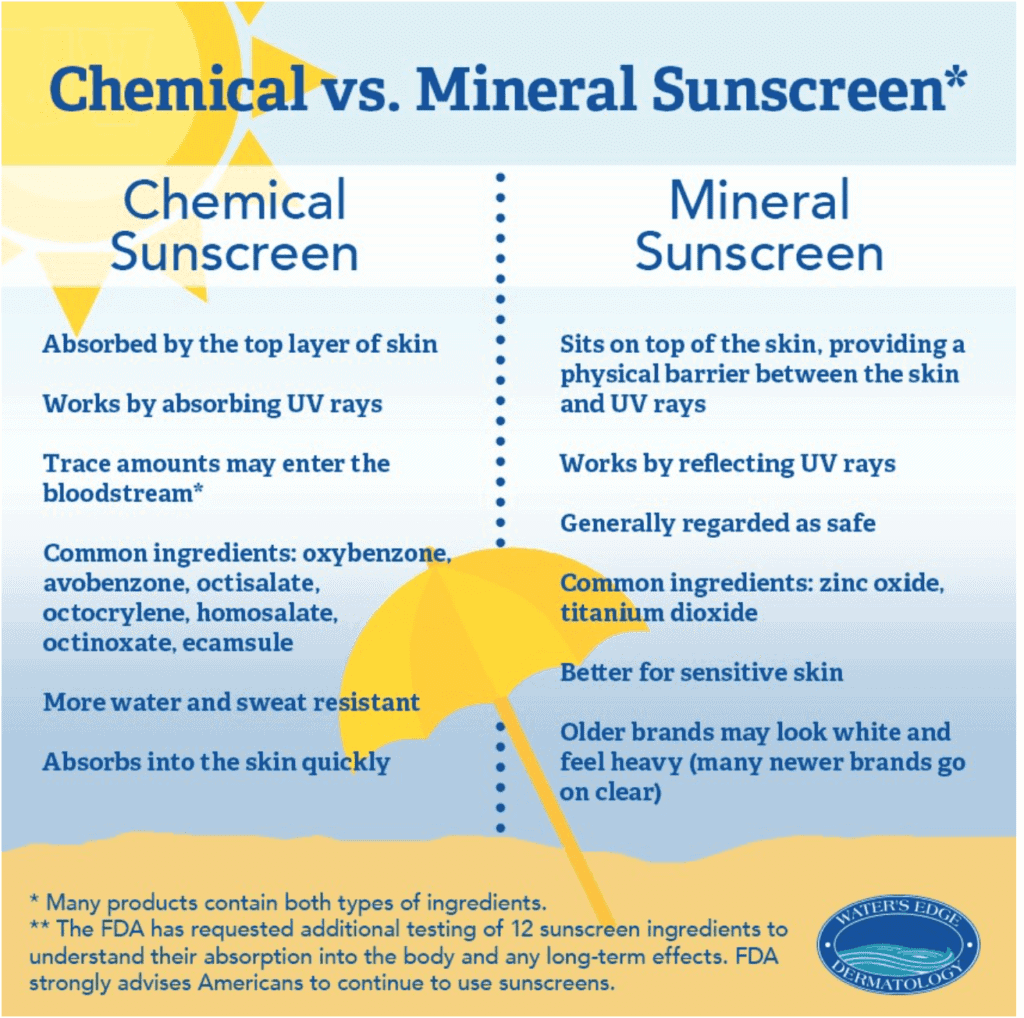
Many or most of the sunscreens you find at the store are chemical sunscreens, which penetrate the skin. They work by absorbing UV rays and converting them to a small amount of heat, which the body releases.
Mineral sunscreens, also called physical sunscreens, sit on top of the skin. They work by blocking and reflecting the sun’s rays.
Both types offer protection against sunburn, premature aging, and skin cancer, so it comes down to a personal choice. To decide what’s best for you, consider the facts below. Keep in mind that some sunscreens contain both chemical and mineral ingredients.
Ingredients
Chemical sunscreens contain one or more chemicals, such as oxybenzone, avobenzone, octisalate, octocrylene, homosalate, and octinoxate. Mineral sunscreen contains titanium dioxide and/or zinc oxide.
Because chemical sunscreens take time to sink into your skin, you should apply them15 to 30 minutes before going outside. “Otherwise, you could get burned while the sunscreen is being absorbed,” said Evelina Ingersoll, APRN, a certified advanced practice registered nurse at Water’s Edge Dermatology. Mineral sunscreen is effective right away.
The main concern with chemical sunscreens is their ability to enter the bloodstream.
One pilot study conducted by FDA scientists tested four chemical sunscreens and found that all of the chemicals tested (avobenzone, oxybenzone, octocrylene, and ecamsule) were absorbed into the blood at levels higher than those the FDA recommends for chemicals that have not been tested for toxicity. Oxybenzone showed up in the blood in far higher concentrations than the other ingredients.
More research is needed to confirm the study results and determine what effects, if any, absorption might have on a person’s health. Meanwhile, the FDA stresses that people should continue to use sunscreen and follow other sun safety practices, such as wearing protective clothing, hats, and sunglasses.
If you’re concerned about the potential risks of chemical sunscreen, mineral sunscreen may be the way to go. Titanium dioxide and zinc oxide are the only two sunscreen ingredients that currently meet the FDA’s criteria for “generally recognized as safe and effective.”
“Mineral sunscreen is also a good choice if your skin is sensitive or you’re prone to acne or rosacea, since some chemical sunscreens can cause irritation or breakouts,” said Ingersoll.
Environmental Friendliness
Mineral sunscreen is considered to be safer for the planet. Some chemical sunscreens contain ingredients, including oxybenzone, octinoxate, and octocrylene, that can be harmful to marine life and coral reefs. These chemicals may be released into the ocean when you swim, and they can enter waterways when you wash off your sunscreen during your shower.
For these reasons, the National Ocean Service recommends using mineral sunscreen if you plan to swim in the ocean. And it’s a must if you live in or travel to Hawaii. That state has banned the sale and distribution of chemical sunscreens to help protect the environment.
Look and Feel
Chemical sunscreens are typically thinner and tend to go on more easily. Most don’t turn the skin white. Mineral sunscreens may feel heavier, but on the upside, they are more moisturizing.
Mineral sunscreens can be chalky and give the skin a white cast, depending on the product — think of lifeguards with white noses. But newer, more advanced formulas don’t leave a thick residue. Some are tinted, making them a particularly good choice for people with darker skin.
Water Resistance
Most mineral sunscreens are less water-resistant than chemical sunscreens. If you sweat a lot or swim, you’ll need to reapply mineral sunscreen more often.
Price
Some people may prefer chemical sunscreens because they’re usually less expensive than mineral ones. However, as mineral sunscreen grows in popularity, it’s becoming easier to find more affordable options. Several popular drugstore brands, including Neutrogena, Cetaphil, Coppertone, and Aveeno, now offer mineral sunscreens.
Whatever sunscreen you choose, the key to getting the protection you need is this, said Ingersoll: “Wear it every day, reapply it often, and use enough. Most people use less than half of the recommended amount.”
Written By: Jessica Brown, a health and science writer/editor based in Brooklyn, New York. She has written for Prevention magazine, jnj.com, BCRF.org and many other outlets.
What Does Lip Cancer Look Like?
Medical Review By: Thomas Pham, MD
Your lips are important for lots of things, including chewing and kissing. While the occasional cold sore or cause of chapped lips is annoying, lip cancer is another story entirely.
Lip cancer in its early stages is hard to notice, but that’s when it’s most treatable. By the time a lip tumor becomes obvious, cancer requires more invasive treatment, and it may spread to other parts of your body.
If you get a lot of sun exposure, or you smoke, chew tobacco, or drink heavily, it’s time to learn how to spot it.
Types of lip cancer
Lip cancer usually takes the form of squamous cell carcinoma. This type of cancer occurs in the squamous cells, which are thin, flat cells found in the middle and outer layers of the skin. Squamous cell cancer of the lip is much more aggressive than squamous cell cancer found in other places of the skin. It’s more likely to spread to the head and neck and harder to treat.
Much less frequently, lip cancer is melanoma, one of the deadliest types of cancer.
Lip cancer symptoms
The lower lip is more vulnerable to lip cancer because it gets more sun exposure than the upper lip. Symptoms to watch for include:
- A sore, ulcer or lesion on your lip that doesn’t heal (a cold sore, unlike lip cancer, does heal)
- A lump or thickened area on the lip
- Whitish or reddish patches on the lip
- Lip pain, bleeding or numbness
- A lump in your neck or swollen glands
- Jaw swelling or tightness
A precancerous condition that can lead to squamous cell cancer of the lip is actinic cheilitis. Symptoms include:
- Scaly whitish patches on the lip
- Dryness or peeling that won’t heal
- A rough, sandpapery texture
- Blurring of the border between the lip and the adjacent skin
- Loss of color in the skin of the lip
- Swelling or redness of the lip
Who gets lip cancer?
UV radiation from spending a lot of time in the sun or using tanning beds is the leading cause of lip cancer. Certain habits, such as smoking or chewing tobacco and excessive drinking, also increase the risk.
Other risk factors for lip cancer include having a weakened immune system, having fair skin, being over 40 years old, and being infected with certain strains of human papillomavirus (particularly strains 16 and 18). Lip cancer is more common in men, possibly because they are more likely to work outdoors and less likely to use lip balm with SPF. They may also be more likely to have smoked or consumed too much alcohol in the past.
Recent research suggests that taking hydrochlorothiazide, a diuretic, is strongly associated with an increased risk of developing lip cancer. This drug is used alone or in combination with other medications to treat high blood pressure.
Lip cancer treatment
Lip cancer is usually curable; most people survive it and have a good outcome after treatment.
The doctor may recommend Mohs surgery to remove the tumor. In this procedure, the surgeon gradually removes layers of the tumor and a small amount of tissue surrounding it, checking each layer for cancer cells. The surgery ends when cancer cells can no longer be detected under a microscope. Mohs surgery lets surgeons identify and remove tiny roots of cancer, which helps prevent it from spreading to other parts of the body.
Advanced cases are usually treated by an ear, nose, and throat doctor (ENT). Radiation and/or chemotherapy may be used in conjunction with surgery. In rare cases, radiation “seed” therapy is used to treat patients who opt out of surgery. Reconstructive surgery may be necessary to repair the lip.
Protect your lips by following these tips:
Wear lip balm with SPF. Choose a lip balm with an SPF of at least 30 and wear it whenever you go outside. A wide-brimmed hat is also a good idea.
Don’t use tanning beds. Indoor tanning isn’t any safer for your skin than lying in the sun.
Limit or quit smoking and drinking. This is especially important if you drink and also smoke. These habits together put you at much higher risk for lip cancer than either habit alone.
See your dentist regularly. Dentists are often the ones to detect lip cancer, so keep up with routine cleanings and exams.
If you notice any unusual changes in your lip when you look in the mirror, don’t panic. But if something looks or feels different and the problem doesn’t resolve quickly, call your dermatologist ASAP. Treating lip cancer early means less risk of spoiling your smile.
Article Written By: Jessica Brown, a health and science writer/editor based in Brooklyn, New York. She has written for Prevention magazine, jnj.com, BCRF.org, and many other outlets.

4 Surprising Times You Need to Wear Sunscreen
Medical review by Tanya Sperber, APRN
You know you’re supposed to wear sunscreen every day, even on cloudy days and in winter, but there are times when you probably wouldn’t think to bother with it. For example, what’s the point if you’re going to spend most of your day in your office?
Surprise! You can be exposed to ultraviolet (UV) rays in some common places that aren’t exactly outdoors. Over time, this exposure may contribute to an increased risk of wrinkles and skin cancer.
Prepare to slather on sun protection when you find yourself in the following situations.
Sitting by a window
Windows protect you from the sun’s rays, right? Yes and no. Glass blocks most UVB rays, the ones that cause sunburn. That’s why many people assume it’s fine to sit by a sunny window without wearing sunscreen. But according to the Skin Cancer Foundation, more than 50% of UVA rays, which are the main cause of premature aging and also contribute to some skin cancers, pass through glass.
If you’re sitting next to a window, or even if you’re a few feet away from it, it’s a good idea to wear sunscreen. For maximum protection, choose a broad-spectrum sunscreen with an SPF of 30 or higher.
"The best way to incorporate sunscreen in your regimen is to find one you love," said Tanya Sperber, APRN, a board-certified advanced practice registered nurse with Water's Edge Dermatology. "Elta MD Elements is a lightweight tinted sunscreen women can apply everyday prior to applying makeup. This sunscreen provides all the benefits of a physical barrier sunscreen without feeling heavy on the skin, apply makeup over or just apply sunscreen and go. A great non-tinted option for men is Elta MD Sheer - it works well for men with facial hair, rubs in completely and if you’re not sweating or swimming, you’re protected all day with a barrier zinc sunscreen."
If your desk or favorite perch is near a window, consider installing UV-blocking window film for extra protection. These block up to 99.9% of UV radiation and are available in a variety of tints. You can have window film professionally installed or buy it at a home improvement store and install it yourself.
Driving your car
Does the left side of your face have more wrinkles or age spots than the right? Driving may be the reason.
While the windshield of your car blocks most UVA (and UVB) rays, your side windows may provide less protection. A 2016 study found that while windshields in a car blocked an average of 96% of UVA radiation, the side windows blocked an average of just 71%.
The difference is due to the types of glass. Windshields are made of two plates of glass with a layer of plastic between to make them shatterproof. Side windows don’t have that plastic layer, which is what provides most of the windshield’s UVA protection.
Experts suspect that weaker UVA protection from side windows may help explain why skin cancer is more common on the left side of the body. So, if you have a daily commute or spend long periods of time in a car, wear sunscreen. Do so even if the side windows are tinted, since the level of UVA protection that tinted windows provide varies. Remember to apply it to your arms, hands, and face.
Keep the sunscreen handy, but don’t store it in the car. The heat that gets trapped in the car can break down the chemicals in sunscreen and make it less effective.
You can also protect yourself by installing UV-blocking window film on your car’s side windows.
Traveling by plane
If you find yourself in a window seat on your next flight, you’ll need more than your boarding pass before takeoff: You’ll need a thorough application of sunscreen, too.
At 30,000 feet, the sun is much stronger than at ground level, and windows on planes (and buses and trains) may not provide adequate protection from UVA rays.
While the risk of sun damage and skin cancer appears to be higher for pilots and flight crew members than passengers, it’s still smart to wear sunscreen when you fly. Just remember that the Transportation Safety Administration currently allows no more than 3.4 ounces of sunscreen in a carry-on.
Getting a gel manicure
Love gel manicures? You’re not alone. Gels make manicures last longer compared to nail polish, but they have to be set using nail lamps that emit high-intensity UVA light.
The risk of UV damage and skin cancer from the lamps, if any, is probably low. A recent review of medical literature did not find evidence of an increased risk of skin cancer in people under 40 who’ve had gel manicures. Still, the American Academy of Dermatology suggests applying sunscreen to your hands protect yourself. If you prefer, you can wear dark, opaque gloves with the fingertips snipped off.
If you get gel manicures regularly, consider saving them for special occasions.
Written by Jessica Brown, a health and science writer/editor based in Brooklyn, New York. She has written for Prevention magazine, jnj.com, BCRF.org and many other outlets.

Protecting Lighter-Toned Skin from Skin Cancer
St. Patrick’s Day is a great time to remind everyone with lighter-toned skin to take extra precautions in the sun to protect yourself from skin cancer. Most skin cancers develop on areas of the skin that get years of sun exposure, like the face, neck, ears, forearms, hands, and trunk. Basal cell carcinomas and squamous cell carcinomas are the most common, but melanomas are the deadliest. Here’s a quick rundown of the most common skin cancers and what to look for.
Basal cell carcinoma (BCC) looks like a flesh-colored, pearl-like bump, or pinkish patch of skin. BCC frequently develops in people who have light skin, but it can occur in people with dark skin. With early treatment, this type of cancer can be cured. Left untreated, BCC can cause bleeding and severe damage, which can be disfiguring.
Squamous cell carcinoma (SCC) can look like a red scaly patch, raised, firm bump, or a sore that heals and re-opens. People who have light skin are most likely to develop SCC, but it can develop in dark-skinned people, especially those who have scarring.
With early detection and proper treatment, SCC also has a high cure rate. Left untreated, SCC can also be disfiguring. In rare cases, untreated SCC can spread to other areas of the body and can be deadly.
Melanoma may develop in a mole or it can appear on the skin as a new, dark spot. Sometimes melanoma contains shades of red, blue, or white. When found early, melanoma often can be cured. Left untreated, melanoma can spread to other areas of the body and be deadly. In fact, one person dies of melanoma every hour.
Sun Protection Tips
Sun protection helps prevent skin damage and wrinkles, and reduces the risk of developing skin cancer. Newer broad-spectrum sunscreens contain products to block both UVA and UVB rays. To be effective, sunscreen should be reapplied at least every two hours.
The American Academy of Dermatology (AAD) recommends that you seek shade when possible. Avoid sunbathing, wear a wide-brimmed hat, sunglasses, and protective clothing. A typical white tee shirt has an SPF of 3. Colorless dyes that increase the SPF of fabrics to an SPF of 30 are available as laundry products. If you must be in the sun, use a broad-spectrum sunscreen with a sun protection factor (SPF) of at least 30, even on cloudy days.
Melanoma Mondays in May
Mark your calendars for May. We’ll be sharing a wealth of information on protecting your and your family’s skin from the deadliest form of skin cancer. We’ll be giving away t-shirts with UV protection on Facebook and running a “Get Naked…It Saved My Life” promotion with lots of tips on protecting your skin right before the active summer season starts.
Do you have a suspicious spot on your skin that you are concerned about? Water’s Edge Dermatology recommends that everyone have regular skin cancer screenings from a board-certified dermatologist, especially in sunny Florida. Schedule an appointment today and enjoy peace of mind. Click here to request an appointment or call 877.533.8214.
Spotting Skin Cancer
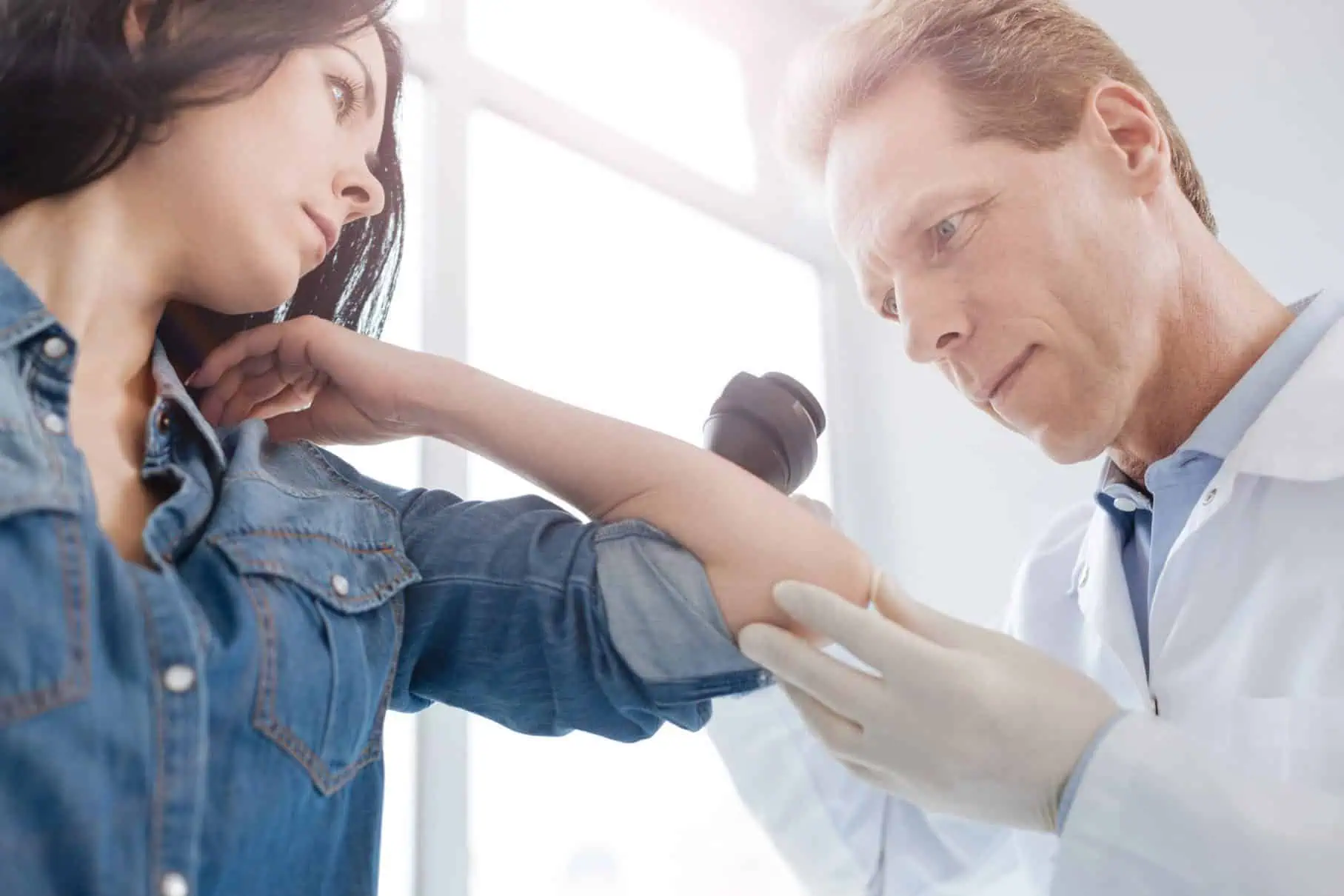
Have you ever looked at a spot on your skin and asked yourself, “Should I be concerned about that?” Most of us have. At Water’s Edge Dermatology, we want to help make everyone smarter about skin cancer diagnosis and treatment.
Skin cancer is the most common cancer in the United States. Early detection is vital. When diagnosed early, skin cancer treatment has a high success rate. Though most skin cancer occurs on the outside of your body, it can appear anywhere – from your scalp to between your toes and even the bottoms of your feet and under your nails.
The American Academy of Dermatology encourages everyone to conduct regular skin self-exams. That way you can be aware of any changes in your skin over time. If possible, have a partner do a skin check with you and help you examine hard-to-see areas like your scalp and back.
What skin cancer looks like
Skin cancer can appear on the body in different ways and can look like:
- A changing mole or mole that appears different from your other moles
- A dome-shaped growth
- A scaly patch
- A non-healing sore or sore that heals and comes back
- A brown or black streak under a finger or toenail
Dermatologists sum it up this way: If you notice a spot on your skin that differs from the others, changes, itches or bleeds, you see your dermatologist and have it checked out.
But I don’t feel sick
You can have skin cancer and feel just fine. In fact, most people who find a suspicious spot on their skin or a streak under a nail report that they don’t feel ill. If you notice a suspicious-looking spot, make an appointment with your Water's Edge Dermatology provider. Remember, when diagnosed early, skin cancer treatment is highly successful. If it is allowed time to grow, treatment can become more difficult.
There are three main types of skin cancer: basal cell carcinoma, squamous cell carcinoma, and melanoma. Basal cell and squamous cell carcinomas are quite common and generally not life-threatening. Often, they can be treated using non-surgical methods such as Electron Beam Therapy. MOHS surgery is sometimes recommended depending on the size and location of the skin cancer.
Melanoma is a more serious type of skin cancer, though when detected early, melanoma is also highly treatable. People with an increased risk of melanoma, including men older than 50, people with more than 50 moles or large or unusual moles, people with fair skin, and those with a history of cancer, should talk to a dermatologist about how often they should schedule a skin exam from their practitioner.
What will the dermatologist do?
When you see your dermatologist for a suspicious spot, the provider will first examine the area. If it looks like it could be skin cancer, your dermatologist will remove all or part of it as part of a skin biopsy. A biopsy of the suspicious growth is the only way to diagnose skin cancer.
The biopsy is reviewed under a microscope by a dermapathologist to see if cancer cells are present. If cancer cells are identified, the biopsy report explain what type of skin cancer cells were found. Following a skin cancer diagnosis, your dermatologist can recommend the best skin cancer treatment for you.
If no cancer cells are found, the biopsy report will explain what was found under the microscope.
Water’s Edge Dermatology recommends that everyone have skin cancer screenings from a board-certified dermatologist, especially in sunny Florida. Schedule an appointment today and enjoy peace of mind. Click here to request an appointment or call 877.533.8214.
Non-Surgical Electron Beam Therapy for Skin Cancer at Water’s Edge
Skin cancer is the most common cancer in the U.S., and it is estimated that one in five Americans will develop skin cancer in their lifetime. Nearly 9,500 Americans are diagnosed with skin cancer every day, totaling nearly 3 million people. The two most common kinds of skin cancer are basal cell carcinoma and squamous cell carcinoma, which are also sometimes called nonmelanoma skin cancer. Rates of skin cancer are on the rise, with women experiencing the greatest increase in skin cancer numbers.
Basal cell carcinoma
The most common of all cancers, basal cell carcinoma accounts for more than 90 percent of all skin cancers in the U.S. It is a slow-growing cancer that is unlikely to spread to other parts of the body. Basal cell carcinoma has increased in recent years due to sunbathing and use of tanning salons. Though rarely fatal, it’s important to catch it in early stages. Look for pink bumps with these features:
- Pearly or waxy appearance
- Sunken center
- Irregular blood vessels on the surface
- A tendency to bleed easily after injury
Squamous cell carcinoma
Squamous cell carcinoma also rarely spreads but does so more often than basal cell carcinoma. It is the second most common skin cancer. Also, rarely deadly, it may spread to nearby tissue or recur if not caught early. Look for:
- Raised, dull-red skin lesion
- Thick-crusted scale
- Ulcerated appearance
Additional warning signs
Both basal and squamous cell cancers commonly develop on areas of the skin that are exposed to the sun. These include the head, face, neck, hands, and arms. The development of an actinic keratosis is an early warning sign of skin cancer. This is a precancerous skin lesion that may appear pink or red in color and rough or scaly and may become larger if not treated.
Non-surgical treatment with Electron Beam Therapy
These cancers often can be treated without surgery using a type of radiation called Electronic Beam Therapy (EBT). EBT is a state-of-the-art treatment that is particularly helpful for treating cancers near the eyes, ears, nose or lips. EBT is also recommended for patients who have other medical issues that make surgery less desirable.
EBT uses a very thin, non-penetrating electron beam to destroy cancer cells in the targeted area while allowing protection of healthy cells. EBT doesn’t go any deeper than the skin, which helps limit any side effects to organs and body tissue.
EBT is painless. Each treatment lasts only a few minutes. For most patients, treatment involves two to six weeks of daily EBT, depending on the size and location of cancer. Patients experience little to no discomfort, and side effects are typically limited to the treatment site. Best of all, EBT delivers a 90 to 98 percent cure rate, depending on the location of the skin cancer.
Water’s Edge Dermatology offers EBT in several of our offices, including:
Enjoy peace of mind and request an appointment today for a skin cancer screening. Request an appointment.

Tips for Preventing Skin Cancer
Did you know that one in five Americans will develop skin cancer in their lifetime? Skin cancer is the most common type of cancer, and when caught early, it is also the most treatable. For those who work outside or participate in regular outdoor activities, covering up and choosing the right sunscreen can help prevent skin cancer.
Most people know that sunscreen is your best tool to lower the risk of skin cancer, especially the deadliest form, melanoma, as well as reduce skin aging caused by the sun. But did you know that it’s all about the right sunscreen and how you use it?
What to Look For
The American Academy of Dermatology recommends that consumers choose a sunscreen product with the following qualities:
- Broad spectrum – Broad spectrum sunscreen protects the skin from both ultraviolet A (also known as UVA) and ultraviolet B (also known as UVB) rays because both can cause skin cancer.
- SPF 15 or higher – The SPF rating indicates how well a sunscreen will protect you from sunburn. SPF 15 is effective in blocking harmful UVB rays for most people. If you are fair skinned, have a family history of skin cancer, or conditions such as lupus that increase sensitivity to sunlight, consider SPF 30 or higher.
- Key ingredients - Ecamsule, avobenzone, oxybenzone, titanium dioxide, sulisobenzone, or zinc oxide. These ingredients block UVA rays.
How to Apply & How Often
While choosing the best sunscreen is important, using it correctly is something a lot of people are confused about. One ounce of sunscreen, which is enough to fill a shot glass, is considered the right amount. Cover all exposed areas of the body thoroughly. Don’t skimp. Many people don’t use enough sunscreen.
Apply sunscreen 15 to 30 minutes before going out in the sun. Don’t forget the tips of the ears, feet, back of the legs, and bald spot if you have one. Reapply sunscreen every two hours. Use a UV-protective lip balm to protect your lips.
If you are going to be exercising or in the water, it’s a good idea to get a sunscreen that is resistant to water and sweat. The FDA defines water resistant to mean that the SPF level stays effective after 40 minutes in the water. Very water resistant means it is effective after 80 minutes of swimming. These sunscreens are not waterproof, so you’ll need to reapply regularly.
Additional Protection
It’s important to wear sunscreen whenever you are outside during daylight hours. Even on an overcast day, 80 percent of the dangerous UV rays make it through. Even in winter months, exposure to the sun can damage your skin. Though vitally important, sunscreen will not fully protect your skin from the sun’s rays, so also consider these additional precautions to protect your skin from sun damage:
- Stay in the shade when you can.
- Wear sunglasses to protect your eyes, preferably with polarized lenses.
- Stay inside between 10 and 4 when the UV levels are the highest.
- Wear a hat and cover up with sun-protective clothing.
Skin is the largest barrier against infection that we have. Keeping your skin healthy and shielding it from the harmful rays of the sun can help you look younger and prevent skin cancer. So, play it safe and smart – screen up!
Click here to request an appointment with Water’s Edge Dermatology.