
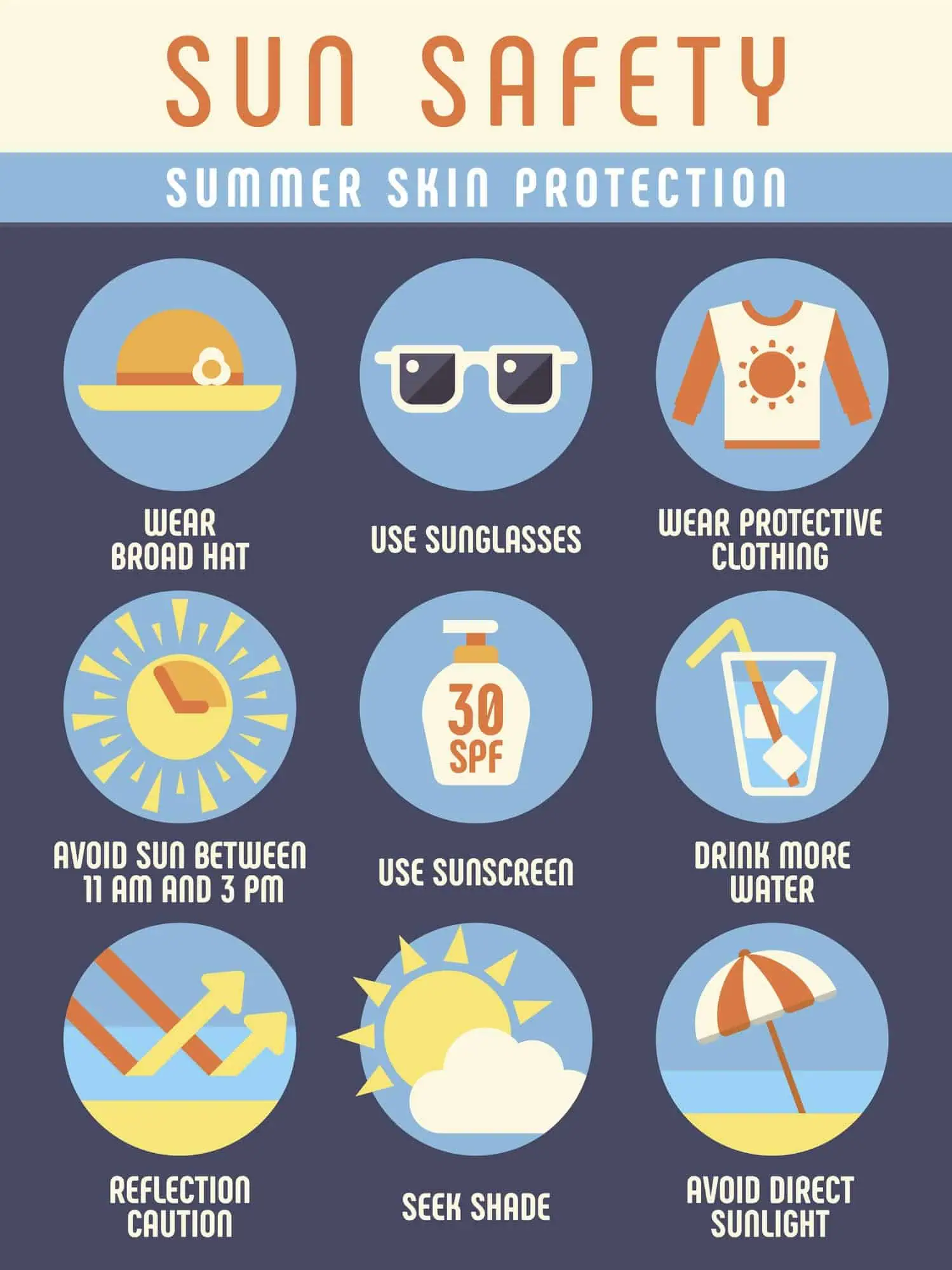
Sun Safety Infographic

Sun Safety

Summertime is fun time to spend outdoors. But in sunny Florida, that means more exposure to the sun’s ultraviolet (UV) rays. Those UV rays can damage unprotected skin in as little as 15 minutes and even lead to skin cancer. Here are some tips to keep you sun safe all year long.

Seek Shade

One of the easiest ways to reduce your exposure to damaging UV rays is to get in the shade. Seek shade under a tree, umbrella or another shelter in order to reduce your risk of sun damage. You’ll help your skin look younger longer and lower your risk of developing skin cancer.

Protective Clothing

Cover up with long-sleeved shirts and long pants when you can to protect your skin from the sun’s harsh UV rays. There are clothing options available that contain a UV protectant built into the fabric. Also, remember that a wet t-shirt provides less UV protection than a dry one, and darker colored clothing protects better than light-colored clothing. Don’t forget to top it off with a hat with a brim all the way around that shades your face, ears, and back of the neck. If you choose a baseball cap instead, be sure to protect your ears and the back of your neck with sunscreen of at least 30 SPF.

Sunglasses

Choose sunglasses that are labeled UV protectant to reduce the risk of developing cataracts. Most of the sunglasses sold in the U.S. block both UVA and UVB rays. Sunglasses also protect the skin around your eyes from sun damage, and wrap-around sunglasses are an excellent option to block UV rays that might sneak in from the side.

Wear Sunscreen

Choosing the right sunscreen can be daunting, so we recommend following these four rules to make it easier:

  1. Broad-spectrum – Broad-spectrum sunscreen protects the skin from both ultraviolet A (also known as UVA) and ultraviolet B (also known as UVB) rays. Both of these rays can cause skin cancer.
  2. SPF 30 or higher – The sun protection factor (SPF) rating indicates how well a sunscreen protects you from the sun by blocking harmful UVB rays. Choose a sunscreen with SPF 30 or higher to make sure you are protected.
  3. Key ingredients – Look for active ingredients like ecamsule, avobenzone, titanium dioxide, sulisobenzone or zinc oxide. Beware of products that include oxybenzone or octinoxate which are harmful to the environment. Some areas of Florida have banned the sale of sunscreen with oxybenzone and octinoxate because these chemicals can damage coral reefs.
  4. Avoid tanning oils – They generally do not provide enough protection against the harmful effects of the sun.

How to Apply Sunscreen & How Often

To get the maximum protection from your sunscreen, follow these recommendations:

  • One ounce of sunscreen is considered the right amount. Cover all exposed areas of the body thoroughly. Don’t skimp. Many people don’t use enough sunscreen.
  • Apply sunscreen 15 to 30 minutes before going in the sun. Don’t forget the tips of the ears, feet, back of the legs and bald spot (if you have one). Reapply sunscreen every two hours and use a UV-protective lip balm to cover your lips.
  • If you are exercising or are in the water, it’s a good idea to get a sunscreen that is resistant to water and sweat. The FDA defines water resistant to mean that the SPF level stays effective after 40 minutes in the water. Very water-resistant means it is effective after 80 minutes of swimming. These sunscreens are not waterproof, so reapply regularly.

Protecting your skin from the harmful rays of the sun can help you look younger and prevent skin cancer. Just to be on the safe side, be sure to get a skin cancer screening every year, so if you do develop skin cancer, it can be detected and treated early.

Schedule a skin cancer screening at your nearest Water’s Edge Dermatology office.


The Top 3 Winter Skincare Tips

Winter is coming. And with the changing of seasons, it's time to change your skin care routine. While the chill of the season may bring a rosy glow to many a cheek, the low temperatures and harsh winds may incite dry skin, increased acne, irritation, eczema, and other averse skin conditions.

And it's not just the cold temperatures — when you crank up the heat in your home, that dries your skin out, too.

"As soon as you turn the heat on indoors, the skin starts to dry out," Bonnie LaPlante, an esthetician with the Canyon Ranch resort in Lenox, Mass., told WebMD in an interview. "It doesn't matter if you heat your home using oil, wood, or electricity. The skin gets dry."

If you want to avoid the winter skin blues, follow these 3 winter skin tips for a glowing complexion.

Get the Help of a Professional

Finding the best skin care products at a pharmacy or drug store can be difficult when you don't have a specialist to aid your quest. Many products, such as exfoliants and ones containing salicylic acid, retinoids, or benzyl peroxide, can be extremely drying, and take a toll on already-dry skin. Instead of taking a chance, visit a dermatologist either in-person, or schedule a teledermatology session. Teledermatology services are becoming increasingly popular, and have a success rate of 91% for those who use them. These professionals will be able to assess your skin and tell you exactly what products you should be using.

Moisturize, Moisturize, Moisturize

Believe it or not, acne worsens when your skin is dry, making it more irritated and inflamed. And what many of the 50 million acne sufferers in America don't understand is that skin needs oil to be healthy. Because of this, it's important to keep moisturizing during the winter. Use an "ointment" moisturizer that will help to create a protective barrier on your skin.

Keep Your Sunscreen Routine

The cold doesn't automatically cancel out the danger of the sun's rays. And with one in five individuals in the US at risk of developing skin cancer in their lifetime, it's essential to slather on the sunscreen year-round. For women, try to use makeup and skincare products that contain at least 30 SPF for total coverage.


The Difference between Drug Store Sunscreen and EltaMD Products

Most people with acne, rosacea and sensitive skin have challenges with sunscreens because of the ingredients added to them. Zinc oxide and titanium oxide are what you want in a sunscreen for long and short UVA/UVB protection. Most products that offer this kind of protection are not aesthetically pleasing.

Top 4 Reasons to Choose EltaMD over a Drug Store Product

  1. EltaMD offers clear protection with antioxidants for additional protection.
  2. All of the EltaMD sunscreen have the highest possible protection from UVA and UVB rays with the safest natural materials. They avoid using harmful chemicals that can lead to irritation, damage the skin or penetrate the skin and are safe on children.
  3. EltaMD sunscreens are formulated with transparent zinc oxide and are noncomedogenic, sensitivity-free, fragrance-free and paraben-free and provide antioxidant protection.
  4. EltaMD products do not contain oxybenzone or avobenzone.

What are the top five reasons I believe everyone should wear sunscreen?

  1. The ozone layer is depleting and your body needs shielding from harmful rays.
  2. Skin cancer rates are on the rise and sunscreen has been proven to decrease the development of skin cancer.
  3.  It helps to prevent facial brown spots and skin discolorations.
  4.  It also helps to reduce the appearance of facial red veins and blotchiness.
  5.  It slows down the development of wrinkled, premature aging skin.