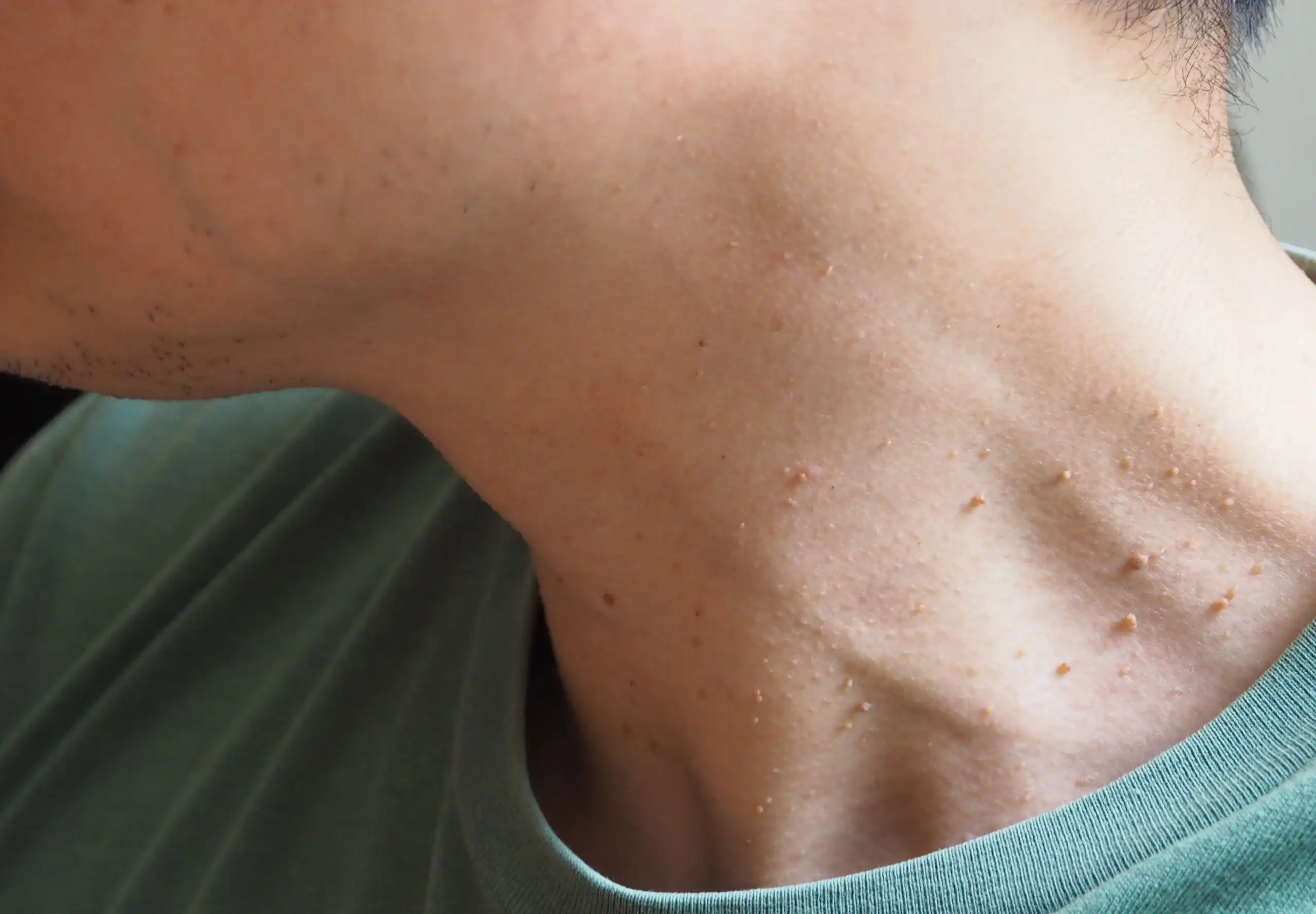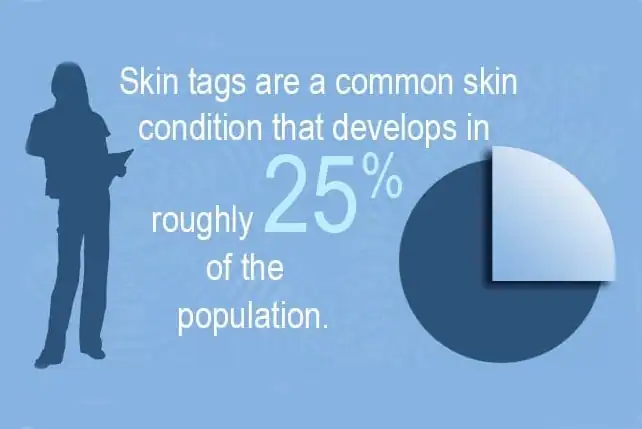
Skin tags are tiny, benign flaps of skin that typically are connected to the underlying skin by a thin stalk. They look like small pieces of hanging skin. They are not present at birth, but they commonly occur as we age. Scientists believe they are an inherited trait and therefore can run in families.
Skin Tag Removal
Skin tags are not harmful and usually do not require treatment, but sometimes can resemble other conditions like seborrheic keratosis (a noncancerous tumor), warts or molluscum contagiosum (a skin virus).
Water’s Edge Dermatology offers several options for treating skin tags, including:
- Surgical excision: Your Water’s Edge dermatologist will use sterile, surgical scissors to cut off the skin tag.
- Cryotherapy: The skin tag is frozen at the base with liquid nitrogen, causing the skin tag to fall off.
- Cauterization: Your skin tag will be burned off with a cautery, causing the skin tag to fall off while sealing the wound to prevent infection or bleeding.
- Ligation: A suture is tied around the base until the skin tag falls off.
A medical dermatologist should always perform skin tag treatment to prevent local infections or excess bleeding from occurring. Depending on the size, number, and location of skin tags, anesthesia may be required. Attempting to self-treat skin tags can cause complications, or you could miss an underlying condition. If a skin tag is not properly removed, there is also a risk of skin discoloration. Skin tag removal may not be covered by insurance, so talk to your provider about your options if you have a skin tag that bothers you.
Preventing Skin Tags
Skin tags cannot be prevented, but they are more common in older adults and those who are overweight or have diabetes. Steps to reduce your likelihood of developing skin tags:
- Maintain a healthy weight
- Avoid wearing clothing or jewelry that causes excess rubbing against the skin