
Eating for Fabulous, Healthy Skin
Spring is officially here! If you haven’t already, you will soon start seeing lots of colorful, fresh fruits and vegetables at local farmer’s markets and grocery stores. Did you know that what you eat affects your skin health and appearance? It does! To help restore or maintain healthy skin and a more youthful appearance, start with small steps. Here are three easy tips to follow.
Tip 1: Add more fish to your diet
Fatty fish (such as salmon, mackerel and herring) are excellent for supporting healthy skin. Rich in omega-3 fatty acids, these fish help keep your skin thick, supple and moisturized. Omega-3 fats in fish also help reduce inflammation and can even make your skin less sensitive to the harmful UV rays of the sun. Dry skin can be one sign that your body is not getting enough omega-3 fats.
Fatty fish also contain vitamin E – an important antioxidant that helps protect skin against damage from free radicals and inflammation. By incorporating more fatty fish into your diet, you get the benefit of high-quality protein that helps maintain skin’s strength and integrity.
Tip 2: Eat a rainbow of fruits & vegetables
Fruits and vegetables contain an array of powerful antioxidants that help protect skin from damage caused by free radicals. Free radicals from pollution and sunlight can cause wrinkles and other signs of early aging. Antioxidants neutralize free radicals we encounter in our everyday lives.
To get the biggest benefit, choose a colorful rainbow of fruits and vegetables, and aim for five portions a day. Vary your choices, and get as much color on your plate as possible. Berries (including blueberries, black berries and raspberries) are particularly rich in antioxidants. Carrots, sweet potatoes and pumpkin contain beta carotene, a powerful antioxidant. Kale, papaya and spinach are excellent sources of lutein, another potent antioxidant that is also good for maintaining eye health.
When you fill your plate, cover half of the plate with fruits and vegetables; one fourth with lean protein and one fourth with complex, healthy carbs (such as brown rice or whole grain pasta).
Tip 3: Indulge in dark chocolate
Yes, we saved the best for last, and the news is great! Cocoa is phenomenally beneficial to skin health.
A study reported by the National Institute of Health tells us that consuming cocoa powder on a daily basis for six to 12 weeks can result in thicker, more hydrated skin that is less sensitive to sunburn. Other studies have shown improvements in the appearance of wrinkles.
Specifically, you need to select dark chocolate with at least 70% cocoa in order to maximize the benefits to your skin and keep added sugar to a minimum.
Your Water’s Edge Cosmetics team is here to support your best appearance. Our skilled aestheticians can help you look as young as you feel. Click here to request an appointment or call 877.533.8214.

Protecting Lighter-Toned Skin from Skin Cancer
St. Patrick’s Day is a great time to remind everyone with lighter-toned skin to take extra precautions in the sun to protect yourself from skin cancer. Most skin cancers develop on areas of the skin that get years of sun exposure, like the face, neck, ears, forearms, hands, and trunk. Basal cell carcinomas and squamous cell carcinomas are the most common, but melanomas are the deadliest. Here’s a quick rundown of the most common skin cancers and what to look for.
Basal cell carcinoma (BCC) looks like a flesh-colored, pearl-like bump, or pinkish patch of skin. BCC frequently develops in people who have light skin, but it can occur in people with dark skin. With early treatment, this type of cancer can be cured. Left untreated, BCC can cause bleeding and severe damage, which can be disfiguring.
Squamous cell carcinoma (SCC) can look like a red scaly patch, raised, firm bump, or a sore that heals and re-opens. People who have light skin are most likely to develop SCC, but it can develop in dark-skinned people, especially those who have scarring.
With early detection and proper treatment, SCC also has a high cure rate. Left untreated, SCC can also be disfiguring. In rare cases, untreated SCC can spread to other areas of the body and can be deadly.
Melanoma may develop in a mole or it can appear on the skin as a new, dark spot. Sometimes melanoma contains shades of red, blue, or white. When found early, melanoma often can be cured. Left untreated, melanoma can spread to other areas of the body and be deadly. In fact, one person dies of melanoma every hour.
Sun Protection Tips
Sun protection helps prevent skin damage and wrinkles, and reduces the risk of developing skin cancer. Newer broad-spectrum sunscreens contain products to block both UVA and UVB rays. To be effective, sunscreen should be reapplied at least every two hours.
The American Academy of Dermatology (AAD) recommends that you seek shade when possible. Avoid sunbathing, wear a wide-brimmed hat, sunglasses, and protective clothing. A typical white tee shirt has an SPF of 3. Colorless dyes that increase the SPF of fabrics to an SPF of 30 are available as laundry products. If you must be in the sun, use a broad-spectrum sunscreen with a sun protection factor (SPF) of at least 30, even on cloudy days.
Melanoma Mondays in May
Mark your calendars for May. We’ll be sharing a wealth of information on protecting your and your family’s skin from the deadliest form of skin cancer. We’ll be giving away t-shirts with UV protection on Facebook and running a “Get Naked…It Saved My Life” promotion with lots of tips on protecting your skin right before the active summer season starts.
Do you have a suspicious spot on your skin that you are concerned about? Water’s Edge Dermatology recommends that everyone have regular skin cancer screenings from a board-certified dermatologist, especially in sunny Florida. Schedule an appointment today and enjoy peace of mind. Click here to request an appointment or call 877.533.8214.

Three Common Skin Rashes in Children
It’s that time of year again when children are back in school. Like every parent, you purchased school supplies and new school clothes so your child is comfortable and ready to hit the school room. But what about your child’s skin health, which can have a serious impact on their ability to thrive in school?
One of the most common skin show-stoppers are rashes. A rash is a skin reaction that can be caused by contact with a skin irritant, allergy, bacteria, or virus. Let’s take a look at three common skin rashes and what to look out for now and throughout the school year.
Eczema causes patches of dry, scaly red skin. Though eczema tends to flare up in cooler, dryer months when there is less moisture in the air, dryness from frequent exposure to air conditioning, overheating and sweating in the summer, and chlorine from swimming pools can also trigger eczema. Tree and plant allergies are also known to cause this skin rash. Your child’s doctor can draw up a treatment plan to help your child feel more comfortable and keep the symptoms under control.
Impetigo is a superficial skin infection caused by streptococcus or staphylococcus bacteria. This rash is often found near the nose and mouth but can occur anywhere on the body. It is more common in warmer months and can also occur as a secondary infection in the skin that has been damaged by insect bites, poison ivy, eczema, or abrasions.
Impetigo begins as small superficial blisters that rupture, leaving red, open patches of skin. It may be itchy and is highly contagious. Children can transfer the infection to other parts of the body or to other children through physical contact. Though rarely a serious disease, it is important to seek treatment. Doctors typically prescribe topical or oral antibiotics and anti-itch medication if needed.
Molluscum contagiosum is a contagious viral infection that causes pearly bumps on the skin. The virus enters the skin through small breaks in the skin barrier causing bumps, also known as “water warts” which may have a dimple in the center. This skin condition is caused by the poxvirus that is more common in hot, humid climates and may be spread in swimming pools, clothing, or towels shared by other children who may be infected. Though the bumps will typically go away on their own in six to twelve months, a dermatologist can help with topical creams to reduce the itching in order to prevent a secondary bacterial infection from occurring.
Water’s Edge Dermatology treats all types of skin rashes and diseases. We provide comprehensive, advanced skincare for children of all ages, whether your child is a newborn, a toddler, teenager, or young adult. We understand the importance of putting kids at ease with our kid-friendly, compassionate approach to care.
As experts in spotting and treating all kinds of skin diseases, we take the time to correctly diagnose the issue and provide an effective treatment plan that is right for you and your child. And we take the time to explain everything, so you and your child can have peace of mind.

Notes from a Veteran Dermatology Nurse: Getting Started & Sticking With It
A special guest post, written by veteran dermatology nurse Lisa Cheek.
Last week’s observance of National Nurses Week got me thinking and reminiscing. As a veteran dermatology nurse (16 years!), I’ve got plenty of stories, and memories. Some of them good, some of them bad, some happy, some sad.
You may wonder how a young woman gets into dermatology nursing in the first place – and how and why she sticks with it. Allow me to share my story.
I was living in a small Indiana town called Kokomo, going to school for graphic design. A friend working in a dermatologist’s office tells me one day just how busy the office is, that they need help. She asks if I’m interested.
I needed a job and thought to myself, “How hard can it be to treat acne?!” Little did I know how little I really knew about skin, skincare, and dermatology. It didn’t take long after plunging in for me to realize; I had no idea what I was getting myself into.
The jargon and terminology, the difficult diagnoses, the multitude of symptoms, treatments, fluids, smells and more… were just the beginning.
On my very first day, I experienced the smell of cauterization (burning skin) while observing a procedure. Wasn’t sure I was going to make it through the day and remember it like it was yesterday. Could hardly eat my lunch I was so haunted by the smell. But kept telling myself we were helping people… and managed to get past it and move forward.
Onto my next early hurdle. Cysts. If you haven’t seen and smelled what’s sometimes inside one of these, you don’t know what you’re missing – and you don’t want to. Didn't help that the nurse practitioner working with me seemed to express deliver cyst cases my way. Sometimes they ruptured while I was simply numbing the surrounding skin. It seemed like cyst goo followed me around the office.
Then there’s the unique language of dermatology. It was daunting and difficult to get accustomed to. And it kept going into far more depth and detail than I ever imagined it could or would.
To be honest… I really did think dermatology would be mostly acne problems. It didn’t take long to see firsthand just how far off base I was. I had no idea dermatology nurses did so much case-by-case documentation either – the lion’s share, and then some.
There were also aspects of dermatology care I wasn’t even aware of when I started. I had no clue that cosmetic treatments and aesthetic medicine were involved!
Back in the day, it felt like the doctor had to chase some patients around just to inject the filler they’d come to be treated with. Because so unlike today’s treatments, injections involved a very large needle, and it could be painful. Frankly, it was sometimes hard to watch. Thank goodness for the genius who decided we should start adding numbing, painkilling lidocaine to the mix!
I had a lot to learn. A lot. Just like any dermatology nurse, even the ones coming out of nursing school with knowledge and skills I didn’t have when I started. But more so. I set about getting up to speed as quickly as I could, with help.
The dermatologist I was working with would quiz me about each patient’s diagnosis, sometimes right there in the exam room with the patient! It made me nervous and uncomfortable in the beginning. I thought he was just being a pain and trying to make me look dumb.
In fact, he was helping me learn, and grow. It worked. I was like a sponge. I couldn’t get enough of it. I would take notes every day, then go home to study and research dermatology conditions and cases even further.
My compassion and caring for patients and their problems combined with my curiosity and thirst for knowledge. Together, they fueled my professional growth. Developing those habits early on helped make me a better-and-better nurse. They still do. Even 16 years later, I’m still learning about new diagnoses and treatments, still seeing cases I’ve never seen before.
And I am proud of the nurse I have become.
There’s nothing to compare with the gratitude of someone whose suffering has been eased, much less entirely eliminated. To play some small part in that is a great reward.
At the end of the day, that’s what keeps me and most dermatology nurses going, seeing how much we can help people in great distress. That, and for me, the pleasure of sharing my experiences and knowledge with others. Which I look forward to doing more of with all of you, from time to time.

Shingles, Seniors & Medicare Coverage
Chances are, most young people have little idea of what Shingles is, much less how doctors treat it, or Medicare covers it. But the skin disease that’s scourge to so many millions of seniors has its roots in childhood. Chickenpox, in fact.
Back in the day as they say, there wasn’t a vaccine preventing most kids from contracting the varicella-zoster virus that causes chickenpox. On the other hand, children traditionally experience a significantly milder version of the virus than adults do. In fact, many parents have breathed a sigh of relief when their little ones presented with the telltale red, itchy spots; relieved to get it over and done with.
Well, there’s over and done with. And then there’s the difficult reality that if you did have chickenpox as a child, your body still hosts the varicella-zoster virus. It hides out in your nerve tissue near the spinal cord, waiting for years. Then, when the immune system of some unsuspecting senior dips low enough, it can reactivate as shingles.
So, What’s Shingles & What Do You Do About It?
While chickenpox is generally not feared, shingles is another story. While not a life-threatening condition, it remains a skin disease dreaded by at-risk seniors. Dreaded, because as anyone who’s suffered through it can tell you, shingles can be extremely painful. Think itchy red rash, fluid-filled blisters, numbness and/or burning in the skin.
The good news is, shingles is preventable for more than 9 out of 10 people, with a new, more effective-than-ever shingles vaccine. And if you do contract shingles, more good news is that it usually goes away on its own after 2-3 weeks.
Getting to your dermatologist’s office in the first 2-3 days of a shingles outbreak can be a huge help. This allows common treatments such as oral antiviral medication, pain relievers and possibly corticosteroids to provide real relief before things get out of hand.
If you’re over 50, certainly if you’re over 60, the shingles vaccine is highly recommended. Good alternative to all the medical care and treatment you’ll need if you do get it. Which raises a question important to so many senior healthcare patients/consumers:
What Will Medicare Cover When It Comes To Shingles?
Medicare Part A covers hospital benefits and Part B covers outpatient benefits. If you develop shingles, your visits to the dermatologist for diagnosis and treatments are covered by Medicare Part B.
After you meet your annual Medicare Part B deductible ($183 in 2018), Medicare pays 80% of the cost of your doctor visits and related lab tests. You’re responsible for the other 20%, unless you purchase “Medigap” coverage to help limit out-of-pocket costs for such deductibles and copayments.
While Part B covers your doctor’s visits related to shingles, the medications for treating and/or preventing shingles are generally going to fall under Medicare Part D coverage.
How can Medicare Part D Drug Coverage help with Shingles?
Beneficiaries purchase Part D policies from private insurance companies. Some Part D companies include the varicella-zoster vaccine in their drug formularies. When considering aPart D policy, you’ll want to check on that. While this vaccine might cost $200 or more without coverage, beneficiaries with Part D often pay around half that amount when they use their coverage.
For individuals with an active case of shingles, Part D plans should cover a number of medications which help control the infection. Having Part D coverage means you’ll only be responsible for your plan’s required copayment for any of these covered medications instead of full cost.
The most common and least expensive medication is Acyclovir. This medication has been around since the 1980’s and is a generic form of the brand-name antiviral medication called Zovirax.
Your doctor may also prescribe valacyclovir or famciclovir, which are two newer forms of antivirals that may treat shingles more rapidly than acyclovir. That means it’s worth checking for Part D coverage of these drugs too.
Do take note though; many seniors with Medicare Part D Drug coverage still have to confront the infamous Medicare Part D “Donut Hole” (till 2020). This is an actual reduction in coverage that kicks in for seniors whose drug costs exceed a prescribed monthly and/or annual limit.
For the time being, seniors and their loved ones need to take this and all the other above information into consideration when evaluating the costs and coverages for prevention or treatment of shingles.

Welcome to the new Water's Edge Dermatology Blog
It's worth repeating because it's a been a long time coming: Welcome to our new Water’s Edge Dermatology, or WEderm Blog!
We pledge…
No stern lectures about using sunscreen (but please do use it, lol!) – or about any other skin care issues.
No overloading you with medical jargon.
No overdoing it on any one topic till the very mention of it turns you off.
And you will not find wall-to-wall seriousness at the Water's Edge Dermatology Blog, as we allow ourselves and guest bloggers to use a little humor (respectfully and tastefully) to touch on some aspects of dermatology and skin care.
Now you may be thinking… "OK, I know what it won't be... so what will the WEderm Blog be like?"
Mission Number One? Keeping our posts varied, engaging, and useful. We’ll do our best to keep it conversational, and relatable. And we'll feature a diverse mix of up-to-date dermatology information, practical skin care tips, unique insider insights, and personal stories.
While we’ll do close-ups on individual skin problems and diseases, we’ll also cover subjects such as Skin in Nature, Skin Science, and the lighter side of skin – from makeup trends to unusual stories about skin from around the world.
Our goal is to keep you engaged, and coming back for more… and in the process allow you to become as knowledgeable as you’d like about skin and skin conditions; and as comfortable as possible partnering with and regularly visiting a dermatologist, to maintain healthy, beautiful skin at every age and stage of life.
We know that many people remain hesitant or scared of going to a dermatologist office – until something goes wrong and they have to.
So the Water's Edge Dermatology Blog is here in no small measure to ease fears, and help the hesitancy fade away, by empowering you with relevant information, tackling sensitive topics, answering your questions, sharing success stories, and more.
Let’s start by briefly addressing some common reasons for hesitancy about visiting a quality dermatology provider:
- “There’s nothing odd-looking on my skin, I don’t need a dermatologist.” Maybe. But you know what they say about looks being deceiving? Getting a baseline skin exam at least once yearly is recommended for everyone. And here in “The Sunshine State”, many of our patients visit us 3-4 times a year – even without a skin problem.
- “My insurance doesn’t cover specialties.” Annual skin screenings are often and increasingly covered, so check.
- “I don’t want to get naked in front of strangers.” Not many people do. And depending on your skin issue, you may not need to (unless you really do want to… nahh, just kidding!). Besides, from body weight to hairiness, dirty nails, tattoos, spray-tan accidents – you name it, we’ve seen it. And we couldn't care less. Our Water’s Edge Dermatology offices are genuine “judgement-free zones”.
- “Spots on my skin aren’t bothering me, I don't want to have to get a biopsy.” Simply having moles or spots doesn't mean you'll need them biopsied. Dermatology providers are trained to identify the suspicious lesions which – unless biopsied – could turn out to be skin cancer. If you do have a suspicious growth and require a biopsy, know that the process is quick, and virtually painless.
So... any of those concerns familiar?
Sure they are, for some folks – and that’s fine. We’re here to offer you (and/or your loved ones) the kind of information, insight and reassurance that helps overcome hesitancy, and gets you into a partnership with a great dermatology practice… for the lifelong health and beauty of your skin.
Again, welcome and thanks for visiting our new Water's Edge Dermatology Blog! Please do connect and share your feedback and ideas... and come back and see us again soon!
The 3 Things Your Dermatologist Can Do For You
We are only given one body and the skin we're in is built to last a lifetime. However, it is up to us to treat our body and our skin as well as possible to keep it healthy and to increase our longevity. One of the best ways to do this is by taking frequent visits to your local dermatologists. While dermatologists are indeed experts when it comes to clear, beautiful skin, their knowledge runs further than skin deep and can help you improve more than just your complexion.
Still curious? Here are three things your dermatologist specialist can do for you:
Acne Treatment
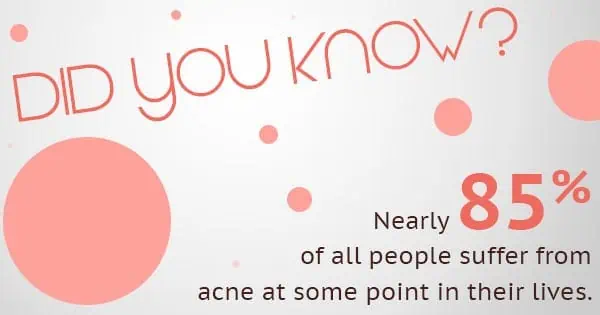
Did you know that nearly 85% of people who suffer from acne at some point in their lives? And sometimes, even the best over the counter acne treatment doesn't cut it. Luckily, that's where dermatologists come in. From skin care routine to giving you the best acne treatment for your skin, dermatologists tackle your dermatological issues from a number of standpoints in order to ensure that your skin is clear and healthy.
Cosmetic Procedures
From unsightly acne scarring to excessive body hair to unwanted varicose veins, dermatologists offer a number of solutions to your cosmetic dermatological wants and needs. Using state-of-the-art technology such as laser treatment for and glycolic peels, dermatologists are able to restore your skin to its clearest, healthiest, and most natural state.
Skin Cancer Prevention and Treatment
Approximately one in five Americans will develop skin cancer in their lifetime. And because skin cancer can develop quickly and relatively silently, a seemingly harmless misshapen mole can reach stage four in a matter of months. Consequently, it's important to do regular mole checks and to visit your local dermatologist regularly. Your doctor will examine any existing moles on your body to assess your current risk level. In the event that they do find cancer, your dermatologist will work swiftly to alleviate the problem, finding the least invasive and most effective treatment possible.
How Much is a Trip to the Dermatologist?
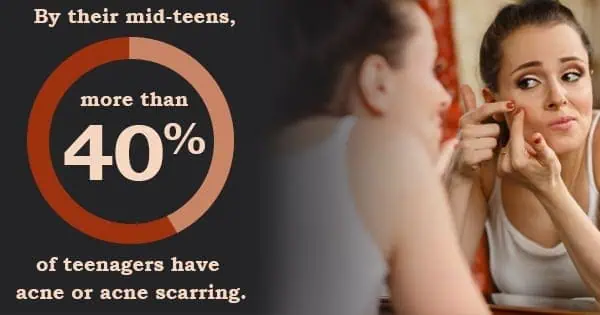
There are a variety of common skin conditions that can affect the average person over the course of their lives. For example, around 7.5 million Americans have psoriasis, and current estimates suggest that as many as one in five people in the United States will develop skin cancer in their lifetime. However, few skin disorders are as common as acne, which affects people of all ages but is especially common during adolescence: by their mid-teens, more than 40% of teenagers have acne or acne scarring. For this reason, many people will seek out acne treatment products and other therapies for their skin problems over the course of their lives, which may necessitate a trip to a local dermatologist. Unfortunately, some dermatologist prices are more than some people are willing to pay. Why do dermatologist clinics charge as much as they do? Read on for brief explanation of dermatologist prices.
Location
When it comes to adjusting their rates, dermatologists look at several factors pertaining to the area they practice in: the number of competing dermatologists in the area, the cost of living and economic conditions, and the local clientele. An expensive area that is popular with dermatologists and also has a high number of vacationers and retirees, such as New York City, will have more expensive dermatologists than rural Ohio, for example.
Reputation and Specialties
The best dermatologist in a given area or one that provides a unique service will naturally charge more than other practitioners in the area. These professionals will have numerous referrals every month and won't need to worry about making their dermatologist prices competitive. However, the extra cost might be worth the effective treatment or service this doctor can provide.
The Patient
Unfortunately, sometimes a particular patient's case will simply be more expensive than others. If you don't have health insurance, for example, or are requesting more expensive treatments that may not be completely covered by your insurance provider, your costs will be steeper.
Dermatology is a highly-requested service, and this demand means that dermatologist prices are often higher than what a patient might like to pay. However, by researching different clinics in your area, discussing your different options with your dermatologist and making sure your insurance and other factors are in order, you can significantly reduce your expenses. With proper diligence, you will be able to access the skin care and treatments you need for healthy, beautiful skin at a cost you can afford.
New Study Reveals Characteristics of Fast-Growing Melanoma
No matter what your past experience with skin problems may be, noticing a new growth on your skin is always a cause for concern, particularly if it is a fast-growing skin growth. Whether it looks more like a lesion or a rash, this change in your skin should be examined by the best rated dermatologist in your area immediately. However, this is especially true if the growth resembles an atypical nevus, one of the moles that can signal skin cancer. An Australian study recently revealed that certain characteristics may be a sign that melanoma will develop faster and may become fatal.
Melanoma is the most serious form of skin cancer, marked by the uncontrolled growth of pigment-producing cells. While an estimated one in every five Americans will develop skin cancer at some point in their life, people are more likely to develop melanoma if they have more than 50 moles, or if those moles are large or unusual. However, in an article published in the December edition of the Archives of Dermatology, researchers reported that these risk factors might not accurately determine who will develop fast-developing melanoma. Instead, their study showed that this potentially fatal situation could occur in anyone.
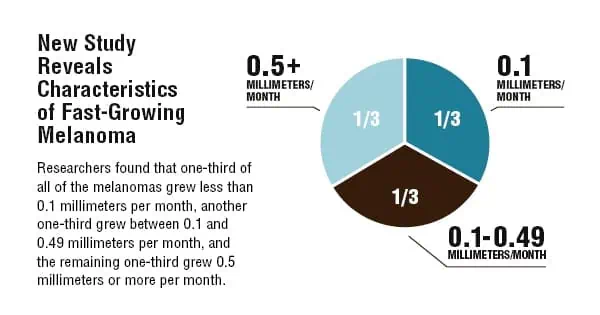
In the study, a team of dermatologists from Melbourne asked 404 patients with invasive melanoma and their families to recall when they first noticed a spot on their skin that eventually became melanoma, and when they saw that the mole had changed. The patients' skin was also examined, and the researchers collected additional data on demographics, skin cancer risk factors, tumor characteristics, and who had first detected the cancer. According to their research, the team determined that fast-growing melanoma is more likely to occur in those without large numbers of moles and freckles, especially the elderly. The moles that develop are more likely to be red than brown and black, symmetrical, elevated and symptomatic. Using their data to determine growth rates, the researchers also found that one-third of all of the melanomas grew less than 0.1 millimeters per month, another one-third grew between 0.1 and 0.49 millimeters per month, and the remaining one-third grew 0.5 millimeters or more per month.
The Australian report draws attention to an important fact about skin cancer and melanoma: anyone can develop these serious conditions, regardless of age, noticeable risk factors and other problems. For this reason, if you notice a fast-growing change in your skin, seek out the best rated dermatologist in your area for a diagnosis. Even if the problem is not melanoma, your health could still be at risk. By making an appointment at the best rated dermatologist clinic near you immediately, you can be sure that you will get the treatment and care you need before serious consequences take effect.