
HydraFacial MD - Not Your Grandma's Facial!
We’ve been getting a ton of interest in a cosmetic treatment we offer called HydraFacial MD. As word spreads about this rejuvenating procedure, our patients want to know more. What’s a hydrafacial? How does HydraFacial MD work? How will it benefit your skin? Is HydraFacial MD really any better than other facials?
You’ve been asking, we’ve been listening. Now, it’s time to answer some of your most common questions about hydrafacials, and about HydraFacial MD in particular.
What is HydraFacial MD?
HydraFacial MD is a 30-minute facial procedure that combines cleansing, chemical peel, exfoliation, and extraction. In the process, it takes out the bad stuff — like pore-clogging junk that causes acne outbreaks — and restores or adds the good stuff, leaving your skin looking younger and more refreshed.
HydraFacial MD actually incorporates five separate treatment phases into one session (though this can be tailored to your unique needs).
- Vortex Exfoliation – The safe but powerful HydraFacial MD wand delivers a proprietary serum (Secret’s out, it’s a combination of lactic acid and glucosamine) to break up and remove the dead skin cells that accumulate on the face. Like other exfoliation procedures, Vortex Exfoliation immediately begins to reveal younger, healthier looking skin.
- Vortex Peel – Your technician will then use the wand to apply a mixture of glycolic and salicylic acids. The Vortex Peel is a superficial chemical peel, which means it affects just the top layer of skin (epidermis). This type of peel doesn’t leave scaling and has very little risk of scarring, if any. The Vortex Peel can help reduce the appearance of shallow acne scars and fine to moderate lines and wrinkles.
- Vortex Extraction – The wand removes blackheads and clears clogged pores with a gentle circular suction.
- Vortex Boost – During this phase, you receive one or more of four proprietary serum blends filled with antioxidants, peptides, hyaluronic acid and more, depending on your particular needs. Growth Factor Boost, for example, contains various growth factors to help diminish the appearance of fine lines and wrinkle. Britenol Boost contains Alpha-Arbutin and vitamin C to reduce the appearance of sun damage and lighten dark spots.
- Vortex Fusion – In this step, your technician applies a serum containing antioxidants (e.g. vitamin E, white tea extract) and hyaluronic acid to your face. The Vortex Boost serum restores the skin and helps protect it from future insults.
A sixth phase, called Daily Essentials, is a take-home product that can help extend the benefits of HydraFacial MD treatments. Daily Essentials includes many of the same substances that are applied during Vortex Boost and Vortex Fusion phases.
Do HydraFacial MD treatments hurt?
HydraFacial is no more painful than the extraction and exfoliation steps of other facials. In fact, the way in which the HydraFacial MD wand delivers the serum and suction makes the procedure virtually painless. Most people report that treatments are virtually painless, especially compared to traditional facials.
Is HydraFacial MD any better than a standard facial?
First, you can assume that HydraFacial MD is better than any “facial” mask you buy at a drugstore or online retailer. Because it's a medical-grade facial, the question is really whether it's better than other medical grade facial procedures. HydraFacial MD is actually a hydradermabrasion procedure. It provides greater skin rejuvenation than regular dermabrasion or even chemical dermabrasion, but slightly less than non-ablative laser techniques and treatments.
Hydradermabrasion not only cleans and rectifies the skin immediately, it also stimulates the skin to be plumper, fuller, smoother, and more resilient. When you then add the flexibility of adding a customized assortment of skin care additives to the treatment, it is hard to find a traditional facial that can compete with HydraFacial MD.
Rapidly becoming one of Water's Edge Dermatology's most popular cosmetic treatments, patients are thrilled with the results; from help with acne conditions, to anti-aging benefits, to facial rejuvenation, beauty enhancement and more.
If interested in learning more about other outstanding aesthetic services, cosmetic treatment options and promotional offers at Water’s Edge Dermatology, please visit the Cosmetic Dermatology section of our website periodically to see everything that’s now possible.

Eating for Fabulous, Healthy Skin
Spring is officially here! If you haven’t already, you will soon start seeing lots of colorful, fresh fruits and vegetables at local farmer’s markets and grocery stores. Did you know that what you eat affects your skin health and appearance? It does! To help restore or maintain healthy skin and a more youthful appearance, start with small steps. Here are three easy tips to follow.
Tip 1: Add more fish to your diet
Fatty fish (such as salmon, mackerel and herring) are excellent for supporting healthy skin. Rich in omega-3 fatty acids, these fish help keep your skin thick, supple and moisturized. Omega-3 fats in fish also help reduce inflammation and can even make your skin less sensitive to the harmful UV rays of the sun. Dry skin can be one sign that your body is not getting enough omega-3 fats.
Fatty fish also contain vitamin E – an important antioxidant that helps protect skin against damage from free radicals and inflammation. By incorporating more fatty fish into your diet, you get the benefit of high-quality protein that helps maintain skin’s strength and integrity.
Tip 2: Eat a rainbow of fruits & vegetables
Fruits and vegetables contain an array of powerful antioxidants that help protect skin from damage caused by free radicals. Free radicals from pollution and sunlight can cause wrinkles and other signs of early aging. Antioxidants neutralize free radicals we encounter in our everyday lives.
To get the biggest benefit, choose a colorful rainbow of fruits and vegetables, and aim for five portions a day. Vary your choices, and get as much color on your plate as possible. Berries (including blueberries, black berries and raspberries) are particularly rich in antioxidants. Carrots, sweet potatoes and pumpkin contain beta carotene, a powerful antioxidant. Kale, papaya and spinach are excellent sources of lutein, another potent antioxidant that is also good for maintaining eye health.
When you fill your plate, cover half of the plate with fruits and vegetables; one fourth with lean protein and one fourth with complex, healthy carbs (such as brown rice or whole grain pasta).
Tip 3: Indulge in dark chocolate
Yes, we saved the best for last, and the news is great! Cocoa is phenomenally beneficial to skin health.
A study reported by the National Institute of Health tells us that consuming cocoa powder on a daily basis for six to 12 weeks can result in thicker, more hydrated skin that is less sensitive to sunburn. Other studies have shown improvements in the appearance of wrinkles.
Specifically, you need to select dark chocolate with at least 70% cocoa in order to maximize the benefits to your skin and keep added sugar to a minimum.
Your Water’s Edge Cosmetics team is here to support your best appearance. Our skilled aestheticians can help you look as young as you feel. Click here to request an appointment or call 877.533.8214.
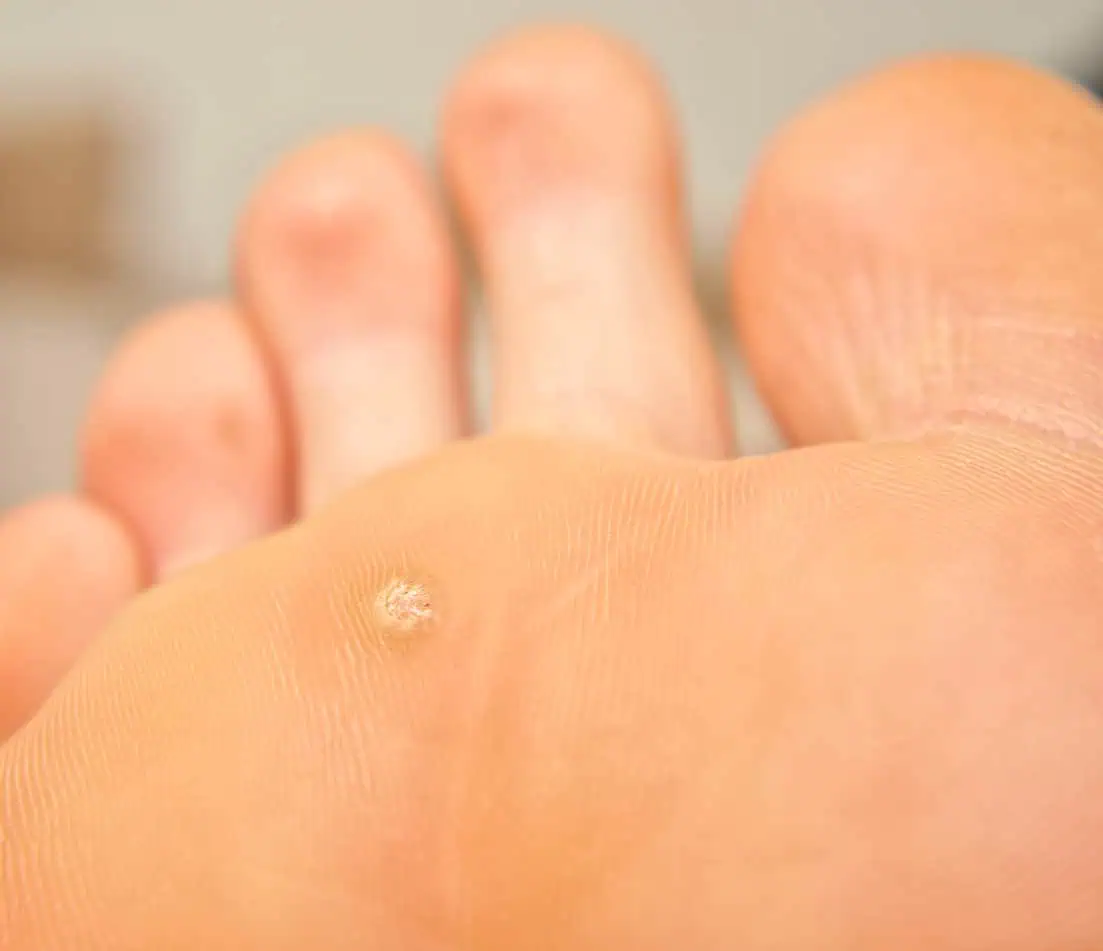
What Are Warts?
Warts are caused by viruses and are passed from person to person, sometimes indirectly through touching an object someone with a wart has touched. While they are cosmetically unappealing, they are non-cancerous and not dangerous, but they can cause discomfort if they become irritated.
What Causes Warts?
Warts are caused by a viral infection in the top layer of the skin. Viruses that cause warts are called human papillomavirus or HPV. Warts are usually skin-colored and feel rough to the touch, but they can appear dark, flat, and smooth. The appearance of a wart depends on where it is growing.
Some people get warts depending on how often they are exposed to the virus. Wart viruses occur more easily if the skin has been damaged in some way, which explains the high frequency of warts in children who bite or pick at hangnails. Some people are just more likely to catch the wart virus than others, just as some people catch colds more easily. Patients with a weakened immune system also are more prone to a wart virus infection.
Types of Warts
Common warts usually grow on the fingers, around the nails, and on the backs of the hands. They are more common where skin has been broken or where fingernails are bitten or hangnails picked. These are often called “seed” warts because the blood vessels to the wart produce black dots that look like seeds.
Foot or plantar warts are usually on the soles, or plantar area, of the feet. When plantar warts grow in clusters, they are known as mosaic warts. Most plantar warts do not stick up above the surface like common warts because the pressure of walking flattens them and pushes them back into the skin. Like common warts, these warts may have black dots. Plantar warts can be painful, feeling like a stone in a shoe.
Flat warts are smaller and smoother than other warts. They tend to grow in large numbers, 20 to 100 at a time. They can occur anywhere, but in children they are most common on the face. In adults, they are often found in the beard area in men and on the legs in women. Irritation from shaving probably accounts for this.
Treatment
In children, warts can disappear without treatment over a period of several months to years. However, warts that are bothersome, painful, or rapidly multiplying should be treated. Warts in adults often do not disappear as easily or as quickly as they do in children. Water’s Edge Dermatology practitioners are trained to use a variety of treatments for warts, depending on the age of the patient and the type of wart.
Common warts typically are treated by applying salicylic acid gel, “painting” with cantharidin, cryotherapy (freezing), electrosurgery, or laser treatment. Foot warts are often treated using salicylic acid plasters, applying other chemicals to the wart, or with laser surgery, electrosurgery, or cutting to remove the wart. Flat warts are treated using “peeling” methods with daily applications of salicylic acid, tretinoin, glycolic acid, or other surface peeling preparations.
Tips for Preventing Warts
Though there is no foolproof way to avoid getting warts, there are some steps that can reduce the chances of getting or spreading warts:
- Avoid biting or chewing fingernails and cuticles.
- Wash your hands often.
- Moisturize skin, especially skin that is dry and cracked.
- Always wear sandals or flip flops in public showers, locker rooms, and pools.
- Clean cuts and scratches with soap and water.
- Never share razors, towels, or socks with other people.
- Keep hands and feet dry and wear extra-absorbent socks if your feet tend to sweat a lot.
- Avoid touching other people’s warts.
Your Water’s Edge Dermatology practitioner can make a proper diagnosis and discuss the best way to treat a wart. Request an appointment now for you or your child or other family member to have warts evaluated and treated correctly.

Three Common Skin Rashes in Children
It’s that time of year again when children are back in school. Like every parent, you purchased school supplies and new school clothes so your child is comfortable and ready to hit the school room. But what about your child’s skin health, which can have a serious impact on their ability to thrive in school?
One of the most common skin show-stoppers are rashes. A rash is a skin reaction that can be caused by contact with a skin irritant, allergy, bacteria, or virus. Let’s take a look at three common skin rashes and what to look out for now and throughout the school year.
Eczema causes patches of dry, scaly red skin. Though eczema tends to flare up in cooler, dryer months when there is less moisture in the air, dryness from frequent exposure to air conditioning, overheating and sweating in the summer, and chlorine from swimming pools can also trigger eczema. Tree and plant allergies are also known to cause this skin rash. Your child’s doctor can draw up a treatment plan to help your child feel more comfortable and keep the symptoms under control.
Impetigo is a superficial skin infection caused by streptococcus or staphylococcus bacteria. This rash is often found near the nose and mouth but can occur anywhere on the body. It is more common in warmer months and can also occur as a secondary infection in the skin that has been damaged by insect bites, poison ivy, eczema, or abrasions.
Impetigo begins as small superficial blisters that rupture, leaving red, open patches of skin. It may be itchy and is highly contagious. Children can transfer the infection to other parts of the body or to other children through physical contact. Though rarely a serious disease, it is important to seek treatment. Doctors typically prescribe topical or oral antibiotics and anti-itch medication if needed.
Molluscum contagiosum is a contagious viral infection that causes pearly bumps on the skin. The virus enters the skin through small breaks in the skin barrier causing bumps, also known as “water warts” which may have a dimple in the center. This skin condition is caused by the poxvirus that is more common in hot, humid climates and may be spread in swimming pools, clothing, or towels shared by other children who may be infected. Though the bumps will typically go away on their own in six to twelve months, a dermatologist can help with topical creams to reduce the itching in order to prevent a secondary bacterial infection from occurring.
Water’s Edge Dermatology treats all types of skin rashes and diseases. We provide comprehensive, advanced skincare for children of all ages, whether your child is a newborn, a toddler, teenager, or young adult. We understand the importance of putting kids at ease with our kid-friendly, compassionate approach to care.
As experts in spotting and treating all kinds of skin diseases, we take the time to correctly diagnose the issue and provide an effective treatment plan that is right for you and your child. And we take the time to explain everything, so you and your child can have peace of mind.

Ten Tips for Super Spring Skincare Routine
Spring is a time for reawakening, rebirth and renewal – including for your skincare routine! If you’re wondering what updates to make, and which cosmetic treatments can work a little extra magic in combination with a spring-freshened skincare routine, read on.
Winter to Spring Skincare Transition
The winter months are dehydrating for your skin. It’s not uncommon for your outermost layer of skin (epidermis, and you knew that, right?!) to appear dull, rough, even raw. Think of what happens when you dry out a plump and juicy plum. Yup… prunes.
In similar fashion, when stripped of moisture your skin tends to shrink and wrinkle. That’s fine for a plum, not so hot for your face. Staying well-hydrated inside and out is an important baseline for spring skincare.
Take heed of some of the following tips too, and you'll have your gorgeous, youthful glow back in no time.
Ten Tips That Can Help
-
- Spring cleaning of your skincare supplies: Throw out old makeup and other skin products and refresh your bathroom shelf.
- Reboot your cleansers: Use moisturizing cleansers to hydrate winter-dried skin. Products with vitamins A, E, C work best when used with warm and not hot water.
- Lighten up: Revise that winter skincare routine for spring by using fewer products overall. Swap heavy creams for lightweight moisturizers with an SPF 30 or more.
- Exfoliate: Once a week, remove dead skin cells to help get all your glow back where it belongs. This also helps your moisturizers penetrate and benefit your skin.
- Wear sunscreen daily without fail: With longer days and stronger sunshine, you have to be more careful than ever to use daily SPF 30+ moisturizer. Using lightweight moisturizer with the sunscreen already included is a good option.
- Eat your way to restored elasticity: Promote collagen formation with foods rich in Vitamin C. Oranges and other citrus, broccoli, kiwis and peppers, all great choices. Foods with the bioflavonoid anthocyanins, such as cherries, and most berries, also help promote collagen levels and elasticity.
- Account for allergies: Facial fallout from seasonal allergies can wreak havoc with even the most seasonally fine-tuned skincare routines. Talk to your favorite dermatologist about impact and treatment for springtime allergies, which cause redness, inflammation, under-eye bags.
- Soothe and comfort your skin: Soak in a warm bath with Epsom salts and/or soothing natural botanical ingredients. Maybe a massage with using therapeutic body oils to slough off dead skin and flush out toxins? You get the idea!
- Consider a cosmetic peel or other rejuvenation treatment: Spring is a great time to get a seasonal-specific chemical peel or other aesthetic treatment. Best to do that with a licensed aesthetician in a dermatologist’s office. These treatments can be game-changers, sloughing off dead skin, brightening the fresh new layer, and reducing age/brown spots.
- Find & wear the right hats: Can't hurt to make a little shopping part of your new spring skincare routine. Look for wide-brimmed, fashionably fun hats that will protect as much of your head and neck as possible.
In addition to the tips above, consultation with an aesthetic medicine specialist will give you great options for treatments best-suited to your individual skin type this spring. There’s an exciting new range of aesthetic treatments available to help you put your best face forward, right through Labor Day and beyond.
Working in partnership with your dermatologist and/or aesthetic medicine specialist, here’s to hoping your skincare routine gets the “Spring Awakening” it needs and deserves this year!

What's All The Buzz About HydraFacial MD? Not Your Grandma's Facial!
We’ve been getting a ton of interest in recent months about a new cosmetic treatment we offer called HydraFacial MD. As word spreads about this rejuvenating procedure, our patients want to know more. What’s a hydrafacial? How does HydraFacial MD work? How will it benefit your skin? Is HydraFacial MD really any better than other facials?
You’ve been asking, we’ve been listening. Now, it’s time to answer some of your most common questions about hydrafacials, and about HydraFacial MD in particular.
What is HydraFacial MD?
HydraFacial MD is a 30-minute facial procedure that combines cleansing, chemical peel, exfoliation, and extraction. In the process, it takes out the bad stuff — like pore-clogging junk that causes acne outbreaks — and restores or adds the good stuff, leaving your skin looking younger and more refreshed.
HydraFacial MD actually incorporates five separate treatment phases into one session (though this can be tailored to your unique needs).
- Vortex Exfoliation – The safe but powerful HydraFacial MD wand delivers a proprietary serum (Secret’s out, it’s a combination of lactic acid and glucosamine) to break up and remove the dead skin cells that accumulate on the face. Like other exfoliation procedures, Vortex Exfoliation immediately begins to reveal younger, healthier looking skin.
- Vortex Peel – Your technician will then use the wand to apply a mixture of glycolic and salicylic acids. The Vortex Peel is a superficial chemical peel, which means it affects just the top layer of skin (epidermis). This type of peel doesn’t leave scaling and has very little risk of scarring, if any. The Vortex Peel can help reduce the appearance of shallow acne scars and fine to moderate lines and wrinkles.
- Vortex Extraction – The wand removes blackheads and clears clogged pores with a gentle circular suction.
- Vortex Boost – During this phase, you receive one or more of four proprietary serum blends filled with antioxidants, peptides, hyaluronic acid and more, depending on your particular needs. Growth Factor Boost, for example, contains various growth factors to help diminish the appearance of fine lines and wrinkle. Britenol Boost contains Alpha-Arbutin and vitamin C to reduce the appearance of sun damage and lighten dark spots.
- Vortex Fusion – In this step, your technician applies a serum containing antioxidants (e.g. vitamin E, white tea extract) and hyaluronic acid to your face. The Vortex Boost serum restores the skin and helps protect it from future insults.
A sixth phase, called Daily Essentials, is a take-home product that can help extend the benefits of HydraFacial MD treatments. Daily Essentials includes many of the same substances that are applied during Vortex Boost and Vortex Fusion phases.
Do HydraFacial MD treatments hurt?
HydraFacial is no more painful than the extraction and exfoliation steps of other facials. In fact, the way in which the HydraFacial MD wand delivers the serum and suction makes the procedure virtually painless. Most people report that treatments are virtually painless, especially compared to traditional facials.
Is HydraFacial MD any better than a standard facial?
First, you can assume that HydraFacial MD is better than any “facial” mask you buy at a drugstore or online retailer. Because it's a medical-grade facial, the question is really whether it's better than other medical grade facial procedures. HydraFacial MD is actually a hydradermabrasion procedure. It provides greater skin rejuvenation than regular dermabrasion or even chemical dermabrasion, but slightly less than non-ablative laser techniques and treatments.
Hydradermabrasion not only cleans and rectifies the skin immediately, it also stimulates the skin to be plumper, fuller, smoother, and more resilient. When you then add the flexibility of adding a customized assortment of skin care additives to the treatment, it is hard to find a traditional facial that can compete with HydraFacial MD.
Rapidly becoming one of Water's Edge Dermatology's most popular cosmetic treatments, patients are thrilled with the results; from help with acne conditions, to anti-aging benefits, to facial rejuvenation, beauty enhancement and more.
Best news of all?
In response to demand, Water’s Edge is currently featuring a limited-time HydraFacial Special Offer. Regularly a $275 value, this game-changing treatment is currently available for only $169 – and that includes a free gift of ZO premium skin care products!
If interested in learning more about other outstanding aesthetic services, cosmetic treatment options and promotional offers at Water’s Edge Dermatology, please visit the Cosmetic Dermatology section of our website periodically to see everything that’s now possible.
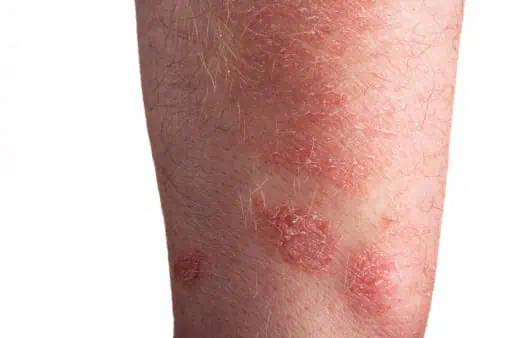
Signs and Symptoms of Psoriasis
Psoriasis is a heredity skin disease that is often a lifelong condition. Psoriasis is a chronic disease that affects the skin and joints. Usually your skin “turns over” every 30 to 60 days, but with psoriasis, it occurs every 9 to 12 days. The skin cells are not shed and it creates a layer of excess skin cells over the skin. This appears as patches of red or white scaly, itchy skin.
Proper diagnosis is the first step to psoriasis skin treatment. Water’s Edge is your psoriasis treatment center. Your medical dermatologists can help with diagnosis and a variety of effective treatment options.
Common Signs and Symptoms of Psoriasis Skin Disease
- Areas of red, inflamed skin, covered with white scales. These areas of red are called plaques. Scales are the silvery-white coating over the plaque.
- Psoriasis plaques can itch and be painful.
- Plaques can appear anywhere on the skin. They are most common on the knees, elbows, lower back and scalp.
- Patches of plaques vary in size and can often merge together into a larger patch.
- Crumbling or detached nails. Discoloration and pits in the nails may occur.
- Flakey, white scales on the scalp.
- Bleeding areas where skin is scratched.
There is no cure for psoriasis. However, it can be controlled with treatments.

Don’t let your psoriasis rule your life. Schedule a consultation with your Water’s Edge medical dermatologist today.