Nail Problems and What to Do About Them
Did you know that our nails are essentially hardened skin cells? They might seem tough as, well, nails, but they can present their own unique health problems if they aren’t treated with care and attention.
What Exactly Are Nails?
We want nails to look strong and healthy, serve as an onboard toolset of sorts and protect our fingers and toes. But what makes up a nail and how a nail grows is amazingly delicate.
Your nails are made up mostly of keratin, which is a protein found in the skin and hair. As nails grow out from the matrix – the hidden half-moon area under the cuticle – older cells in the nail are pushed forward and harden to form a visible nail that protects and supports tissues in our fingers and toes.
Common Nail Issues
Nail problems make up about 10% of all dermatological conditions. As we age, nails thicken and become more susceptible to issues such as fungal and bacterial infections. Often these are nothing to worry about, but some may signal disease. Here are some common nail issues:
- White Spots – Typically white spots in the nail are caused by mild trauma such as catching a finger in a door. Typically, the nail will grow out and the white spots will disappear. However, if you see several white spots that do not seem to grow out, those might be an indication of an infection or other medical condition that may need treatment.
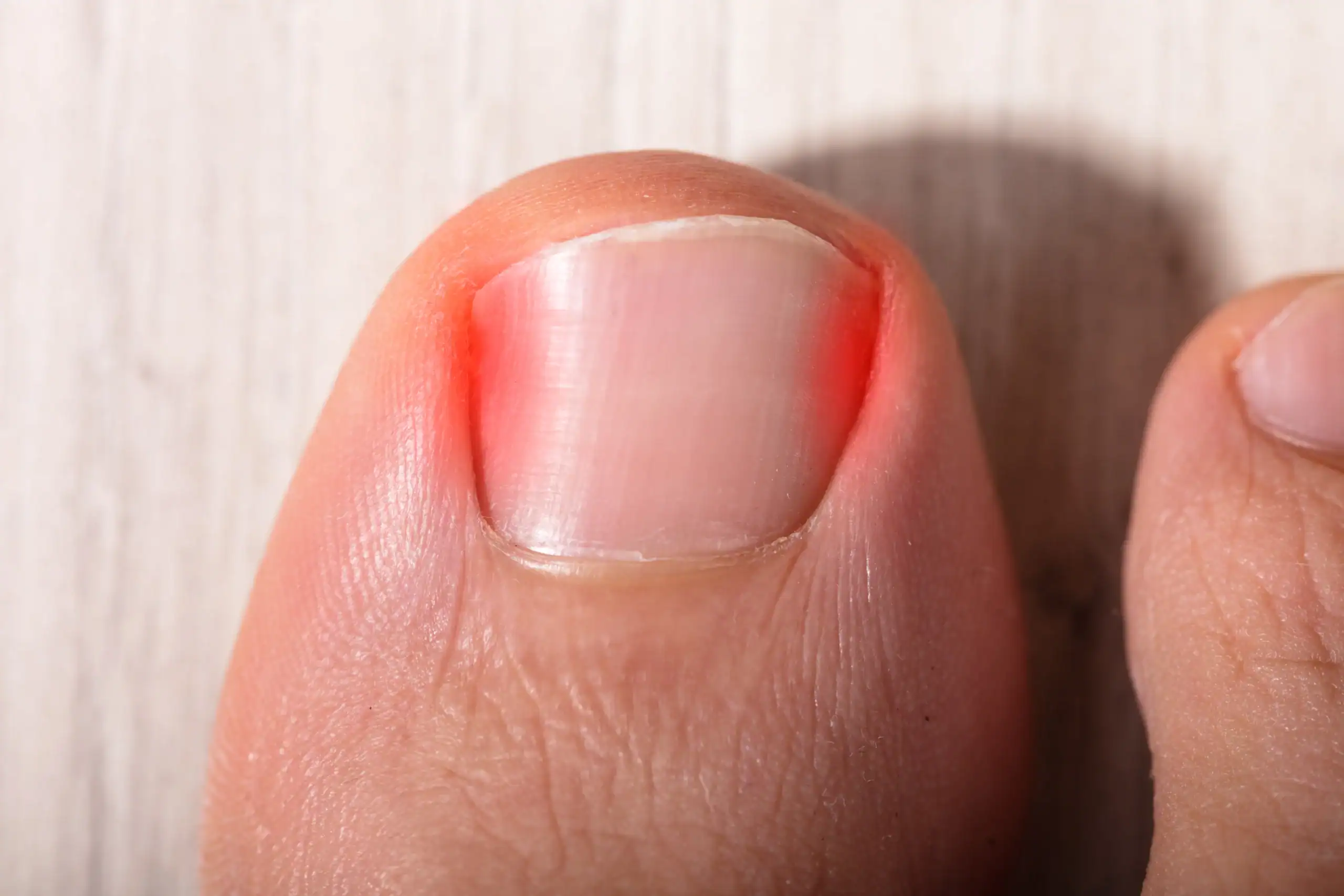
- Ingrown Nail – Most of us have had ingrown nails when the corner of the nail curves into the skin. Ingrown nails can be painful and sometimes get infected.
- Bacterial Infections – Redness, swelling and pain of the skin around the nails can be signs of a bacterial infection. Sometimes the nail may appear green. If you have your hands in water or the skin around the nails is exposed to chemicals on a regular basis, you might be susceptible to developing a bacterial infection.
- Nail fungus – This is a common condition that typically begins as a white or yellow spot under the tip of the nail. The nail may become discolored, thickened, misshaped and maybe even painful. If you see any of these symptoms, make an appointment with your Water’s Edge dermatologist.
- Dark Spots – If dark spots or streaks appear on any nail and you know it’s not because of an injury, see your practitioner. Dark spots or streaks on a nail could be signs of melanoma – the deadliest form of skin cancer. Be sure to get checked out right away.
Tips to Keep Nails Healthy
Practicing good nail habits is key to keeping them healthy. Water’s Edge recommends these tips:
- Keep nails clean and dry to help prevent bacteria, viruses or fungus from collecting under the nail.
- Cut nails straight across, rounding them slightly at the tips for maximum strength.
- Keep nails shaped and free of snags.
- Avoid biting fingernails and do not remove the cuticle.
- Trim toenails regularly to keep them short.
- Soak your feet in warm salt water for 5 to 10 minutes if toenails are thick and difficult to cut. This softens the nails and makes them easier to trim.
- Avoid digging out ingrown toenails, especially if they are infected or sore. See your practitioner for treatment.
- Wear shoes that fit correctly and alternate your shoes so you are not wearing the same shoes every day.
- If you see changes in your nails, such as swelling or pain, see your Water’s Edge provider.
- If you have diabetes or poor circulation, watch your nails carefully. See your Water’s Edge provider at the first sign of a problem.
Your nails can reveal a lot about your health, and changes in nails can signal disease or a medical issue. If you notice any issues or changes in your nails, make an appointment with your Water's Edge provider or call 877-900-3223 .

Time for Your Child’s Summer Skin Check
With kids out of school, it’s time for fun, sun and a lot of activities. It’s also time to schedule a summer skin check and stock up on sunscreen!
At Water’s Edge Dermatology, we are experts in spotting and treating all kinds of pediatric skin, hair and nail conditions, which is why we are encouraging a summer skin health screening for all children.
Potential Skin Issues in Children
Damage from pediatric skin cancer, acne, warts, eczema, rashes and sun damage could have a destructive impact on a child’s life if left undetected and untreated. That’s why we are sharing these quick facts about potential skin issues in children.
Skin Cancer: Skin cancer in children is on the rise. Though the most serious and deadly form of skin cancer – pediatric melanoma – represents only about 1% of new melanoma cases diagnosed each year in the U.S., malignant melanoma is the most common skin cancer in children and teens. It has increased about 2% each year since 1970. Fair-skinned, light-haired children are at the highest risk, but it’s a good idea for all children to get checked out annually.
Acne: Acne is the most common skin problem in the country. It often begins in puberty but can also affect adults in their 20s, 30s, 40s and even into their 50s. Most acne appears on the face, but it can also show up on the shoulders, upper arms, chest, neck and back. While acne is not curable, your Water’s Edge dermatologist can create a plan that helps treat and prevent breakouts.
Warts: Warts are noncancerous skin growths that are caused by a viral infection in the top layer of the skin. Warts are usually skin colored and feel rough to the touch, but they can also appear dark in color or flat and smooth, depending on their location. In children, warts can disappear without treatment over several months to years. However, warts that are bothersome, painful or rapidly multiplying should be treated. Water’s Edge providers use a variety of treatments, depending on the type of wart and the age of the patient.
Eczema: Eczema is often called “the itch that rashes”. Eczema appears in itchy patches that can be widespread or limited to a few areas like the back of the knee or inside of the elbow. Between 10% and 20% of children develop eczema, and at least 80% of these children will have it before the age of five. If your child has eczema, it’s important to see your Water’s Edge provider and have the condition treated.
Rashes: Skin rashes are very common all year round, but especially in the summer months where the warm weather can cause rashes that irritate skin. Active children can develop a heat rash or get into poison ivy and other plants that may cause rashes. For some children, insect bites can cause an allergic skin reaction, while other children might be exposed to bacterial or viral skin infections that cause rashes. Your Water’s Edge provider can correctly diagnose and treat any skin rash your child may develop.
Sun Damage: Damage from the sun’s rays affects children as well as adults. Sun protection should begin in infancy and continue throughout life. We get about 80% of our total lifetime sun exposure in the first 18 years of life. So, protecting your child’s skin from the sun is very important to prevent skin cancer later in life. Be sure you are using a sunscreen with SPF 30 or higher and wear a t-shirt and hat when in the sun. Also, keep your children out of the sun in the middle of the day from 10am-3pm when the sun’s rays are most intense.
We Care About Skin Health
At Water’s Edge, we care about skin health and early detection of skin illnesses in children. As Florida’s premiere dermatology practice, our team delivers the highest standard of skin care and dermatology services. We are ready, willing and able to help ensure the health of your children’s skin.
Schedule a summer skin check for your children by clicking on the link below, and we will get you set up for an appointment at any one of our 36 offices near you. Schedule a summer skin check now.

Summertime and Acne … It’s the Worst!
Did you know that the summer months are more difficult for those who suffer with acne? According to a study published by The Journal of Dermatology, the majority of patients said their acne is worse when temperatures rise. Why? The summer heat, sweat and humidity all work to increase oil production in the skin. This is probably why June is recognized as Acne Awareness Month.
Acne is the most common skin problem in the country. It often begins in puberty but can also affect adults in their 20s, 30s, 40s and even into the 50s. Most acne appears on the face, but it can also show up on the shoulders, upper arms, chest, neck and back. Untreated acne can be emotionally damaging, especially for teens, and can lead to scarring.
Common Causes of Acne
Nearly 85 percent of all people get acne at some point in their lives; and by the mid-teen years, more than 40 percent of teens have acne or acne scarring. Below are the most common causes of acne:
- Overproduction of oil by enlarged oil glands in the skin
- Blockage of the hair follicles that release oil
- Growth of bacteria called acnes within the hair follicles
- Pores clogged with dead skin cells
- Bacteria causing inflammation within pores
- Environmental factors, such as humidity, that cause skin swelling
- Medications
- Genetic factors
- Hormonal changes
Tips for Managing Acne in the Summer
There are things you can do to help reduce the occurrence of breakouts during the summer months. Here are a few:
- Wear sunscreen. Many acne medications make the skin more sun-sensitive. That’s why it’s important to up your sunscreen game in the summer. Be sure you are using a sunscreen with SPF of at least 30. Apply sunscreen 30 minutes before you plan to be in the sun and every 90 minutes while you are out in the sun. Reapply after swimming.
- Eat fresh fruit and stay hydrated. Fruits like berries are rich in antioxidants that help the skin heal and melons like cantaloupe help stimulate collagen growth in your skin. Be sure to drink eight glasses of water daily to keep your body and skin well hydrated.
- Skip heavy makeup foundation. Heavy foundation can block pores. Keep your makeup simple during the hot days of summer.
- Be consistent with your acne treatment program. Even if your acne improves, do not stop your treatment program. This will help prevent future breakouts.
Treatment for Acne
While acne is not curable, your Water’s Edge dermatologist can create a treatment plan that helps control and prevent breakouts. Treatment options include:
- Topical prescriptions
- Acne surgery
- Microdermabrasion
- Oral antibiotics or birth control pills
- Photodynamic therapy
In honor of Acne Awareness Month, Water’s Edge is offering our Teen Clear Skin Treatment for a special price of $90 in June. If you or a teen you know is suffering from acne, purchase them the Teen Clear Skin Treatment today. It is a non-prescription product that promotes clearer skin and helps prevent future breakouts.

HydraFacial MD - Not Your Grandma's Facial!
We’ve been getting a ton of interest in a cosmetic treatment we offer called HydraFacial MD. As word spreads about this rejuvenating procedure, our patients want to know more. What’s a hydrafacial? How does HydraFacial MD work? How will it benefit your skin? Is HydraFacial MD really any better than other facials?
You’ve been asking, we’ve been listening. Now, it’s time to answer some of your most common questions about hydrafacials, and about HydraFacial MD in particular.
What is HydraFacial MD?
HydraFacial MD is a 30-minute facial procedure that combines cleansing, chemical peel, exfoliation, and extraction. In the process, it takes out the bad stuff — like pore-clogging junk that causes acne outbreaks — and restores or adds the good stuff, leaving your skin looking younger and more refreshed.
HydraFacial MD actually incorporates five separate treatment phases into one session (though this can be tailored to your unique needs).
- Vortex Exfoliation – The safe but powerful HydraFacial MD wand delivers a proprietary serum (Secret’s out, it’s a combination of lactic acid and glucosamine) to break up and remove the dead skin cells that accumulate on the face. Like other exfoliation procedures, Vortex Exfoliation immediately begins to reveal younger, healthier looking skin.
- Vortex Peel – Your technician will then use the wand to apply a mixture of glycolic and salicylic acids. The Vortex Peel is a superficial chemical peel, which means it affects just the top layer of skin (epidermis). This type of peel doesn’t leave scaling and has very little risk of scarring, if any. The Vortex Peel can help reduce the appearance of shallow acne scars and fine to moderate lines and wrinkles.
- Vortex Extraction – The wand removes blackheads and clears clogged pores with a gentle circular suction.
- Vortex Boost – During this phase, you receive one or more of four proprietary serum blends filled with antioxidants, peptides, hyaluronic acid and more, depending on your particular needs. Growth Factor Boost, for example, contains various growth factors to help diminish the appearance of fine lines and wrinkle. Britenol Boost contains Alpha-Arbutin and vitamin C to reduce the appearance of sun damage and lighten dark spots.
- Vortex Fusion – In this step, your technician applies a serum containing antioxidants (e.g. vitamin E, white tea extract) and hyaluronic acid to your face. The Vortex Boost serum restores the skin and helps protect it from future insults.
A sixth phase, called Daily Essentials, is a take-home product that can help extend the benefits of HydraFacial MD treatments. Daily Essentials includes many of the same substances that are applied during Vortex Boost and Vortex Fusion phases.
Do HydraFacial MD treatments hurt?
HydraFacial is no more painful than the extraction and exfoliation steps of other facials. In fact, the way in which the HydraFacial MD wand delivers the serum and suction makes the procedure virtually painless. Most people report that treatments are virtually painless, especially compared to traditional facials.
Is HydraFacial MD any better than a standard facial?
First, you can assume that HydraFacial MD is better than any “facial” mask you buy at a drugstore or online retailer. Because it's a medical-grade facial, the question is really whether it's better than other medical grade facial procedures. HydraFacial MD is actually a hydradermabrasion procedure. It provides greater skin rejuvenation than regular dermabrasion or even chemical dermabrasion, but slightly less than non-ablative laser techniques and treatments.
Hydradermabrasion not only cleans and rectifies the skin immediately, it also stimulates the skin to be plumper, fuller, smoother, and more resilient. When you then add the flexibility of adding a customized assortment of skin care additives to the treatment, it is hard to find a traditional facial that can compete with HydraFacial MD.
Rapidly becoming one of Water's Edge Dermatology's most popular cosmetic treatments, patients are thrilled with the results; from help with acne conditions, to anti-aging benefits, to facial rejuvenation, beauty enhancement and more.
If interested in learning more about other outstanding aesthetic services, cosmetic treatment options and promotional offers at Water’s Edge Dermatology, please visit the Cosmetic Dermatology section of our website periodically to see everything that’s now possible.

The ABCDE Rules of Melanoma
The fun and sun of summer is knocking at the door, but so is the deadliest result of too much sun – melanoma. That’s why catching and treating it early is the key to battling and even curing melanoma.
Melanoma is tricky. It can start on the surface of the skin, under a nail or even in the eye. Once it gets started growing, it can grow deep into the skin and spread through the body. That’s what makes it so dangerous.
Anyone can get melanoma, regardless of age, sex or skin color. People with certain risk factors should be especially persistent about getting regular skin checks for melanoma and other skin cancers by a dermatologist.
Melanoma Risk Factors
People with these risk factors have a higher probability of developing melanoma:
- Fair, sun-sensitive skin that burns easily or tans poorly
- Red or blond hair; Blue or green eyes
- Have 50 or more moles
- Unusual or irregular-looking moles that are typically large in size
- A history of sunburns or indoor tanning bed use
- Blood relatives who have or had melanoma
- Immune system weakness due to disease, organ transplant or medication
- History of melanoma or another skin cancer
- Age 50 or older
What to Look For
A common warning sign of melanoma is change. Melanoma often begins in or near an existing mole. A change in the shape, color or size of a mole can be a warning sign of melanoma. Also be aware if a mole becomes painful or begins to bleed or itch.
Some melanomas develop suddenly and without warning. Regular skin self-exams can you identify these changes.
The ABCDE Rules of Melanoma
Make sure you are doing regular skin checks. Look for moles and other spots on your skin and apply the ABCDE rules listed below. During a skin self-exam, keep in mind that moles are typically uniform in color, round or oval and have a well-defined border. Though melanomas can vary greatly in appearance, most tend to have one or more of these ABCDE traits, and some have several.
 |
 |
 |
 |
 |
| A = ASYMMETRY One half is different than the other half |
B = BORDER Irregular, scalloped or poorly defined border |
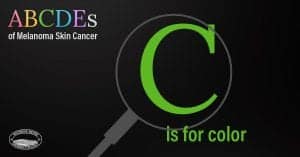
C = COLOR Varied from one area to another with shades of tan, brown, black and sometimes white, red or blue |
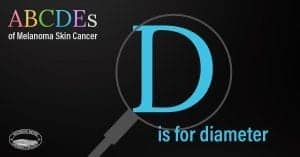
D = DIAMETER Melanomas are usually wider than a pencil eraser, but they can be smaller |
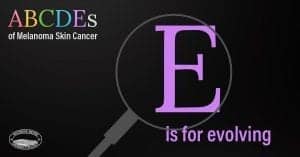
E = EVOLVING A mole or skin lesion that looks different from the rest or is changing in size, shape or color |
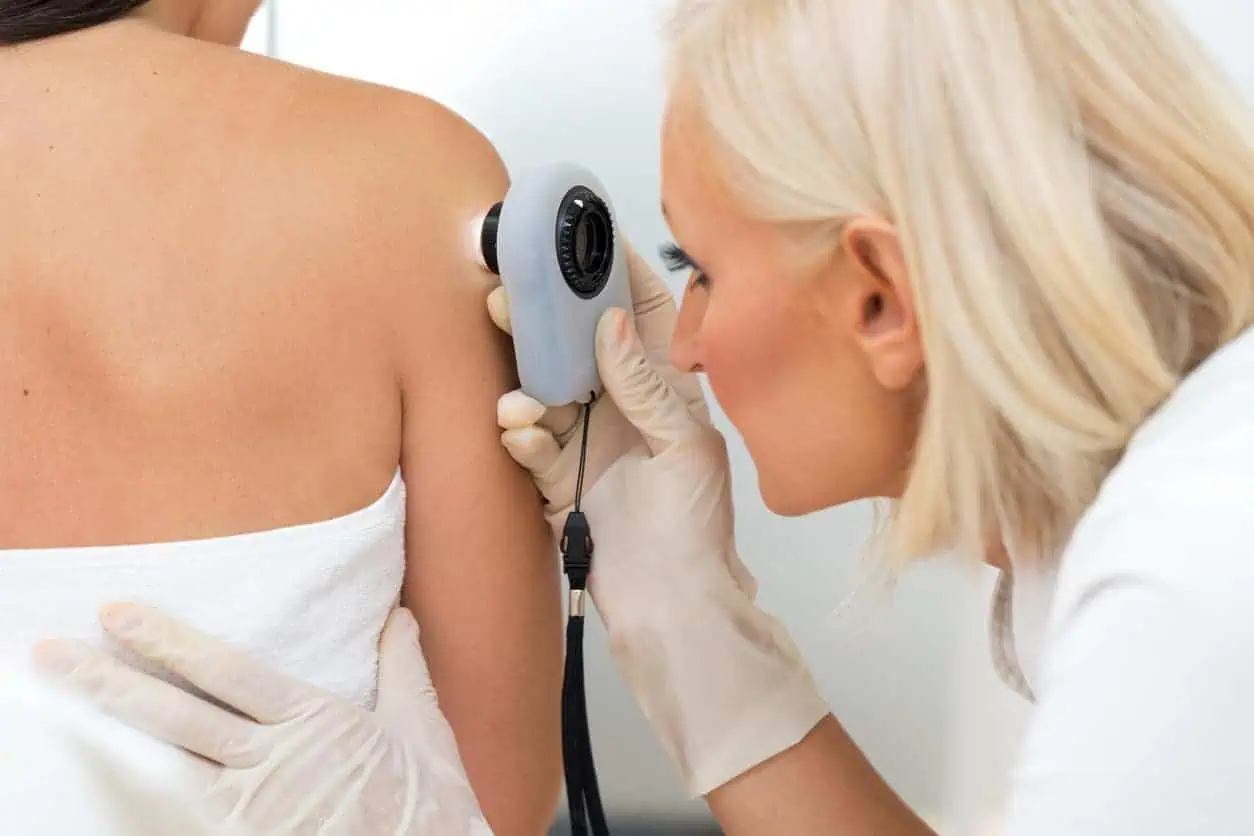
Make an appointment to see a Water’s Edge Dermatology provider if you notice any of the ABCDE traits. Your practitioner will examine any mole that has one or more of these traits and all new growths.
Remember, early detection and treatment saves lives. Click here to schedule a skin cancer screening at your nearest Water’s Edge Dermatology office.
Skin Cancer Treatments
Hearing the word “cancer” can be scary. However, when it comes to skin cancer, it doesn’t have to be frightening. Although it is the most common cancer in the United States, skin cancer is highly curable when caught and treated early.
If you are diagnosed with skin cancer or a pre-cancerous spot, schedule a visit with one of our highly-skilled skin experts. At Water’s Edge Dermatology, you have the best options for curing your skin cancer. Not only are do we have many highly specialized Mohs surgeons on staff, but we are the only dermatology practice in Florida that also offers electron beam therapy as a non-surgical option for our patients. Both treatment options boast high success rates for curing skin cancer.
Types of Skin Cancer and Pre-Cancer
Actinic Keratosis
This is a “pre-cancer” and is usually treated with liquid nitrogen (freezing) or topical (on the skin) medications.
Basal Cell Carcinoma
The most common skin cancer diagnosed in the US. It is very curable and rarely spreads (metastasizes). Treatments for basal cell carcinoma include: curetting and electrodesiccation, excision, Mohs Surgery or radiation therapy. Occasionally, very superficial and small basal cell carcinomas can be treated with liquid nitrogen (freezing) or topical medication.
Squamous Cell Carcinoma
The second more common skin cancer. Generally, it is very curable and has a low risk of spreading (metastasizing) if small and flat. Treatments for basal cell carcinoma include: curetting and electrodesiccation, excision, Mohs Surgery or radiation therapy. Occasionally, very superficial and squamous cell carcinomas can be treated with liquid nitrogen (freezing) or topical medication.
Malignant Melanoma
This type of cancer is less common than basal cell carcinoma and squamous cell carcinoma and must be treated aggressively. Melanoma requires immediate attention because it is an aggressive cancer that can spread (metastasize) to local lymph nodes or beyond. Treatment of Melanoma is typically managed by a team of providers specializing in Mohs surgery and radiation therapy. Thankfully, many melanomas are detected at a very early stage during annual skin checks performed by our highly skilled skin experts.
Skin Cancer Treatment Options
At Water’s Edge Dermatology, we believe you should have a choice when it comes to treating your skin cancer. Whereas most dermatology practices only offer surgical options, Water’s Edge Dermatology is different. We offer our patients the choice between the standard surgical options and a non-surgical option with electron beam therapy.
Below are the most common skin cancer treatment options available to you at Water’s Edge Dermatology.
Curetting and Electrodesiccation
This procedure involves removing cancerous skin through scraping & cauterization. The resulting wounds can take 4-6 weeks to heal.
Excision
This is an in-office surgical procedure where the cancerous tissue is removed from the patient using a local anesthetic.
Mohs Surgery
Named after Dr. Frederic Mohs, this surgical technique is used to treat basal cell carcinoma and squamous cell carcinoma by completely removing the tumor. Mohs Surgery is most commonly used for people who have skin cancer on high-risk locations (the face, neck or hands), recurrent cancer at any site, a predisposition to multiple skin cancers or rapidly growing or large tumors.
During Mohs Surgery, layers of cancer-containing skin are progressively removed, immediately frozen and then examined by a surgeon under a microscope until all the cancer is gone. Once the cancer is removed, the area is repaired with stitches by the provider or a plastic surgeon, depending on the depth and shape of the wound. This process typically takes 2-4 hours. Mohs Surgery is performed under local anesthetic, adding to the safety of this procedure.
Mohs Surgery offers among the highest cancer cure rate while minimizing removal of the surrounding healthy tissue. It has been cited that the cure rate for Mohs Surgery is between 97% - 99% for basal cell carcinoma, with a lower cure rate for squamous cell carcinoma.
Electron Beam Therapy
Electron beam therapy is a state-of-the-art type of superficial radiation therapy. It is a non-surgical, non-invasive, pain-free treatment option that is highly effective at treating many types of skin cancer while providing excellent cosmetic results. Previously only available at major cancer centers and hospitals, Water’s Edge Dermatology is one of the only dermatology practices in Florida offering this state-of-the-art skin cancer treatment.
This technique uses a finely tailored electron particle beam to selectively destroy cancer cells, “melting away” the cancer and sparing normal tissues. It does not use penetrating radiation and is very different from the type of radiation therapy used to treat other cancers, such as breast, lung and prostate. Treatment is delivered in a series of gentle, two-minute sessions five days a week for a course of 3-6 weeks. The total length of treatment depends on several factors including cancer type, location and medical history. During the course of treatment, there are no limitations on daily activities. You can continue normal activities such as work, exercise, swimming, etc. throughout your treatment.
This non-surgical option is ideal for cancers located on the face, scalp, extremities or any location on the body where surgery might be challenging or where the best possible cosmetic outcome is desired. Additionally, radiation therapy is a safer alternative to surgery for patients with certain medical conditions or who are taking some medications (including blood thinners). Like other common skin cancer treatments, electron beam therapy is generally covered by insurance.
It is important to know that most skin cancers can be treated with surgery or electron beam therapy. Both options come with advantages and disadvantages. If you have received a skin cancer diagnosis and would like to discuss treatment options, please contact us at (877) 544-3880. We are happy discuss the advantages and disadvantages of each treatment option with you and answer any questions you may have.

Get Ready for Summer with UltraShape® Power

Summer is just around the corner, which means it’s time to get your body ready to hit the beach! Unfortunately, diet and exercise are not enough for some people to achieve the body they want and deserve. We have great news - UltraShape® Power is here.
UltraShape® Power
It’s the first and only FDA-cleared, non-invasive, body-shaping procedure that permanently destroys fat cells. It’s a life-changing technology that is now available at Water’s Edge Dermatology.
How It Works
UltraShape® Power uses gentle ultrasound technology to destroy fat in just three virtually painless treatments. The technology destroys the walls of fat cells and releases that fat in the form of triglycerides which are then processed through the liver and eliminated from the body naturally.
UltraShape® Power was developed by an internationally renowned plastic surgeon and a physicist specializing in the use of high-power ultrasound to destroy blood clots.
Treatment is fully customizable to meet the unique needs of each patient and will not cause pain or harm surrounding tissue, nerves or muscle. There are no unwanted side effects. Treatment takes an hour or less, with results sometimes seen just two weeks after the first session.
Don’t wait to get your body ready for summer. Click here to Request an Appointment or call 877.533.8214.

How to Choose a Sunscreen
Sun and fun. They go together, particularly in the sunshine state. But sun can go with other things that aren’t so fun at all, such as pre-mature aging of your skin and even dangerous skin cancers.
Fortunately, there is a not-so-secret weapon that is easily available and known by just about everyone. It’s called sunscreen but using the wrong sunscreen in the wrong ways is a waste of your time and money, and most importantly can put your health at risk.
With so many options available, choosing the right sunscreen can be overwhelming, which is why we developed the Water's Edge Dermatology guide to selecting the best sprays and creams to protect your skin from harmful UV rays.
What to Look For in a Sunscreen
Water’s Edge Dermatology recommends following these rules for choosing a sunscreen:
- Broad spectrum – Broad spectrum sunscreen protects the skin from both ultraviolet A (also know as UVA) and ultraviolet B (also known as UVB) rays. Both of these rays can cause skin cancer.
- SPF 30 or higher – The sun protection factor (SPF) rating indicates how well a sunscreen protects you from the sun by blocking harmful UVB rays. Choose a sunscreen with SPF 30 or higher to make sure you are protected.
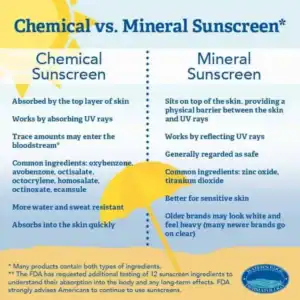
- Key ingredients – Look for active ingredients like ecamsule, avobenzone, titanium dioxide, sulisobenzone or zinc oxide. Beware of products that include oxybenzone or octinoxate which are harmful to the environment. Some areas of Florida have plans to ban the sale of sunscreen with oxybenzone and octinoxate because these chemicals can damage coral reefs.
- Avoid tanning oils – They generally do not provide enough protection against the harmful effects of the sun.
How to Apply Sunscreen & How Often
If choosing the best sunscreen is half the battle, the other half is using it correctly so you get the maximum protection. Here are a few tips to help:
- One ounce of sunscreen is considered the right amount. Cover all exposed areas of the body thoroughly. Don’t skimp. Many people don’t use enough sunscreen.
- Apply sunscreen 15 to 30 minutes before going in the sun. Don’t forget the tips of the ears, feet, back of the legs and bald spot (if you have one). Reapply sunscreen every two hours and use a UV-protective lip balm to protect your lips.
- If you are exercising or are in the water, it’s a good idea to get a sunscreen that is resistant to water and sweat. The FDA defines water resistant to mean that the SPF level stays effective after 40 minutes in the water. Very water resistant means it is effective after 80 minutes of swimming. These sunscreens are not waterproof, so reapply regularly.
Additional Protection
It’s important to wear sunscreen whenever you are outside during the day. Even on an overcast day, 80 percent of the dangerous UV rays make it through. Though vitally important, sunscreen does not fully protect your skin from the sun’s rays, so also consider these additional precautions to protect your skin from sun damage:
- Stay in the shade when you can.
- Wear sunglasses to protect your eyes, preferably with polarized lenses.
- Stay inside between 10am and 4pm when the UV levels are the highest.
- Wear a hat and sun-protective clothing.
Skin is the largest barrier against infection that we have. Keeping your skin healthy and shielding it from harmful rays of the sun can help you look younger and prevent skin cancer. Also, be sure to get a skin cancer screening every year so if you do have skin cancer, it can be detected and treated early.
Play it safe and smart – sunscreen up and get a skin cancer screening!
Shop our favorite EltaMD sunscreens.
Schedule a skin cancer screening at your nearest Water’s Edge Dermatology office.
First Monday in May is Melanoma Monday
Did you know that skin cancer is the most common cancer? Approximately 9,500 people in the U.S. are diagnosed with skin cancer every day. That means approximately one in five Americans develop skin cancer. While melanoma is not the most common type of skin cancer, it is the most dangerous. It is responsible for 10,000 American lives lost every year and is the second most common form of cancer in females ages 15 to 29. The good news is that skin cancer is also the most preventable cancer.
To raise awareness of melanoma and to encourage annual skin checks to help prevent skin cancer in general, the American Academy of Dermatology designates the first Monday in May as Melanoma Monday.
Who gets melanoma?
People of all colors and races get melanoma. Those with light skin who sunburn easily are at higher risk. If you have any of the following risk factors, you need to take extra caution in protecting your skin from the harmful rays of the sun:
- History of sunburns
- Family history of skin cancer
- Exposure to X-rays
- Use of tanning beds or sunlamps
What does melanoma look like?
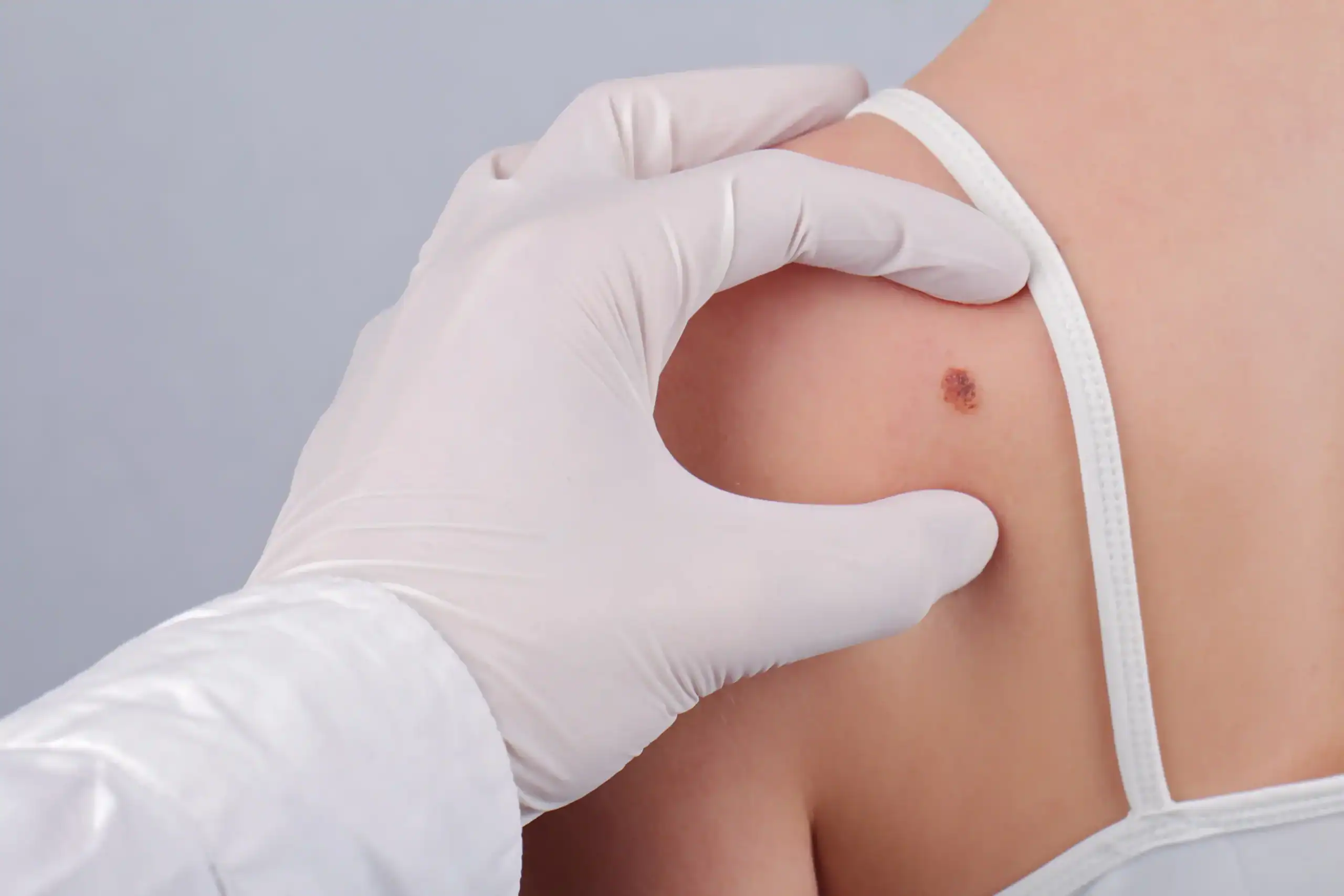
Melanoma often develops in a mole or appears suddenly as a new dark spot on the skin. Be on the lookout for changes in moles, and if you see irregular edges or unusual colors in a mole, schedule a visit with your Water’s Edge Dermatology provider right away. Catching melanoma early (before it can spread) is key to stopping it. Even though melanoma can be deadly, survival rates can be greater than 90% when treated early.
Preventing melanoma
Tips to help prevent melanoma:
- Wear broad-spectrum, water-resistant sunscreen with an SPF of 30 or more on exposed skin
- Cover up with a hat and clothing
- Stay in the shade when possible, especially 10am-4pm when the sun’s rays are the strongest
- Protect children from sun exposure by playing in the shade, wearing protective clothing and applying sunscreen
- Avoid tanning beds, which can cause skin cancer and wrinkling
- Check your birthday suit on your birthday. If you notice any skin changes, skin growths or bleeding on your skin, see a Water’s Edge Dermatology practitioner immediately
In addition to doing self-exams on your birthday, May is a great month to schedule a skin check by a highly specialized skin care expert. At Water’s Edge Dermatology, our providers are experts in spotting melanoma and treating it early with procedures just right for each of our valued patients. Be safe and schedule your skin cancer check now.
Request an appointment with one of our skin care experts at Water’s Edge Dermatology.