

How to Choose a Sunscreen
Sun and fun. They go together, particularly in the sunshine state. But sun can go with other things that aren’t so fun at all, such as pre-mature aging of your skin and even dangerous skin cancers.
Fortunately, there is a not-so-secret weapon that is easily available and known by just about everyone. It’s called sunscreen but using the wrong sunscreen in the wrong ways is a waste of your time and money, and most importantly can put your health at risk.
With so many options available, choosing the right sunscreen can be overwhelming, which is why we developed the Water's Edge Dermatology guide to selecting the best sprays and creams to protect your skin from harmful UV rays.
What to Look For in a Sunscreen
Water’s Edge Dermatology recommends following these rules for choosing a sunscreen:
- Broad spectrum – Broad spectrum sunscreen protects the skin from both ultraviolet A (also know as UVA) and ultraviolet B (also known as UVB) rays. Both of these rays can cause skin cancer.
- SPF 30 or higher – The sun protection factor (SPF) rating indicates how well a sunscreen protects you from the sun by blocking harmful UVB rays. Choose a sunscreen with SPF 30 or higher to make sure you are protected.
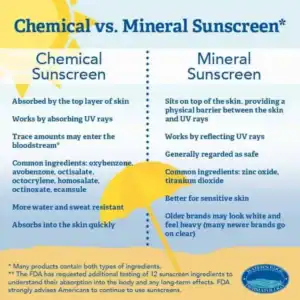
- Key ingredients – Look for active ingredients like ecamsule, avobenzone, titanium dioxide, sulisobenzone or zinc oxide. Beware of products that include oxybenzone or octinoxate which are harmful to the environment. Some areas of Florida have plans to ban the sale of sunscreen with oxybenzone and octinoxate because these chemicals can damage coral reefs.
- Avoid tanning oils – They generally do not provide enough protection against the harmful effects of the sun.
How to Apply Sunscreen & How Often
If choosing the best sunscreen is half the battle, the other half is using it correctly so you get the maximum protection. Here are a few tips to help:
- One ounce of sunscreen is considered the right amount. Cover all exposed areas of the body thoroughly. Don’t skimp. Many people don’t use enough sunscreen.
- Apply sunscreen 15 to 30 minutes before going in the sun. Don’t forget the tips of the ears, feet, back of the legs and bald spot (if you have one). Reapply sunscreen every two hours and use a UV-protective lip balm to protect your lips.
- If you are exercising or are in the water, it’s a good idea to get a sunscreen that is resistant to water and sweat. The FDA defines water resistant to mean that the SPF level stays effective after 40 minutes in the water. Very water resistant means it is effective after 80 minutes of swimming. These sunscreens are not waterproof, so reapply regularly.
Additional Protection
It’s important to wear sunscreen whenever you are outside during the day. Even on an overcast day, 80 percent of the dangerous UV rays make it through. Though vitally important, sunscreen does not fully protect your skin from the sun’s rays, so also consider these additional precautions to protect your skin from sun damage:
- Stay in the shade when you can.
- Wear sunglasses to protect your eyes, preferably with polarized lenses.
- Stay inside between 10am and 4pm when the UV levels are the highest.
- Wear a hat and sun-protective clothing.
Skin is the largest barrier against infection that we have. Keeping your skin healthy and shielding it from harmful rays of the sun can help you look younger and prevent skin cancer. Also, be sure to get a skin cancer screening every year so if you do have skin cancer, it can be detected and treated early.
Play it safe and smart – sunscreen up and get a skin cancer screening!
Shop our favorite EltaMD sunscreens.
Schedule a skin cancer screening at your nearest Water’s Edge Dermatology office.
First Monday in May is Melanoma Monday
Did you know that skin cancer is the most common cancer? Approximately 9,500 people in the U.S. are diagnosed with skin cancer every day. That means approximately one in five Americans develop skin cancer. While melanoma is not the most common type of skin cancer, it is the most dangerous. It is responsible for 10,000 American lives lost every year and is the second most common form of cancer in females ages 15 to 29. The good news is that skin cancer is also the most preventable cancer.
To raise awareness of melanoma and to encourage annual skin checks to help prevent skin cancer in general, the American Academy of Dermatology designates the first Monday in May as Melanoma Monday.
Who gets melanoma?
People of all colors and races get melanoma. Those with light skin who sunburn easily are at higher risk. If you have any of the following risk factors, you need to take extra caution in protecting your skin from the harmful rays of the sun:
- History of sunburns
- Family history of skin cancer
- Exposure to X-rays
- Use of tanning beds or sunlamps
What does melanoma look like?
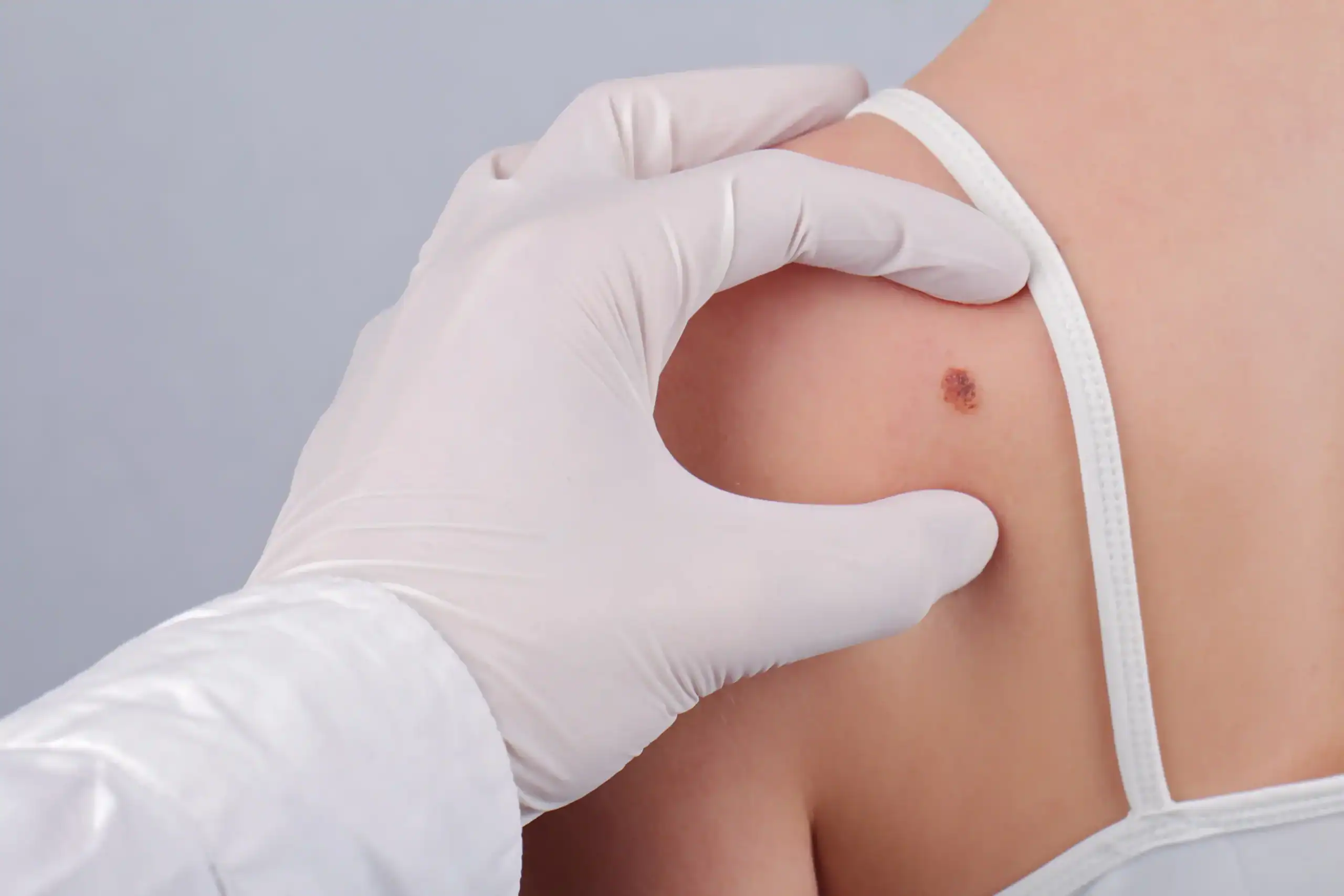
Melanoma often develops in a mole or appears suddenly as a new dark spot on the skin. Be on the lookout for changes in moles, and if you see irregular edges or unusual colors in a mole, schedule a visit with your Water’s Edge Dermatology provider right away. Catching melanoma early (before it can spread) is key to stopping it. Even though melanoma can be deadly, survival rates can be greater than 90% when treated early.
Preventing melanoma
Tips to help prevent melanoma:
- Wear broad-spectrum, water-resistant sunscreen with an SPF of 30 or more on exposed skin
- Cover up with a hat and clothing
- Stay in the shade when possible, especially 10am-4pm when the sun’s rays are the strongest
- Protect children from sun exposure by playing in the shade, wearing protective clothing and applying sunscreen
- Avoid tanning beds, which can cause skin cancer and wrinkling
- Check your birthday suit on your birthday. If you notice any skin changes, skin growths or bleeding on your skin, see a Water’s Edge Dermatology practitioner immediately
In addition to doing self-exams on your birthday, May is a great month to schedule a skin check by a highly specialized skin care expert. At Water’s Edge Dermatology, our providers are experts in spotting melanoma and treating it early with procedures just right for each of our valued patients. Be safe and schedule your skin cancer check now.
Request an appointment with one of our skin care experts at Water’s Edge Dermatology.

Eating for Fabulous, Healthy Skin
Spring is officially here! If you haven’t already, you will soon start seeing lots of colorful, fresh fruits and vegetables at local farmer’s markets and grocery stores. Did you know that what you eat affects your skin health and appearance? It does! To help restore or maintain healthy skin and a more youthful appearance, start with small steps. Here are three easy tips to follow.
Tip 1: Add more fish to your diet
Fatty fish (such as salmon, mackerel and herring) are excellent for supporting healthy skin. Rich in omega-3 fatty acids, these fish help keep your skin thick, supple and moisturized. Omega-3 fats in fish also help reduce inflammation and can even make your skin less sensitive to the harmful UV rays of the sun. Dry skin can be one sign that your body is not getting enough omega-3 fats.
Fatty fish also contain vitamin E – an important antioxidant that helps protect skin against damage from free radicals and inflammation. By incorporating more fatty fish into your diet, you get the benefit of high-quality protein that helps maintain skin’s strength and integrity.
Tip 2: Eat a rainbow of fruits & vegetables
Fruits and vegetables contain an array of powerful antioxidants that help protect skin from damage caused by free radicals. Free radicals from pollution and sunlight can cause wrinkles and other signs of early aging. Antioxidants neutralize free radicals we encounter in our everyday lives.
To get the biggest benefit, choose a colorful rainbow of fruits and vegetables, and aim for five portions a day. Vary your choices, and get as much color on your plate as possible. Berries (including blueberries, black berries and raspberries) are particularly rich in antioxidants. Carrots, sweet potatoes and pumpkin contain beta carotene, a powerful antioxidant. Kale, papaya and spinach are excellent sources of lutein, another potent antioxidant that is also good for maintaining eye health.
When you fill your plate, cover half of the plate with fruits and vegetables; one fourth with lean protein and one fourth with complex, healthy carbs (such as brown rice or whole grain pasta).
Tip 3: Indulge in dark chocolate
Yes, we saved the best for last, and the news is great! Cocoa is phenomenally beneficial to skin health.
A study reported by the National Institute of Health tells us that consuming cocoa powder on a daily basis for six to 12 weeks can result in thicker, more hydrated skin that is less sensitive to sunburn. Other studies have shown improvements in the appearance of wrinkles.
Specifically, you need to select dark chocolate with at least 70% cocoa in order to maximize the benefits to your skin and keep added sugar to a minimum.
Your Water’s Edge Cosmetics team is here to support your best appearance. Our skilled aestheticians can help you look as young as you feel. Click here to request an appointment or call 877.533.8214.
Protecting Lighter-Toned Skin from Skin Cancer
St. Patrick’s Day is a great time to remind everyone with lighter-toned skin to take extra precautions in the sun to protect yourself from skin cancer. Most skin cancers develop on areas of the skin that get years of sun exposure, like the face, neck, ears, forearms, hands, and trunk. Basal cell carcinomas and squamous cell carcinomas are the most common, but melanomas are the deadliest. Here’s a quick rundown of the most common skin cancers and what to look for.
Basal cell carcinoma (BCC) looks like a flesh-colored, pearl-like bump, or pinkish patch of skin. BCC frequently develops in people who have light skin, but it can occur in people with dark skin. With early treatment, this type of cancer can be cured. Left untreated, BCC can cause bleeding and severe damage, which can be disfiguring.
Squamous cell carcinoma (SCC) can look like a red scaly patch, raised, firm bump, or a sore that heals and re-opens. People who have light skin are most likely to develop SCC, but it can develop in dark-skinned people, especially those who have scarring.
With early detection and proper treatment, SCC also has a high cure rate. Left untreated, SCC can also be disfiguring. In rare cases, untreated SCC can spread to other areas of the body and can be deadly.
Melanoma may develop in a mole or it can appear on the skin as a new, dark spot. Sometimes melanoma contains shades of red, blue, or white. When found early, melanoma often can be cured. Left untreated, melanoma can spread to other areas of the body and be deadly. In fact, one person dies of melanoma every hour.
Sun Protection Tips
Sun protection helps prevent skin damage and wrinkles, and reduces the risk of developing skin cancer. Newer broad-spectrum sunscreens contain products to block both UVA and UVB rays. To be effective, sunscreen should be reapplied at least every two hours.
The American Academy of Dermatology (AAD) recommends that you seek shade when possible. Avoid sunbathing, wear a wide-brimmed hat, sunglasses, and protective clothing. A typical white tee shirt has an SPF of 3. Colorless dyes that increase the SPF of fabrics to an SPF of 30 are available as laundry products. If you must be in the sun, use a broad-spectrum sunscreen with a sun protection factor (SPF) of at least 30, even on cloudy days.
Melanoma Mondays in May
Mark your calendars for May. We’ll be sharing a wealth of information on protecting your and your family’s skin from the deadliest form of skin cancer. We’ll be giving away t-shirts with UV protection on Facebook and running a “Get Naked…It Saved My Life” promotion with lots of tips on protecting your skin right before the active summer season starts.
Do you have a suspicious spot on your skin that you are concerned about? Water’s Edge Dermatology recommends that everyone have regular skin cancer screenings from a board-certified dermatologist, especially in sunny Florida. Schedule an appointment today and enjoy peace of mind. Click here to request an appointment or call 877.533.8214.

What Are Warts?
Warts are caused by viruses and are passed from person to person, sometimes indirectly through touching an object someone with a wart has touched. While they are cosmetically unappealing, they are non-cancerous and not dangerous, but they can cause discomfort if they become irritated.
What Causes Warts?
Warts are caused by a viral infection in the top layer of the skin. Viruses that cause warts are called human papillomavirus or HPV. Warts are usually skin-colored and feel rough to the touch, but they can appear dark, flat, and smooth. The appearance of a wart depends on where it is growing.
Some people get warts depending on how often they are exposed to the virus. Wart viruses occur more easily if the skin has been damaged in some way, which explains the high frequency of warts in children who bite or pick at hangnails. Some people are just more likely to catch the wart virus than others, just as some people catch colds more easily. Patients with a weakened immune system also are more prone to a wart virus infection.
Types of Warts
Common warts usually grow on the fingers, around the nails, and on the backs of the hands. They are more common where skin has been broken or where fingernails are bitten or hangnails picked. These are often called “seed” warts because the blood vessels to the wart produce black dots that look like seeds.
Foot or plantar warts are usually on the soles, or plantar area, of the feet. When plantar warts grow in clusters, they are known as mosaic warts. Most plantar warts do not stick up above the surface like common warts because the pressure of walking flattens them and pushes them back into the skin. Like common warts, these warts may have black dots. Plantar warts can be painful, feeling like a stone in a shoe.
Flat warts are smaller and smoother than other warts. They tend to grow in large numbers, 20 to 100 at a time. They can occur anywhere, but in children they are most common on the face. In adults, they are often found in the beard area in men and on the legs in women. Irritation from shaving probably accounts for this.
Treatment
In children, warts can disappear without treatment over a period of several months to years. However, warts that are bothersome, painful, or rapidly multiplying should be treated. Warts in adults often do not disappear as easily or as quickly as they do in children. Water’s Edge Dermatology practitioners are trained to use a variety of treatments for warts, depending on the age of the patient and the type of wart.
Common warts typically are treated by applying salicylic acid gel, “painting” with cantharidin, cryotherapy (freezing), electrosurgery, or laser treatment. Foot warts are often treated using salicylic acid plasters, applying other chemicals to the wart, or with laser surgery, electrosurgery, or cutting to remove the wart. Flat warts are treated using “peeling” methods with daily applications of salicylic acid, tretinoin, glycolic acid, or other surface peeling preparations.
Tips for Preventing Warts
Though there is no foolproof way to avoid getting warts, there are some steps that can reduce the chances of getting or spreading warts:
- Avoid biting or chewing fingernails and cuticles.
- Wash your hands often.
- Moisturize skin, especially skin that is dry and cracked.
- Always wear sandals or flip flops in public showers, locker rooms, and pools.
- Clean cuts and scratches with soap and water.
- Never share razors, towels, or socks with other people.
- Keep hands and feet dry and wear extra-absorbent socks if your feet tend to sweat a lot.
- Avoid touching other people’s warts.
Your Water’s Edge Dermatology practitioner can make a proper diagnosis and discuss the best way to treat a wart. Request an appointment now for you or your child or other family member to have warts evaluated and treated correctly.
TIPS FOR ACHIEVING YOUR BEST SKIN … NO MATTER YOUR AGE
 Skincare from your 20s to your 70s & beyond.
With Valentine’s Day approaching, the team of experts at Water’s Edge Dermatology wants to help you look your best on Valentine’s Day and every day. But did you know your skincare regimen needs to evolve depending on your age and adapting skincare for your age bracket can help you look and feel better? Find your age bracket below and check out our tips for your best skincare routine based on your stage in life.
Your 20s
Your 20s should be all about preventing sun damage, and that means using sunscreen and/or sunblock. It takes about 15 to 20 years for the sun’s damage to appear on your skin, so protecting the skin is critical early on. Products containing titanium or zinc dioxide physically prevent the sun’s rays from reaching the skin, while sunscreen works with the top layer of your skin to absorb UVA and UVB rays before they damage the skin. Sunscreen does not provide as much protection as sunblock. For extra protection, wear a hat when out outdoors.
Regular cleansing and moisturizing with gentle products are also important. Make sure your moisturizer has SPF 15 or 20 and provides both UVA and UVB protection. If you have any skin issues, such as adult acne, find a dermatologist who can design a regular maintenance routine just right for you and treat skin problems early on.
Your 30s
Your body’s ability to renew damaged skin cells begins to decline in your late 20s and early 30s. Skin becomes thinner and finer. As natural cell turnover slows, your skin may also begin to look dull. Your 30s is a good time to begin adding a physical or chemical exfoliant to your routine to help smooth the skin and stimulate cell renewal. Look for moisturizers with Vitamin C plus antioxidants and a night cream with retinol or glycolic acid to stimulate exfoliation and renewal. As fine lines begin to appear, some consider treatment with Botox to prevent those encroaching lines from becoming deeper.
Your 40s
The effects of gravity and sun damage begin to show up in your 40s. Lines become deeper and sun damage may be more apparent as dark blotches, hyperpigmentation, or melasma. To help reduce the impact of these changes, consider laser resurfacing to reduce the appearance of sun damage and stimulate collagen production. A prescription retinoid can help reduce brown spots, increase exfoliation and collagen production, and thicken the epidermis. Some may want to begin incorporating dermal fillers to help diminish fine lines and plump areas of the face that are less supple due to volume loss.
Your 50s
In your 50s, hormonal changes can pile on. Skin begins to lose elasticity and may appear dull. Hyperpigmentation, deep lines, and sagging neck begin to appear. Fortunately, there are many options for restoring skin in your 50s so you look and feel your best. Advanced laser resurfacing or Radio Frequency procedures, chemical peels, Botox and fillers can treat a number of issues that are common in your 50s. You’ll want a complete skincare regimen that helps rejuvenate the skin’s appearance on a daily basis. A trusted team of aestheticians and dermatologist can design the skincare plan that’s just right for you.
Your 60s & Beyond
By the time you reach your 60s, ideally, you’ve been taking good care of your skin throughout your adult life (and don’t worry – even if you haven’t it’s never too late to start). At this stage in life, it is not unusual to begin seeing a variety of age-related skin issues, including precancerous spots from sun damage, spider veins, or more dramatic hyperpigmentation. Menopause can cause a multitude of skin problems including extreme dryness, acne, and rosacea. Your Water’s Edge dermatologist can help with these issues and create a custom plan to care for your skin.
No matter your age, the Water’s Edge Dermatology team can help restore your skin so you look and feel your best. Request an appointment for a skin evaluation so we can help you achieve your best skin health. Request an appointment.
What to Expect from a Chemical Peel
Are you ready to reduce the appearance of sun damage, wrinkles, skin discoloration, or acne scars for a healthier, clearer, and brighter complexion? If so, skin-resurfacing with a chemical peel may be a right choice for you.
Types of chemical peels
Depending on the results you’d like to see, chemical peels can be done at different depths: light, medium, or deep. Each type of chemical peel uses a different chemical solution, and your choice of light, medium, or deep depends on the skin issues you are treating. During your consultation, your provider will make a recommendation based on your concerns, goals, and the level of down-time involved.
- Light chemical peel. This treatment removes the outer layer of skin (epidermis) and is used to decrease the appearance of fine wrinkles, acne, uneven skin tone, and even skin dryness. A light chemical peel can be repeated as often as every two to five weeks.
- Medium chemical peel. This treatment removes skin cells from the epidermis and from the upper portion of the middle layer of skin (dermis). This type of peel is used to treat wrinkles, acne scars, and uneven skin tone. A medium peel can be repeated after three to four weeks, then every three to four months to maintain best results.
- Deep chemical peel. This treatment removes skin cells from the epidermis and from the mid to lower layer of the dermis. A deep peel may be recommended to treat deeper wrinkles, scars, or precancerous growths. A deep chemical peel is dependent on your provider’s discretion and typically is only performed once.
The procedure
Once you and your dermatologist or clinician decide that you are a good candidate for a chemical peel, there are some precautions to take before your treatment, which include:
- Wear sunscreen. In order to help prevent irregular pigmentation in the treated areas of skin, be sure to use sunscreen at least four weeks before your appointment.
- Avoid these cosmetic and hair removal treatments. A week before your scheduled chemical peel appointment, be sure to avoid skin bleaching or facial scrubs. Also, avoid hair-removal laser treatments, waxing, or use of depilatory products on the area to be treated.
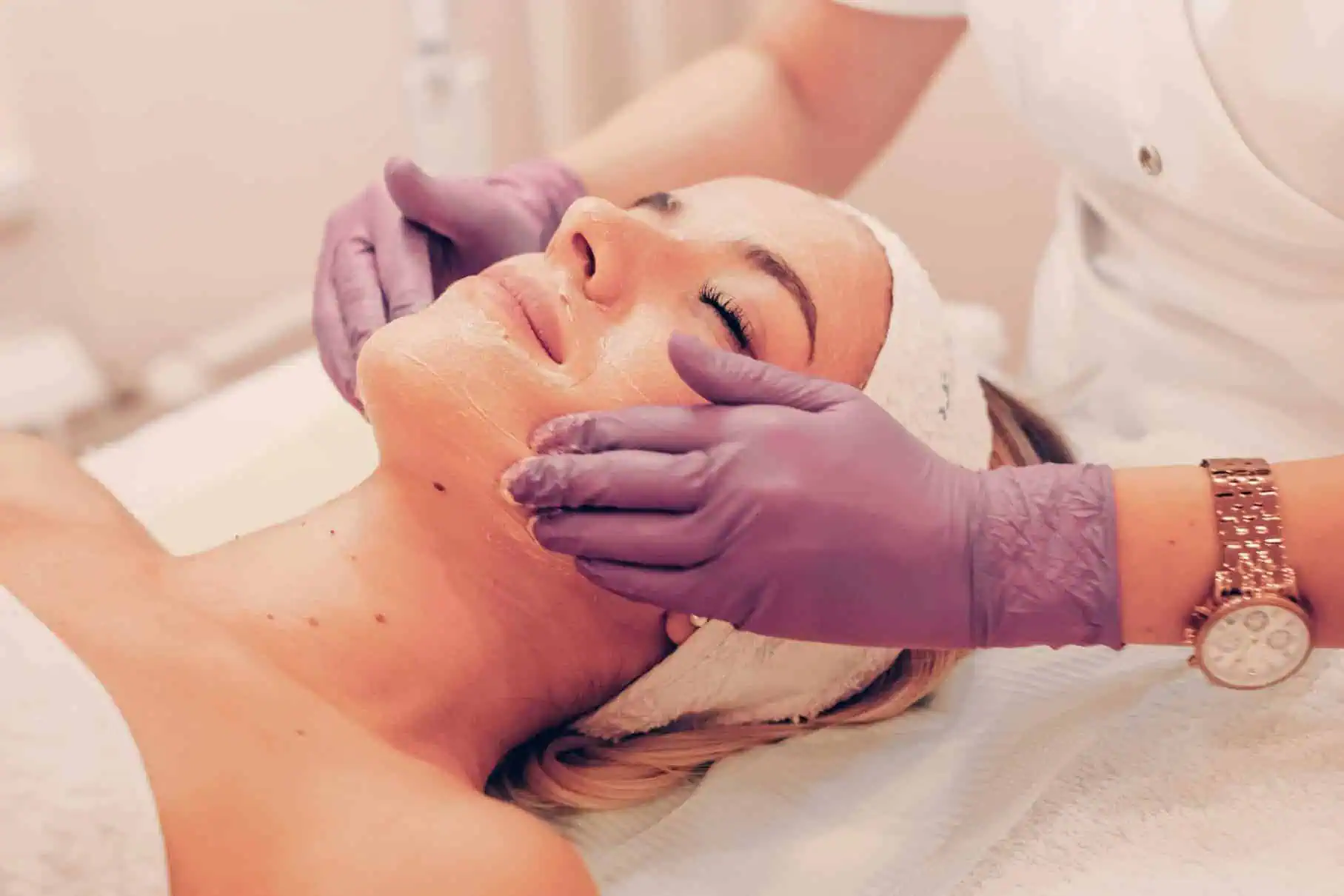
Chemical peels are performed in your dermatologist’s office. At the beginning of the treatment, your provider will clean your face and may cover your eyes with ointment, gauze, tape, or goggles. Before a deep chemical peel, your provider may numb your skin with a local anesthetic.
During a light chemical peel, your provider will use a brush, cotton ball, gauze, or sponge to apply a solution which might sting mildly while on your skin. Your provider will apply neutralizing solution to remove the chemical solution at the end of the procedure.
During a medium peel, your provider will apply cool compresses to your skin after the chemical treatment. You might feel stinging for up to twenty minutes.
After a light peel, treated skin may be red, dry, and mildly irritated. Your provider might apply a soothing, protective ointment or additional correctives. Expect treated areas to take one to seven days to heal.
After a medium peel, your treated area will be red, tight, and swollen. Your provider might recommend using ice packs. Treated areas take about one to two weeks to heal.
After a deep peel, you’ll experience redness, swelling, and skin burning. Your provider may apply a watertight dressing. Treated areas may develop new skin in about two weeks.
Results
Following your procedure, you’ll see improved skin texture, tone and decrease in appearance of wrinkles. Results are more dramatic if you have a medium or deep chemical peel. Because new sun damage can reverse your results, be sure to wear sunscreen on the treated area to protect your skin. Maintain and amplify your achieved results with a personal at-home skincare regimen.
Give yourself the gift of a more youthful and healthier look. Click here to request an appointment today to get started.
Men 50+ at Higher Risk for Melanoma
A new study reported by CNN found that men are dying at a higher rate than women from melanoma, an aggressive form of skin cancer.
Dr. Dorothy Yang who led the study at the Royal Free London NHS Foundation Trust stated, “Over the past 30 years, mortality trends (for melanoma) have increased in most countries. There is evidence that suggests men are less likely to protect themselves from the sun or engage with melanoma awareness and prevention campaigns.”
Men & Melanoma Risk Factors
The biggest risk factor for developing melanoma is overexposure to ultraviolet radiation from the sun or using tanning beds. The American Academy of Dermatology notes that men can benefit from learning more about skin cancer prevention. According to an AAD survey:
- Only 56% of men know there is no such thing as a healthy tan, compared to 76% of women.
- Just 54% of men know that getting a base tan is not a healthy way to protect your skin from the sun, compared to 70% of women.
- Only 56% of men know that skin cancer can occur on areas of the skin not typically exposed to the sun, compared to 65% of women.
Because men over 50 have a higher risk of developing melanoma, it is especially important for men to be vigilant about their skin. While melanoma is the deadliest form of skin cancer, when detected early it is highly treatable. Dermatologists advise both men and women to perform regular skin self-exams to identify early signs of skin cancer and report suspicious moles or spots to their dermatologist. Unfortunately, studies are finding that men 50 and older are less likely to heed this advice than other population groups.
According to Dr. Laura K. Ferris, MD, PhD, FAAD, a board-certified dermatologist and assistant professor of dermatology at the University of Pittsburgh School of Medicine in Pennsylvania, delayed diagnosis is the reason that older men are the most at risk and are most likely to die from melanoma. Dr. Ferris states, “This should be a wakeup call to men over 50 and their loved ones. It’s vitally important that men check their skin regularly and see a board-certified dermatologist if they notice a spot that is changing, growing or looks unusual.”
Dr. Ferris recommends these tips for performing skin self-exams:
- Use a mirror to examine hard-to-see places.
- Look for the “ugly duckling,” or the one mole that looks different from the rest.
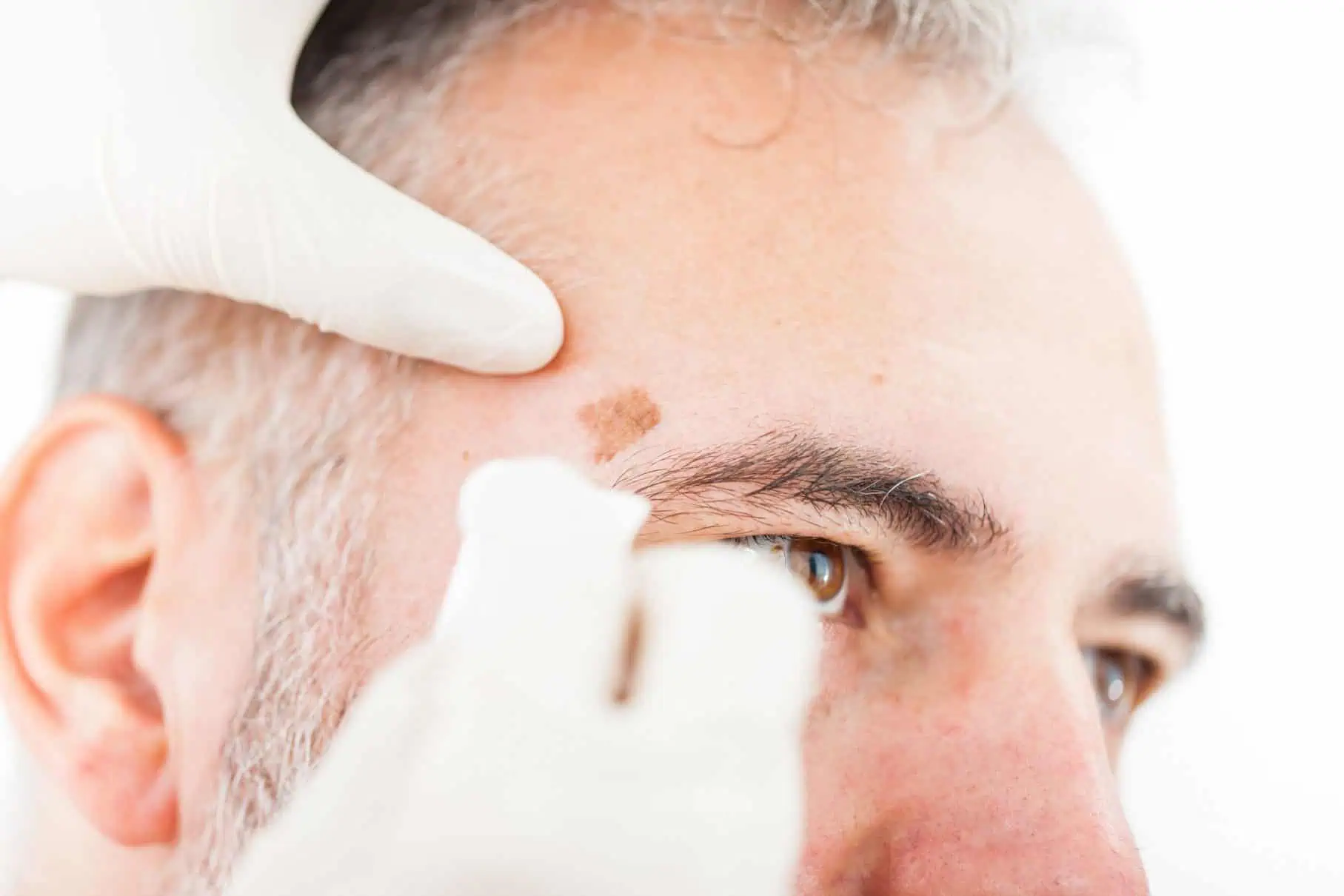
- Pay attention to any mole that is changing or growing rapidly no matter its color, because melanoma may be brown, black or even pink or red.
- If in doubt, get the mole looked at sooner rather than later. When found in its earliest stages, melanoma is highly curable.
The American Academy of Dermatology also recommends that older men take steps to protect their skin by:
- Using a broad-spectrum, water resistant sunscreen with an SPF of 30 or higher.
- Wearing protective clothing when in the sun.
- Seeking shade when outdoors whenever possible.
Early treatment saves lives. Everyone should get a skin cancer screening once or twice a year as your doctor recommends based on your own risk profile, and of course if you have a suspicious mole or spot, schedule a skin assessment today at Water’s Edge Dermatology.
Tips for Choosing the Best Anti-Aging Skincare Products
We all want to look our best and keep our skin youthful, but selecting the right anti-aging skin care products and developing an anti-wrinkle regimen can be daunting. There are so many products out there, it’s difficult to know where to start. Today we’re sharing dermatologists’ top tips for choosing the best anti-aging skincare products in order to maximize your results for healthy, beautiful skin.
- Start with sunscreen: Exposure to the sun speeds up the process of natural aging of your skin, causing wrinkles and uneven pigmentation. Dermatologists agree that sunscreen is the most-effective anti-aging product you can buy. Use sunscreen on exposed skin year-round when outdoors. Choose sunscreen that includes:
- Broad spectrum – blocks UVA and UVB rays
- Non-comedogenic, sensitivity-free, fragrance-free and paraben-free
- SPF 30 or higher
- Water resistant
- Add a moisturizer: Though moisturizers can’t prevent wrinkles, they can help minimize fine lines. This is so effective that moisturizer often is the secret ingredient in many anti-aging products. We recommend moisturizers with Hyaluronic Acid because they help to smooth and plump fine lines and wrinkles. If you use a tinted moisturizer for your face, be sure to select one with a built-in SPF of at least 15.
- Treat your #1 aging-skin concern: It’s important to remember that a regimen to rewind fine lines or fade sun-damaged spots can take time, and compliance is key! Too often, regimens are not followed because of skin irritation and over-doing it on intensive, results-oriented products. Acclimation is important before introducing more products that can create more inflamed skin.
- Buy products formulated for your skin type: No one product works for everyone. Select a sunscreen, moisturizer, and other anti-aging skin care products that are formulated for your skin type. If your skin tends to be oily, select a moisturizer made for oily skin. If you have sensitive skin, you want to see the words “sensitive skin” on the label.
- Read product labels: Look for products that offer all of the following:
- Hypoallergenic – the product can still cause an allergic reaction, but the risk is lower
- Non-comedogenic or non-acnegenic – the product does not cause acne
- Consumer hotline number – contact for questions regarding the product
- Not tested on animals
- Buy anti-aging products from a cosmetic practice: It’s always better to purchase anti-aging products from a cosmetic practice rather than over the counter or in a spa. Qualified aestheticians can help create a personalized skincare plan that is right for your skin type and targets your key skin concerns. Additionally, they can recommend medical treatments with a well-rounded approach that encompasses wrinkles and brown spots, prescription creams, serums, injectables and fillers as well as skin-resurfacing and can guide you to the right combination of treatments for you.
Schedule a skin assessment today at Water’s Edge Dermatology. We can help create a skincare regimen that fits your lifestyle and recommend the best products for you. Click here to request an appointment.