
Teen Acne Isn’t Just a Cosmetic Problem
Medical review by John Minni, DO
If you’ve ever had acne, you know how frustrating it can be. But for some people, it’s more than frustrating.
“Many people think that acne is just a cosmetic issue, but the condition can lead to depression and anxiety, and teenagers are particularly vulnerable,” said John Minni, DO, a board-certified dermatologist at Water’s Edge Dermatology.
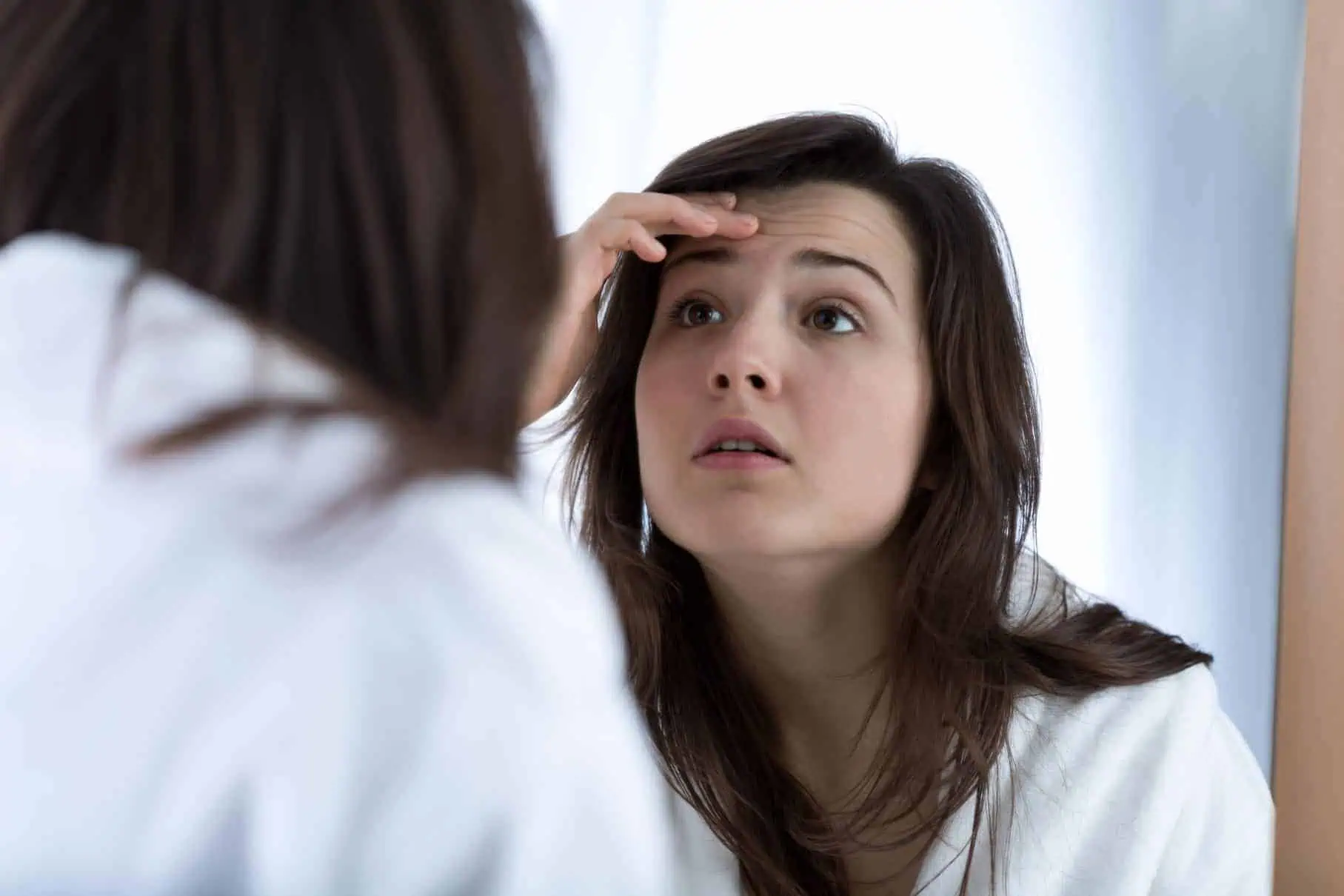
“They’re at a stage when they’re trying to fit in and establish their identity, so it’s disheartening for them to be constantly reminded of their acne, whether they’re looking in the mirror or other people point it out.”
Scientists have long suspected that acne and depression were linked, as well as acne and anxiety. In 2020, a review of 42 studies published in the Journal of the American Academy of Dermatology confirmed these associations. The authors advised dermatologists to pursue aggressive treatment in patients with acne and to consider screening them for mental health issues or referring them to a mental health professional.
Teen acne has wide-ranging effects
Coping with acne, regardless of its severity, can affect nearly every aspect of a teen’s life, Dr. Minni said.
“Acne can contribute to low self-esteem and a poor self-image and make teenagers a target for bullies,” he explained. “As a result, they may try to make themselves invisible.” They may avoid speaking up in class, trying out for sports, joining clubs and hanging out with friends, or making new ones.
Acne can make grooming difficult for teenage boys who are starting to shave and may struggle to avoid nicking blemishes. Body acne may limit clothing choices. Teens ready to date may worry that no one will find them attractive.
Even though many teens get acne, it can create a feeling of loneliness.
“Teenagers are bombarded with images and videos of people with perfect skin, especially on social media sites such as Instagram, that can make them feel like they’re the only person who struggles with acne,” Dr. Minni said. They may not realize that in many cases the photos have been retouched or the person is wearing heavy makeup.
Who’s at risk for acne-related depression and anxiety?
Not every teenager with acne will develop emotional health problems. And not all cases of depression and anxiety in teens are related to acne.
“Acne can be a big instigator of depression and anxiety, but these illnesses are multi-faceted,” Dr. Minni says. “Battling acne may simply be the tipping point for teenagers who are already vulnerable to depression and anxiety due to genetics and environmental factors such as lack of social support.”
Gender may also play a role. Studies have shown that teen girls suffer more emotional distress due to acne than boys. However, the gap appears to be narrowing, according to Dr. Minni.
“The pressure on teen boys to meet certain standards of attractiveness has increased significantly over the years,” he said. “But the good news is that boys are now more likely to see a dermatologist for their acne. It used to be that ‘tough guys’ didn’t do that.”
Acne treatment for teens is critical
Treating acne early on can help reduce the risk of harmful psychological effects. If a teenager has already started showing signs of depression and anxiety related to acne, prompt treatment can help ease or resolve their symptoms, Dr. Minni noted.
“Early intervention is also important because fewer blemishes mean there are fewer opportunities to develop acne scars,” he added. “These scars may be permanent and can cause a lot of distress for years to come.”
Acne does sometimes respond well to over-the-counter cleansers and treatments, but many teens will need to see a dermatologist get results. If OTC products don’t lead to significant improvement after three months of regular use, that’s a sign to see a dermatologist.
“Parents and teens should know that dermatologists have more options for treating acne than ever before that are simple, safe, and affordable,” Dr. Minni said. “Teenagers can get extraordinary results from acne treatment, and that can help restore their confidence.”
Written by Jessica Brown, a health and science writer/editor based in Brooklyn, New York. She has written for Prevention magazine, jnj.com, BCRF.org and many other outlets.
5 Tips to Help Your Teen Overcome Acne
Acne is the most common skin disorder in the U.S. and affects 40 to 50 million Americans. Just when appearance often becomes so important to teens acne can strike and strike hard. By the mid-teens, more than 40 percent of adolescents have acne.
At Water’s Edge Dermatology, teens come to see our acne experts tens of thousands of times each year. We know that acne can take a toll on a teen’s outlook on life, social adjustment, and even school performance. Studies show that teen acne can result in lower self-esteem, poor body image, social withdrawal, depression, anger, and frustration.
The good news is that there are things that parents can do to help teens overcome acne, starting with these five steps from the American Academy of Dermatology (AAD):
Tip 1: Take acne seriously
Telling your teen that acne will clear up on its own may do more harm than good. Kids with acne may be bullied and called names like “pizza face” or “crater face.” Studies have shown that when acne clears, self-esteem also rises. Treatment can help prevent acne from getting worse. Without treatment, acne sometimes becomes severe and may leave permanent scars.
Tip 2: Be cautious about reminding your teen to use acne treatment
It’s true that for treatment to work, your teen must use it. But because they are teenagers, daily parental reminders sometimes feel like nagging and may actually backfire. Fewer reminders may be more effective. Do help your teen keep all of their dermatology appointments. Studies have shown that teens are more likely to follow a treatment plan right before and after an appointment.
Tip 3: Reduce stress
Just about everything can be stressful during teenage years. Stress can cause acne to flare up, so do what you can to reduce stressful situations for your teen, encouraging physical activity, build into their schedules downtime to chill out, and share the importance of just taking a moment to pause and take a deep breath.
Tip 4: Watch for signs of depression
Acne can affect how teens feel about themselves and can lead to depression, anxiety or both. Watch for these signs:
- Sadness lasting 2 weeks or longer
- Loss of interest in activities your teen once enjoyed
- Avoiding social activities
If you spot any of these behaviors, seek professional counseling to help you help your teen. At some point, once you are confident your teen is ready, consider seeing a dermatologist for acne treatment.
Tip 5: Let your teen have the freedom to meet with the dermatologist alone
Allowing your teen the opportunity to meet with the dermatologist without you in the room can help the doctor find out what your teen wants, develop a treatment plan that makes sense to the teen, and create a trusting medical relationship that will make it more likely that your teen will follow treatment regimens and keep follow-up appointments.
Water’s Edge dermatologists can treat your teen’s acne and help prevent new breakouts from occurring, with several treatment options customized to meet your teen’s needs. Click here to request an appointment.
Three Major Misconceptions & Myths About Professional Acne Treatment
We’ve heard more than our share of acne treatment myths in recent years; from how people get acne, to how they can get rid of it, and just about everything in between. Let’s look at three of the more common misconceptions about professional acne treatment.
Myth 1: Dermatologists are basically professional strength pimple-poppers
This is probably the biggest myth about what dermatologists bring to the table when treating acne here in 2018. If psychiatrists are sometimes referred to as “shrinks”, and chiropractors as “bone crackers”, maybe it's understandable that dermatologists are labeled by some (we forgive you!) as glorified “pimple poppers”. But, it's also inaccurate.
Popping pimples is what plenty of people choose to do for themselves already. Plenty more watch graphic videos of the process on YouTube. But our Water’s Edge Dermatology acne experts and others will tell you, pimple-popping is perhaps the worst thing you can do to cystic acne.
This inflammatory act may satisfy an emotional need in the heat of an impulsive moment. But it traumatizes the pimple – both the clogged pore and the skin surrounding it. Your fingers may also be introducing bacteria to your skin and bloodstream that can actually worsen an acne outbreak.
Perhaps the worst part about giving in to frustration and impulsively popping a pimple (or carefully plotting the dark deed for days, either way!) is that it greatly increases your risk of developing an acne scar — either a permanent depression or bump.
So, no; professional acne treatment by a credentialed, qualified dermatology provider has nothing to do with pimple popping. The provider actually uses a very thin, sterilized needle to inject the pimple with medicine, usually an anti-inflammatory. Within minutes to hours, the pimple shrinks from the inside, which smooths the skin. No blood, pus, popping or scarring involved.
Myth 2: I had isotretinoin treatment, so I can’t have a facial
People with severe acne sometimes need a powerful oral medication called isotretinoin. Doctors used to caution patients to wait up to a year after stopping isotretinoin treatment before having cosmetic procedures and/or aesthetic treatments. Imagine just how frustrating that would be. You’re finally getting control of your acne with the right medication – but then hear you have to wait a year to have treatments that could rid you of acne scars and blemishes!
Thankfully, a panel of experts has concluded that there isn’t sufficient evidence to support such cautionary recommendations or restrictions any longer. While patients who have taken oral isotretinoin should still avoid mechanical dermabrasion and laser ablation procedures for 6-12 months, that’s all they need to avoid. There is no good reason to avoid manual dermabrasion, superficial chemical peels, laser hair removal, fractional laser procedures, or even some forms of facial surgery. If you have taken isotretinoin and want a cosmetic treatment or aesthetic procedure, discuss what for you with your cosmetic dermatology provider.
Myth 3: Stronger (more highly concentrated) treatments are always better
While a “stronger” dose makes sense for many medications (e.g. extra strength pain relievers, maximum strength cold relief, etc.), a higher concentration on the label doesn’t necessarily mean an acne treatment is any better for treating acne, or better for you.
When you apply something to your skin for acne, there’s a delicate balance between effectiveness and irritation. Products like benzoyl peroxide do tend to work a little better at higher concentrations. But the maximum concentration isn’t the best for everyone. In fact, many skin products such as benzoyl peroxide can be highly irritating to the skin at higher concentrations.
The bottom line on “stronger” formulas is to proceed with caution, always doing spot tests of any topical ointment being introduced to your skin for the first time. The most foolproof way to be sure you’re getting the best possible treatment for your particular skin and acne, at the right concentration and strength, is to find a Water’s Edge Dermatology office near you and receive professional acne treatment and guidance from a licensed, credentialed and experienced dermatology provider.
Top 5 Causes of Children's School Year Skin Problems
When summer officially ends every late September, the somewhat stressful “Back-to-School” season is also pretty much over with – whew! The question is, did shopping for school supplies and other preparations also leave you well-prepared for dealing with inevitable school year skin problems?
Below are 5 of the most common causes of skin problems among schoolchildren, plus some practical skincare tips on how to prevent or treat them.
Stress
It’s remarkable how much stress affects the skin. Various rashes and acne are commonly caused by stress. So what can you do to help minimize the impact of stress on your children's skin? Find the right tools and techniques to keep their stress levels low (easier said than done, but think communication, exercise & relaxation). Ensure they gently wash their face twice daily with a mild, natural cleanser and warm rather than hot water. And get them to use a hypoallergenic, lightweight moisturizer (with SPF 30 or higher sun protection) daily.
Hormones
Hormones can play a huge role in causing acne for teens, and for an increasing numbers of "tweens" too. Getting your schoolkids into a consistent daily facial cleansing and skincare routine is extremely important. Visiting a dermatologist for the right acne treatment will be warranted in some cases. In extreme instances, you may also want to ask your family physician if hormone therapy is worth consideration.
Sweat
Let’s face it. Here in South Florida, everyone sweats, which can cause rashes and acne breakouts. Training your children to seek shade outside and stay as dry as possible can help. Same with washing off sweat as soon as possible. Consider adding gentle, individually wrapped facial wipes, a lightweight, comfy cap or hat and a soft, absorbent washcloth or bandana to their daily backpack load. But remember to put that bandana in a baggie to keep it clean, and replace with a clean, dry one each day!
Sports
Autumn sports such as football can cause their own set of skin conditions. In Florida, there’s still the sun and heat causing heavy sweating. And sports helmets can cause folliculitis (inflammation of hair follicles). Washing the face immediately after sports activity and cleaning helmet pads with rubbing alcohol are good preventive measures. Some sports uniforms and gear can also cause allergic reactions to some kids. If skin irritations develop in weeks after donning uniforms, a trip to your nearest Water’s Edge Dermatology office is in order.
Shoes/Clothing
Switching from summer’s tank-tops, shorts, and flip-flops to shoes, sneakers, and school uniforms can trigger common skin conditions, such as athlete’s foot. Breathable socks that wick away moisture from damp feet and over-the-counter foot powders that do the same can help prevent such fungal skin infections. New school uniforms should always be washed before first wearing, and if possible, given a day of “test-wearing” to identify any possible irritation or allergic reaction.
Of course, getting the kids on board with a program that addresses the 5 issues above can be…challenging. Explain to them that getting and keeping the clear skin they crave is the goal, the reason for all the extra efforts. Putting sticky notes on bathroom/bedroom mirrors at home with gentle and/or humorous reminders can also help. And if/when needed, virtually all of our dermatology providers specialize in pediatric dermatology as well as adult skincare.
For questions on common school year skin conditions affecting children, such as skin rashes, skin infections and head lice, please contact Water’s Edge Dermatology for an appointment with one of our practitioners by calling your local office, or toll-free at (877) 900-3223. You can also request an appointment online.
Here's to you and your children having a happy, healthy school year!