





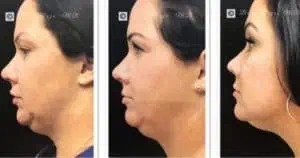
How To Get Rid of Jowls
Medical Review By: Bebe Pajo, MD
Jowls are a tip-off to middle age for celebrities and the rest of us, too. Even if your skin is as smooth as a baby’s bottom, jowls can make you look older. Not so long ago, plastic surgery was the only option for getting rid of jowls, but today there are noninvasive alternatives that can restore a smoother jawline.
What are jowls? They are the loose skin that droops below the jawline. They stem from the loss of collagen that comes with age and the sagging that results. Jowls are also caused by the shrinking of bone that happens over time. That includes the cheekbones, which diminish in volume.
“When that happens, there’s less bone to hold up the fat pads in your face and your skin, and the tendency is for the cheeks to go forward and downward,” said advanced aesthetic medicine expert Bebe Pajo, MD, of Water’s Edge Dermatology. The same drooping can deepen laugh lines, the creases that extend from the edge of the nose to the outer corners of the mouth.
Genes also play a role in the development of jowls. Some people’s faces are simply destined to be jowly.
Dr. Pajo has consulted with patients ranging in age from their early 20s to 90s who want to get rid of jowls. “I educate them about what causes jowls and explain that my goal is to correct the reason you have them instead of just masking the symptoms.” She uses several non-invasive treatments to streamline the jawline, sometimes in combination, including the ones below.
Profound lift
“This treatment tightens the skin. It’s like a facelift, only it’s nonsurgical,” said Dr. Pajo.
In a Profound lift, the provider numbs the skin with an anesthetic, then inserts microneedles that deliver heat in the form of radiofrequency energy to deep layers of tissue. This heat breaks down the collagen, which stimulates the body to produce more collagen as well as elastin and hyaluronic acid, which are also essential for healthy skin.
After the procedure, which is performed in a single session lasting about 45 minutes, patients feel a little discomfort. The treatment does cause significant bruising that can last a week or more, though Dr. Pajo can offer a form of laser therapy called VBeam immediately following the treatment that helps clear swelling and discoloration in a day or two.
The full results of Profound treatment are seen after about six months. “At that time, a patient’s face looks more chiseled and narrower,” said Dr. Pajo. “We get amazing results.”
Radiesse and other hyaluronic acid fillers
Dr. Pajo uses several injectable treatments that help restore the jawline and improve the skin’s overall appearance. One is the hyaluronic acid filler Radiesse. It has a toothpaste-like texture, so it can mimic bone and restore the lost structure that supports fat pads in the face. Radiesse also stimulates collagen production, which tightens the skin. “You’re getting two benefits with this treatment,” said Dr. Pajo.
“Hyaluronic acid fillers are my choice to volumize the face, especially in younger patients who don’t have significant bone loss and wrinkles,” she noted.
The injections cause mild bruising and tenderness. Cosmetic benefits last up to a year or more.
Sculptra
Another collagen stimulator, Sculptra Facial Treatment, can also benefit patients with jowls, said Dr. Pajo. Sculptra is made of the same material used in dissolvable stitches, so it is naturally absorbed by the body over time. It is approved by the Food and Drug Administration for smoothing facial wrinkles, including laugh lines.
The most common side effects that have been reported with Sculptra include bruising, pain at the injection site, swelling, and redness, which can last anywhere from a few days to a few weeks. Benefits can last up to several years.
Fractional CO2 laser therapy
For some patients, Dr. Pajo recommends fractional CO2 laser therapy. This treatment creates columns of microscopic perforations in the skin, which stimulate collagen growth. Within five to 10 days, the treated skin exfoliates and heals.
“It’s a great way to tighten the skin and lift jowls,” said Dr. Pajo. However, the treatment isn’t for everyone. It can cause burning and blistering in people with darker or tanned skin, Dr. Pajo noted. Patients typically experience a few days of discomfort following the procedure.
Thread lift
Dr. Pajo typically refers patients with very heavy jowls for consultation with a plastic surgeon, who may recommend a facelift or neck lift. But for patients who don’t want surgery, she often suggests a thread lift.
Unlike in a facelift, no skin is removed. Instead, the provider lifts sagging skin by pulling it back slightly, then inserting sutures, or threads, under the skin with a small needle to “anchor” loose skin in place. The sutures are eventually absorbed by the body.
“A thread lift not only lifts the jowls but stimulates collagen, too,” said Dr. Pajo.
A thread lift requires only local anesthetic, and the aftereffects are mild. You can drive yourself home and be back at work the next day, according to Dr. Pajo. She typically has the patient check-in with her after a month or so, once the swelling has subsided. If the jowls aren’t fully resolved, she often recommends adding Radiesse treatment to enhance the results.
Jowls don’t have to give away your age. Consult with a board-certified dermatologist or an aesthetic medicine physician with advanced training to discuss the options for treating them.
Article Written By: Timothy Gower, an award-winning journalist who writes about medicine and health. His work has appeared in more than two dozen national magazines.
How to Prevent Wrinkles While You Still Can

Medical review by Denise Guevara, DO
If your face is still as smooth as a baby’s bottom, you probably aren’t thinking about wrinkles. Unfortunately, everyone gets them eventually, partly because as the body ages, it produces less collagen and elastin, proteins that keep the skin firm and elastic.
But if you act now, you can delay the development of wrinkles and enjoy young-looking skin longer. Here, Denise Guevara, DO, a board-certified dermatologist at Water’s Edge Dermatology, shares her best tips for staving off these telltale signs of aging.
Use sunscreen daily
You probably know this, but it bears repeating: Wearing sunscreen is one of the best ways to prevent wrinkles.
“Exposure to the sun’s ultraviolet rays is one of the main causes of premature wrinkles because they damage collagen and elastin, among other harmful effects,” said Dr. Guevara.
Sunscreen plays a particularly large role in preventing wrinkles in people with fair skin. A study published in Clinical, Cosmetic, and Investigational Dermatology concluded that UV rays appeared to be responsible for 80% of signs of aging facial skin in Caucasian women. (The sun takes less of a toll on dark skin because the skin contains more melanin, which provides some natural protection.)
Regardless of skin color, everyone should wear a broad-spectrum sunscreen with an SPF of at least 30 every day, both to prevent wrinkles and to reduce the risk of skin cancer, Dr. Guevara noted.
RELATED: A Melanoma Warning for Millennials and Gen Z
Wear sunglasses
Wearing sunglasses protects the skin around your eyes from UV rays and guards against wrinkles by making you less likely to squint.
“Crow’s feet, which are the wrinkles that form at the outer corners of your eye, are dynamic wrinkles, meaning they develop as a result of repetitive facial movements such as squinting,” Dr. Guevara explained.
If you need regular prescription glasses, it’s important to wear those too in order to limit squinting. Be sure to get regular eye exams as well. You may not realize right away that your vision has gotten worse and that you’ve been squinting more than usual.
Quit smoking
Smoking and vaping cause premature facial wrinkling in several ways. They interfere with the body’s ability to produce collagen and cause blood vessels to narrow, which prevents nutrients from being delivered to the skin. Smoking is also a major contributor to dynamic wrinkles.
“When you smoke, you make repetitive facial movements, such as pursing your lips and squinting,” Dr. Guevara said. “Over time, this creates wrinkles around the mouth and eyes.”
Quitting smoking won’t reduce wrinkles that have already appeared, but it can prevent them from deepening.
Sleep on your back
If you regularly sleep on your side or stomach, you may develop more wrinkles than someone who sleeps on their back.
“Resting your face on a pillow creates compression, which reduces blood flow to the areas of your skin and neck that are in contact with the pillow, depriving them of nutrients,” said Dr. Guevara. “This causes wrinkles to develop on the affected areas as time goes by.”
Can’t sleep on your back? You can minimize compression by sleeping on a softer, bouncier pillow.
Use retinoids
These vitamins A derivatives are commonly used to reduce and prevent wrinkles by increasing collagen production.
“Retinoids are like insurance against future wrinkling,” Dr. Guevara said. “You can start using them in your 20s to prevent wrinkles, though some people begin applying them in their teens because retinoids are also an effective treatment for acne.”
Your dermatologist can prescribe a retinoid, or you can use an over-the-counter retinol product. Retinols are weaker versions of retinoids. The option you choose comes down to what your skin can tolerate. Retinoids are very exfoliating, so you may prefer retinol — and lower-concentration retinol at that — if you have sensitive skin.
Apply a moisturizer that contains hyaluronic acid
Almost any moisturizer can temporarily plump the skin and diminish the appearance of fine lines, but using a moisturizer that contains hyaluronic acid can also help prevent wrinkles. Not only is hyaluronic acid particularly effective at drawing moisture into your skin, but it also helps maintain the integrity of the outer layers of skin, but Dr. Guevara also explained. These layers referred to as the skin barrier, provide protection from external factors that contribute to premature aging, such as pollution.
You can start using a moisturizer with hyaluronic acid at any age, but it becomes increasingly important as you get older, as the hyaluronic acid that is naturally present in the skin decreases over time.
Neutrogena’s Hydro Boost products contain hyaluronic acid, as does wederm Pure Hydration hyaluronic acid serum.
Add vitamin C serum to your skincare routine
Vitamin C serum helps prevent wrinkles by protecting skin from damage caused by unstable molecules called free radicals. These are generated when skin is exposed to harmful elements, such as UV rays and pollution.
“Free radicals cause premature aging because they break down collagen and elastin in your skin,” Dr. Guevara said. “This leads to wrinkles as well as other signs of aging, such as sagging skin.”
Ideally, you should start using vitamin C serum when you’re in your early 20s. But if you’re older and have wrinkles already, vitamin C serum is recommended to help diminish their appearance.
Eat a well-balanced diet
Eating fruits and vegetables rich in vitamin C and other antioxidants can help stave off wrinkles.
“In addition to neutralizing free radicals, fruit and vegetables also have a high water content, and hydration plays a key role in making the skin look firm,” Dr. Guevara said.
Limit foods that contribute to premature aging, such as those high in sugar. When sugar combines with fats or protein in the blood, harmful compounds called advanced glycation end products, or AGEs can form. AGEs can accumulate in the skin’s collagen and elastin and interfere with their functioning.
Consider “preventive” Botox
Botox injections treat wrinkles by temporarily paralyzing certain muscles. That effect also helps prevent dynamic wrinkles such as crow’s feet and worry lines on the forehead.
“Even if your skin is still smooth and firm, you may want to consider getting Botox injections by the time you’re in your late 20s in order to start minimizing facial movements that contribute to dynamic wrinkles, such as grimacing and frowning,” Dr. Guevara said.
Written by Jessica Brown, a health and science writer/editor based in Brooklyn, New York. She has written for Prevention magazine, jnj.com, BCRF.org and many other outlets.