





8 Summer Skin Care Tips for Clear and Protected Skin
Medical Review By: Heather Freeman, PA-C
You may love the relaxing vibes of summer, but it can be a stressful time of year for your skin. Sunburn and sun damage are threats, of course. Hotter temperatures and high humidity are also hard on the skin, making it more prone to acne, dryness, and certain types of rashes. Swimming pools also rob skin of moisture.
To keep your skin healthy, clear, and well protected, follow these tips from Heather Freeman, PA-C, a board-certified physician assistant at Water’s Edge Dermatology.
1. Apply sunscreen thoroughly
Even if you use sunscreen religiously, it’s easy to overlook certain areas when you apply it, such as the part in your hair and the tops of your ears. According to Freeman, many people also neglect their hands, particularly people who bike or play sports like golf or tennis.
“Many skin cancers develop on the backs of the hands,” said Freeman. Failure to use sunscreen there can also make your hands look older than other parts of your body: “The skin on the back of your hands is thin, to begin with, and it gets even thinner after years of sun exposure,” she added.
Favor lotion sunscreens over sprays. “Sprays make it very hard to measure how much product you’re using,” said Freeman. That’s a concern since most people don’t use enough sunscreen in the first place.
2. Use a lip balm with SPF
Your lips are delicate and vulnerable to sunburn and lip cancer, particularly your bottom lip. Freeman recommends carrying lip balm with SPF and re-applying it frequently whenever you’re outdoors.
“It’s easier to find lip balm with SPF 15, but it’s better to buy one with SPF 30 or higher if it’s available,” she noted. If your drugstore doesn’t carry one, look for one online. Plenty of brands make them.
3. Use a vitamin C serum
If vitamin C serum is not part of your skincare routine already, summer is a great time to add it, said Freeman. “It provides an extra barrier for your skin because its antioxidant power neutralizes free radicals, which are molecules that cause sun damage,” she explained.
Vitamin C serum also helps fade hyperpigmentation caused by the sun, including sunspots (aka age spots) and melasma. And it boosts collagen production.
Be sure to apply it before you put on sunscreen. Since sunscreen is much thicker, it can prevent the serum from penetrating your skin if you apply it first.
4. Switch to lighter skincare products
Even people who don’t typically get acne may develop blemishes during the summer due to increased sweating and oil production, so adjust your skincare routine accordingly.
“If you usually use a creamy cleanser, for example, switch to a gel or foaming cleanser during the summer to avoid clogging your pores,” said Freeman.
To limit oiliness, consider adding a toner to your regimen. “Toner is great for removing any remaining oils from your skin after you cleanse, and it temporarily shrinks your pores, which helps prevent debris from entering them.”
To avoid over-drying your skin, choose a toner that contains salicylic acid, and steer clear of alcohol-based toners.
5. Don’t skip moisturizer
Moisturizer might seem unnecessary in hot, sticky weather, but your skin still needs moisture now.
“Sun exposure dries out your skin, so if you’re spending more time outdoors, dryness can become an issue,” Freeman explained. “And if you’re swimming in pools more frequently, your skin can also become parched from the chlorine.”
That said, you may want to use a lighter moisturizer, such as a water-based lotion or a hyaluronic acid serum. Use a moisturizer even if you have oily skin. Sebum, the oil in oily skin, doesn’t hydrate skin, it just makes it greasy.
If your moisturizer contains SPF, you still need to use a separate sunscreen if you’ll be outside for more than a short period since moisturizer has less staying power when you’re sweating, Freeman noted.
6. Protect yourself from rashes
Heat and humidity increase the risk of heat rash, also called prickly heat, caused by blocked sweat glands. Symptoms include itching, reddened skin, red bumps, and tiny blisters. Rashes caused by fungal infections are also more common in summer.
RELATED: 6 Common Water Rashes and How to Treat Them
“You’re more likely to get a fungal rash now because fungi love hot, moist areas of your body, particularly the skin folds such as your armpits, stomach, and under your breasts,” said Freeman.
To reduce your risk of heat rash and fungal infections, Freeman recommends wearing breathable, cotton clothes and applying a powder such as Zeasorb to skin folds to absorb sweat. Drying these areas with a hairdryer set on cool is also helpful if you’ve just gotten out of the shower or start to feel sweaty at home.
7. Guard against rosacea flares
Summer weather is hard on people with rosacea since sunlight and heat are common triggers of flare-ups. Unfortunately, chemical sunscreens can also cause a flare.
“If you have rosacea, it’s better to use a mineral sunscreen that contains zinc oxide or titanium dioxide because these ingredients are less likely to aggravate your skin,” said Freeman.
If you want to try a new brand of sunscreen, do a patch test first. Apply a small amount near (not on) a rosacea-prone area of your skin. If it burns or stings within 72 hours, don’t use it.
8. See your dermatologist if you get a serious sunburn
You can easily manage a mild sunburn on your own with cold compresses, aloe vera gel, moisturizer, ibuprofen, and drinking plenty of fluids. But serious sunburns should be evaluated by your doctor, according to Freeman. If your skin is crusting, scabbing, or draining pus, or if you have a fever or chills, you may need to take an antibiotic.
Article Written By: Jessica Brown, a health and science writer/editor based in Brooklyn, New York. She has written for Prevention magazine, jnj.com, BCRF.org, and many other outlets.
What Is a Facial?
Medical Review By: Alyse Penninger
If you’ve never gotten a facial, you may be missing out. But what exactly is a facial?
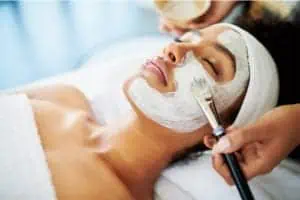
A facial is a deep cleansing treatment that sloughs away dead skin cells and removes debris from deep in your pores. The techniques and products used vary depending on the type of facial and the provider. Facials are best performed by a licensed aesthetician and may include targeted treatments such as dermaplaning or microdermabrasion.
“When you get a facial, you’re treated with medical-grade products that are designed to penetrate the epidermis and affect the deeper layers of skin, unlike drugstore products that sit on top of your skin,” says Alyse Penninger, a licensed medical aesthetician at Water’s Edge Dermatology. “You also get the expertise of an aesthetician, who evaluates your skin and tailors the products and techniques included in the facial to best address your concerns.”
An aesthetician can tailor your facial to achieve the results you want. Here are some of the types of facials commonly offered by dermatology practices.
Classic facial
A classic facial typically involves four steps: cleansing, exfoliating to remove dead skin cells, extracting debris from your pores and hydration.
“If your pores are very clogged, your aesthetician may also steam your face before doing extractions,” said Penninger. “This softens your epidermis, which makes it easier to remove the debris that’s deep in your pores.”
Benefits of a classic facial include clearer, more radiant skin. Anyone can get a classic facial, regardless of skin type, since it’s easy to customize the products used. If your skin is oily, for example, your aesthetician will hydrate your skin with moisturizers that are lighter than those used for people with normal to dry skin.
When to get one: Every four to six weeks.
Acne/milia facial
If you have acne or milia — small, hard bumps that develop under the top layer of skin — you may be tempted to “pop” them yourself. But it’s much safer and more effective to get a facial designed for these concerns.
The reason: When you get an acne or milia facial, your aesthetician will use special tools, such as a lancet, to gently break the skin and expel the contents of the lesion or milia with minimal pressure. To draw out blackheads and whiteheads, the aesthetician may also use ultrasonic tools, which create gentle vibrations in the skin.
“People are sometimes tempted to squeeze acne themselves, but they often apply too much force,” Penninger says. “This can cause irritation and broken capillaries, making skin look even more rough and blotchy.” Squeezing won’t get rid of milia due to their pearl-like hardness and location beneath the surface of the skin.
When to get one: Every four weeks. People with severe acne can get one more often.
Oxygen therapy facial
This type of facial is appropriate for all skin types, though it’s particularly well suited to dry skin. After cleansing and exfoliating your face, the aesthetician uses a wand-like instrument to deliver streams of pressurized oxygen combined with hydrating serums to the skin. This allows the serums to penetrate more deeply.
“Oxygen therapy facials hydrate and plump your skin, making it look more lifted and firm and diminishing fine lines,” Penninger said.
When to get one: Every four to six weeks.
Dermaplaning
Dermaplaning can be added on to any facial. The aesthetician uses a small surgical blade to exfoliate the top layer of skin and remove peach fuzz.
“People love to get dermaplaning before special events because it makes skin look so smooth, almost like it’s airbrushed,” Penninger said.
Your skin may look red for a few days after treatment, so it’s best to schedule the treatment a few days before a special event.
When to get it: Every three to four weeks.
Microdermabrasion
Microdermabrasion delivers more powerful exfoliation compared to classic facials. The aesthetician uses a small, mildly abrasive tool to remove the top layer of skin, diminishing age spots, hyperpigmentation, acne scars and enlarged pores. Microdermabrasion also causes the collagen in skin to thicken, making your face look tighter and smoother.
For more aggressive treatment of hyperpigmentation, fine lines, wrinkles, acne scars and sun damage, your provider might recommend a chemical peel, which is not generally performed in conjunction with a facial. Chemical peels use an acid to slough off the top layers of skin.
When to get it: Twice a month at first, then once a month to maintain the results. Get a mild- or moderate-strength chemical peel once every six to 12 months. Get a deep peel once in your life.
HydraFacial
In this type of facial, the aesthetician uses a wand-like device to perform every step of the treatment. Cleansing and exfoliating are combined into one step; the wand dispenses clearing serum to your face and washes away dead skin cells with a special spiral tip. Next, the aesthetician uses the wand to apply a gentle peel that loosens the debris in your pores, then uses suction to remove the debris. Last, the wand delivers antioxidants and peptides (amino acids that make skin look more plump and firm) to your skin.
While the name implies that the treatment is best for people with dry skin, anyone can get a HydraFacial because the serums used can be tailored to your skin type, Penninger said. Benefits include a brighter, more even complexion and less-noticeable fine lines.
When to get it: Every two to four weeks depending on your skin type.
Article Written By: Jessica Brown, a health and science writer/editor based in Brooklyn, New York. She has written for Prevention magazine, jnj.com, BCRF.org and many other outlets.
What Is a PRP Facial and What Can it Do For Your Skin?

Medical review by Emmanuel Loucas, MD
Is your skin in need of a little rejuvenation? If you’re looking to brighten a dull complexion, tighten sagging skin or lessen the appearance of scars, wrinkles or sun damage, a relatively new treatment called a PRP facial, popularly known as a vampire facial, could be just the ticket.
What is a PRP facial?
PRP stands for platelet-rich plasma. In a PRP facial, plasma is taken from your own blood and then injected into your skin. That plasma is rich in platelets that contain proteins called growth factors.
“These growth factors stimulate fibroblasts, which are cells in the skin that produce collagen,” said Emmanuel Loucas, MD, a board-certified dermatologist at Water’s Edge Dermatology. “When you get PRP therapy, new collagen forms and plumps the skin, making it smoother and minimizing the appearance of fine lines, wrinkles and scars.” PRP therapy also boosts production of elastin, which increases skin’s elasticity.
PRP injections have been used for decades to help athletes heal from injuries. Only more recently have skin care providers begun using PRP injections for facial rejuvenation.
“Patients really like PRP therapy because it’s so natural,” said Dr. Loucas. “You’re being treated with platelets taken from your own blood.”
What to expect
When you arrive at your appointment, the doctor will draw 1 to 2 ounces of blood by placing a needle in your arm. The needle contains a small amount of anticoagulant to prevent the blood from clotting, so it may sting a little, Dr. Loucas said.
The blood is placed in a centrifuge to separate it into various components. The plasma rises to the top, and the lower part of the plasma layer, which is especially rich in platelets, is what is used for the injections.
The number of injections depends on the size of the area treated, but at least a couple of dozen injections with a small needle are typically needed for best results. Don’t worry, topical and injectable anesthetics can be used to minimize any discomfort.
Microneedling with PRP
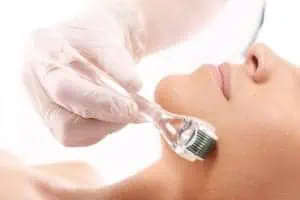
In some cases, your provider may recommend adding microneedling to your treatment. Microneedling with PRP is performed by spreading the PRP on the skin and using a dermaroller (which resembles a mini paint roller coated with tiny needles) to create shallow pricks in the skin. The PRP enters the skin through these pricks. Microneedling on its own also boosts collagen production.
Some doctors use both injections and microneedling. “Combining the two approaches can lead to better results because you’re triggering collagen production in both the dermis [the thick layer of skin beneath the epidermis] and the epidermis,” Dr. Loucas explained.
PRP facial downtime
Recovery from a PRP facial is brief. The treated areas of skin may be a little red at first, but the redness fades in a few hours. You may experience minor swelling for a couple of days. Microneedling may also cause slight bruising, which clears up within four or five days.
How many treatments are needed?
A full course of PRP therapy is three treatment sessions spaced eight weeks apart. Improvement builds over time as collagen production increases. You’ll see the most improvement several weeks after you’ve had all three sessions, but many patients say they can see a difference after just one session, according to Dr. Loucas.
To maintain optimal results, consider undergoing maintenance treatments every six to 12 months.
The best candidates for PRP therapy
PRP facials work best when the skin still has a fair amount of collagen in it, said Dr. Loucas. “PRP isn’t very effective once the skin is very thin and has lost elasticity.”
Most people can safely undergo PRP treatments. Those who have severe inflammation in the area to be treated from a condition such as eczema or psoriasis should wait until the inflammation is cleared. People with a severe immune system disorder should talk with their doctor before undergoing treatment.
Possible risks and side effects
Because it uses your own plasma, PRP treatment is generally safe and well-tolerated. While there’s a risk of infection whenever you puncture the skin, the provider takes steps to minimize it. Other risks include injury to the blood vessels or nerves, calcification at the injection site and development of scar tissue.
When it comes to choosing a provider for your PRP facial, training and experience counts.
“There is an art to performing PRP therapy, so you really want to see a knowledgeable provider who won’t administer it robotically,” Dr. Loucas. “That way, you’ll get the best results for your money.”
Written by Jessica Brown, a health and science writer/editor based in Brooklyn, New York. She has written for Prevention magazine, jnj.com, BCRF.org and many other outlets.
Microneedling + Dermaplaning: Learn Why, When & Where
You may have heard the buzz about microneedling and dermaplaning. These are two terrific beauty treatments we perform with great regularity and success at all our Water’s Edge Dermatology locations that offer aesthetic treatments. The most common questions about these amazing aesthetic services are Why? and When?
Why choose microneedling and dermaplaning, as opposed to other aesthetic services? Why choose one vs. the other? And when is the right time to choose them?
To answer these and other questions, let’s take a closer look at both microneedling and dermaplaning. There are some very good reasons why they’re trending so heavily days, and not only with women.
Addressing an 'Age-Old' Problem with Microneedling & Dermaplaning Treatments
Do you feel a twinge of envy when you see someone with flawless, baby-smooth skin? Do you sigh when you look in the mirror? Fine lines, wrinkles, blemishes, scars, spots – almost everyone has them. With age, uneven texture and signs of sun damage are common. The skin loses collagen and elastin proteins, giving it the characteristic aged appearance. But smoother skin doesn’t have to remain a dream. Here are two minimally invasive procedures that can give you smoother, brighter, more youthful skin.
Microneedling To Turn Back Time
Microneedling involves piercing the top layer of your skin with a dermaroller. This small hand-held instrument is like a paint roller coated with tiny needles. It creates hundreds of little invisible punctures that jump-start the skin’s natural healing mechanisms.
That may sound a bit scary, but this in-office, minimally invasive procedure is virtually painless. Afterwards, you may have some mild swelling and slight bruising. If so, that all resolves within 2-3 days…revealing the beautiful new you underneath.
You’re probably wondering how puncturing the skin can be a good thing. Well you see, we know for sure that aging skin lacks collagen. And the microneedling punctures stimulate collagen production. That’s why it’s also called “collagen induction therapy”. An added benefit is that your skincare products penetrate and are absorbed better, after a microneedling session.
At a microneedling treatment session or two, you’ll notice a reduction in fine lines, deep wrinkles, and crow’s feet. Studies show that nearly 100% of people report excellent results on the anti-aging front.
And, microneedling treatments are also showing outstanding results in reducing the severity of acne scars following treatment. So whether it’s turning back the clock, helping clear old acne scars (or maybe both) … microneedling may be right for you.
Dermaplaning for Healthy, Radiant Skin
Have you ever wondered why your favorite exfoliating cleanser makes your skin look smoother? It’s because it scrapes off that lurking outer layer of dull, dead cells on the skin surface. Dermaplaning is essentially the same thing – exfoliation – but it’s extra-effective because it’s performed by a licensed, trained skincare professional using a sterile surgical-grade scalpel (if that sounds scary, think of it as a fancy razor!).
Dead skin cells and fine hairs need to go, because they make your complexion dull and flaky. They clog pores and predispose your skin to breakouts. Removing dead skin with dermaplaning can benefit all skin types (except people with active inflammatory acne), and restore that youthful glow you long for.
This is a noninvasive in-office procedure that gently shaves the skin surface. You’ll notice improved tone and texture – how does silky smooth skin sound? There’ll be a reduction in acne scars and hyperpigmentation. You’ll have less peach fuzz and your makeup will go on super smooth. Your skincare products will penetrate and work better. Periodic follow-up sessions will keep you glowing.
A dermaplaning treatment at one of our Water’s Edge Dermatology offices is painless and there’s virtually no downtime, other than some slight redness. So, you could get a treatment during your lunch break and head straight back to the office.
When it comes to beauty treatments such as dermaplaning and microneedling, remember that these are precision procedures. You don’t simply want to find "the best deal" and take your chances. You want to find the best facility.
Dermaplaning and microneedling treatments are best done by highly trained, experienced, licensed and insured aestheticians or dermatologists trained in cosmetic dermatology. That's how we do it at Water’s Edge Dermatology. For proper peace of mind, cosmetic procedures are best performed in the safety of a medical office setting.