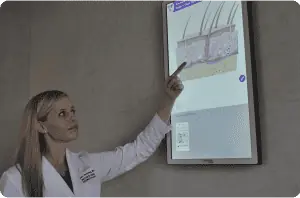





Learn the Facts About Hair Loss

As people age, hair loss becomes a bigger and bigger concern for both men and women. Hair grows essentially everywhere on the human skin with the exclusion of the palms of hands and the soles of feet. It's made up of a protein called keratin. When follicles make new hair cells, old ones are push out of the skin at a typical rate of about six inches of hair per year. So in a sense, the hair we see on our heads is a string of dead keratin cells.

However, hair growth can slow down or stop altogether for a number of different reasons. For many, hair loss is a hereditary issue. There are 30 million American women who experience hereditary hair loss at some point in their life. Age also causes hair loss. As people get older, their hair growth slows, a trend that's especially common amongst men. By age 50, a man has a 50% chance of experiencing losing his hair. Hormones, stress, illness, and environmental factors, such as cosmetic procedures and diet can also cause hair loss.

Luckily, there many ways to approach the treatment of hereditary and onset hair loss. The first and most important step is to find a dermatology practice that specializes in hair loss treatments.

When it comes to hair loss treatment, there are several approaches that both men and women can take.

  • Topical treatments such as rogaine. These are applied directly to the scalp where hair growth it desired.
  • Oral treatments such as propecia help treat male pattern baldness and hair loss.
  • Hair replacement procedures are also popular and effective. One of these treatments typically involves hair transplantation methods and scalp reduction.

If you are experiencing hair loss, know that you are not alone. Finding the best dermatologist for hair loss is an important first step in finding the right kind of hair loss treatment that is right for you.


Getting A “Head” Start in Hair Care

It’s time to give your head and hair care regimen some TLC. With the help of these tips your hair and scalp can be healthy and strong.

  • Know your scalp— Your scalp makes a big difference in your washing habits. If you have an oily scalp, your hair needs to be washed more often, sometimes as often as once a day. A drier scalp or color-treated hair should be washed less frequently.
  • Wash wisely— Shampoo is your friend, but avoid scrubbing at your hair. Massage shampoo into your scalp and let it rinse through your hair to prevent breakage and flyaways.
  • Conditioning leads to healthier hair— Always condition your hair after shampooing to strengthen your hair, protect it from UV rays, decrease static electricity and keep it shiny. Choose a conditioner specially formulated for your hair type and use it primarily on the tips of your hair for the best results.
  • Protect your hair from yourself— Beauty doesn’t have to be detrimental to your hair. Let your hair air-dry or use the lowest setting if you must use a hair dryer. Remember to use a wide tooth comb if you comb it while it’s wet, and use the lowest settings on any hot hair tools.

Your Water’s Edge dermatologist can help you pinpoint the cause for your hair loss. In the meantime, giving your hair and your scalp a break will help you keep your hair looking it’s best.