
The ABCDE Rules of Melanoma
The fun and sun of summer is knocking at the door, but so is the deadliest result of too much sun – melanoma. That’s why catching and treating it early is the key to battling and even curing melanoma.
Melanoma is tricky. It can start on the surface of the skin, under a nail or even in the eye. Once it gets started growing, it can grow deep into the skin and spread through the body. That’s what makes it so dangerous.
Anyone can get melanoma, regardless of age, sex or skin color. People with certain risk factors should be especially persistent about getting regular skin checks for melanoma and other skin cancers by a dermatologist.
Melanoma Risk Factors
People with these risk factors have a higher probability of developing melanoma:
- Fair, sun-sensitive skin that burns easily or tans poorly
- Red or blond hair; Blue or green eyes
- Have 50 or more moles
- Unusual or irregular-looking moles that are typically large in size
- A history of sunburns or indoor tanning bed use
- Blood relatives who have or had melanoma
- Immune system weakness due to disease, organ transplant or medication
- History of melanoma or another skin cancer
- Age 50 or older
What to Look For
A common warning sign of melanoma is change. Melanoma often begins in or near an existing mole. A change in the shape, color or size of a mole can be a warning sign of melanoma. Also be aware if a mole becomes painful or begins to bleed or itch.
Some melanomas develop suddenly and without warning. Regular skin self-exams can you identify these changes.
The ABCDE Rules of Melanoma
Make sure you are doing regular skin checks. Look for moles and other spots on your skin and apply the ABCDE rules listed below. During a skin self-exam, keep in mind that moles are typically uniform in color, round or oval and have a well-defined border. Though melanomas can vary greatly in appearance, most tend to have one or more of these ABCDE traits, and some have several.
 |
 |
 |
 |
 |
| A = ASYMMETRY One half is different than the other half |
B = BORDER Irregular, scalloped or poorly defined border |
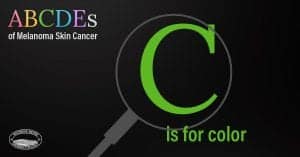
C = COLOR Varied from one area to another with shades of tan, brown, black and sometimes white, red or blue |
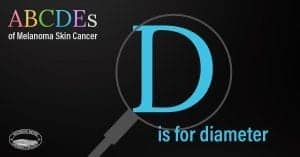
D = DIAMETER Melanomas are usually wider than a pencil eraser, but they can be smaller |
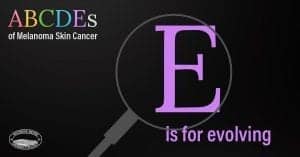
E = EVOLVING A mole or skin lesion that looks different from the rest or is changing in size, shape or color |
Make an appointment to see a Water’s Edge Dermatology provider if you notice any of the ABCDE traits. Your practitioner will examine any mole that has one or more of these traits and all new growths.
Remember, early detection and treatment saves lives. Click here to schedule a skin cancer screening at your nearest Water’s Edge Dermatology office.
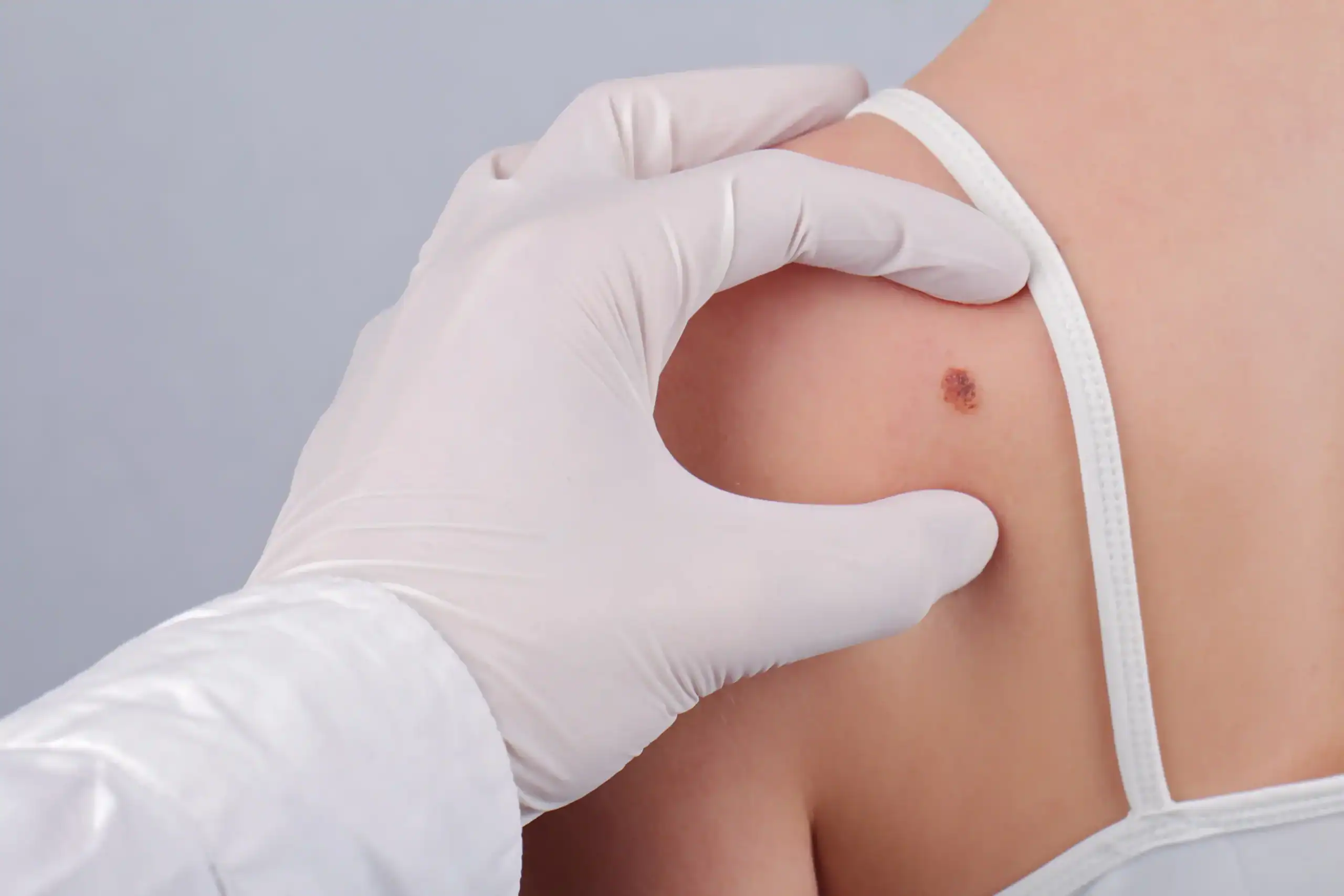
First Monday in May is Melanoma Monday
Did you know that skin cancer is the most common cancer? Approximately 9,500 people in the U.S. are diagnosed with skin cancer every day. That means approximately one in five Americans develop skin cancer. While melanoma is not the most common type of skin cancer, it is the most dangerous. It is responsible for 10,000 American lives lost every year and is the second most common form of cancer in females ages 15 to 29. The good news is that skin cancer is also the most preventable cancer.
To raise awareness of melanoma and to encourage annual skin checks to help prevent skin cancer in general, the American Academy of Dermatology designates the first Monday in May as Melanoma Monday.
Who gets melanoma?
People of all colors and races get melanoma. Those with light skin who sunburn easily are at higher risk. If you have any of the following risk factors, you need to take extra caution in protecting your skin from the harmful rays of the sun:
- History of sunburns
- Family history of skin cancer
- Exposure to X-rays
- Use of tanning beds or sunlamps
What does melanoma look like?
Melanoma often develops in a mole or appears suddenly as a new dark spot on the skin. Be on the lookout for changes in moles, and if you see irregular edges or unusual colors in a mole, schedule a visit with your Water’s Edge Dermatology provider right away. Catching melanoma early (before it can spread) is key to stopping it. Even though melanoma can be deadly, survival rates can be greater than 90% when treated early.
Preventing melanoma
Tips to help prevent melanoma:
- Wear broad-spectrum, water-resistant sunscreen with an SPF of 30 or more on exposed skin
- Cover up with a hat and clothing
- Stay in the shade when possible, especially 10am-4pm when the sun’s rays are the strongest
- Protect children from sun exposure by playing in the shade, wearing protective clothing and applying sunscreen
- Avoid tanning beds, which can cause skin cancer and wrinkling
- Check your birthday suit on your birthday. If you notice any skin changes, skin growths or bleeding on your skin, see a Water’s Edge Dermatology practitioner immediately
In addition to doing self-exams on your birthday, May is a great month to schedule a skin check by a highly specialized skin care expert. At Water’s Edge Dermatology, our providers are experts in spotting melanoma and treating it early with procedures just right for each of our valued patients. Be safe and schedule your skin cancer check now.
Request an appointment with one of our skin care experts at Water’s Edge Dermatology.
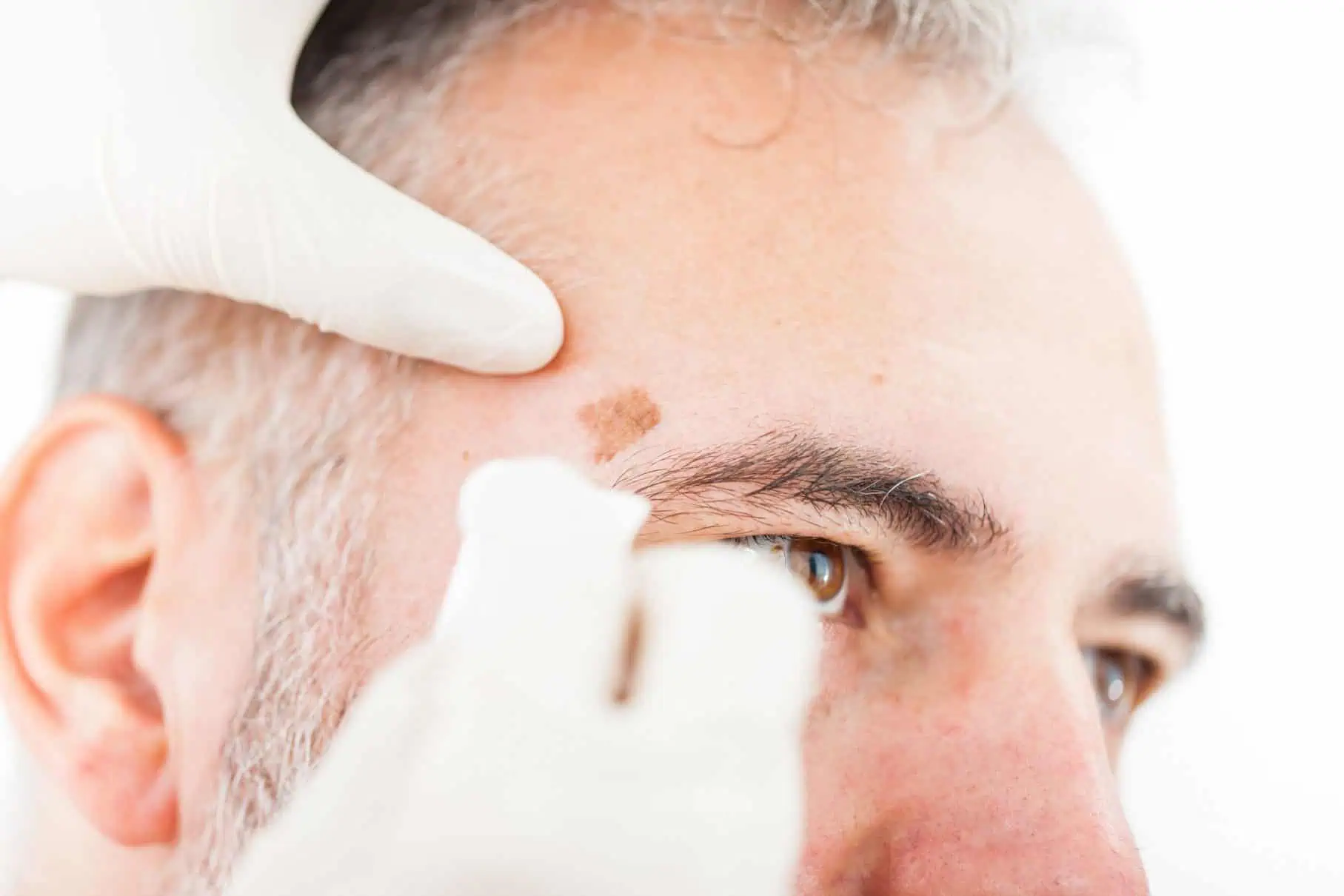
Men 50+ at Higher Risk for Melanoma
A new study reported by CNN found that men are dying at a higher rate than women from melanoma, an aggressive form of skin cancer.
Dr. Dorothy Yang who led the study at the Royal Free London NHS Foundation Trust stated, “Over the past 30 years, mortality trends (for melanoma) have increased in most countries. There is evidence that suggests men are less likely to protect themselves from the sun or engage with melanoma awareness and prevention campaigns.”
Men & Melanoma Risk Factors
The biggest risk factor for developing melanoma is overexposure to ultraviolet radiation from the sun or using tanning beds. The American Academy of Dermatology notes that men can benefit from learning more about skin cancer prevention. According to an AAD survey:
- Only 56% of men know there is no such thing as a healthy tan, compared to 76% of women.
- Just 54% of men know that getting a base tan is not a healthy way to protect your skin from the sun, compared to 70% of women.
- Only 56% of men know that skin cancer can occur on areas of the skin not typically exposed to the sun, compared to 65% of women.
Because men over 50 have a higher risk of developing melanoma, it is especially important for men to be vigilant about their skin. While melanoma is the deadliest form of skin cancer, when detected early it is highly treatable. Dermatologists advise both men and women to perform regular skin self-exams to identify early signs of skin cancer and report suspicious moles or spots to their dermatologist. Unfortunately, studies are finding that men 50 and older are less likely to heed this advice than other population groups.
According to Dr. Laura K. Ferris, MD, PhD, FAAD, a board-certified dermatologist and assistant professor of dermatology at the University of Pittsburgh School of Medicine in Pennsylvania, delayed diagnosis is the reason that older men are the most at risk and are most likely to die from melanoma. Dr. Ferris states, “This should be a wakeup call to men over 50 and their loved ones. It’s vitally important that men check their skin regularly and see a board-certified dermatologist if they notice a spot that is changing, growing or looks unusual.”
Dr. Ferris recommends these tips for performing skin self-exams:
- Use a mirror to examine hard-to-see places.
- Look for the “ugly duckling,” or the one mole that looks different from the rest.
- Pay attention to any mole that is changing or growing rapidly no matter its color, because melanoma may be brown, black or even pink or red.
- If in doubt, get the mole looked at sooner rather than later. When found in its earliest stages, melanoma is highly curable.
The American Academy of Dermatology also recommends that older men take steps to protect their skin by:
- Using a broad-spectrum, water resistant sunscreen with an SPF of 30 or higher.
- Wearing protective clothing when in the sun.
- Seeking shade when outdoors whenever possible.
Early treatment saves lives. Everyone should get a skin cancer screening once or twice a year as your doctor recommends based on your own risk profile, and of course if you have a suspicious mole or spot, schedule a skin assessment today at Water’s Edge Dermatology.
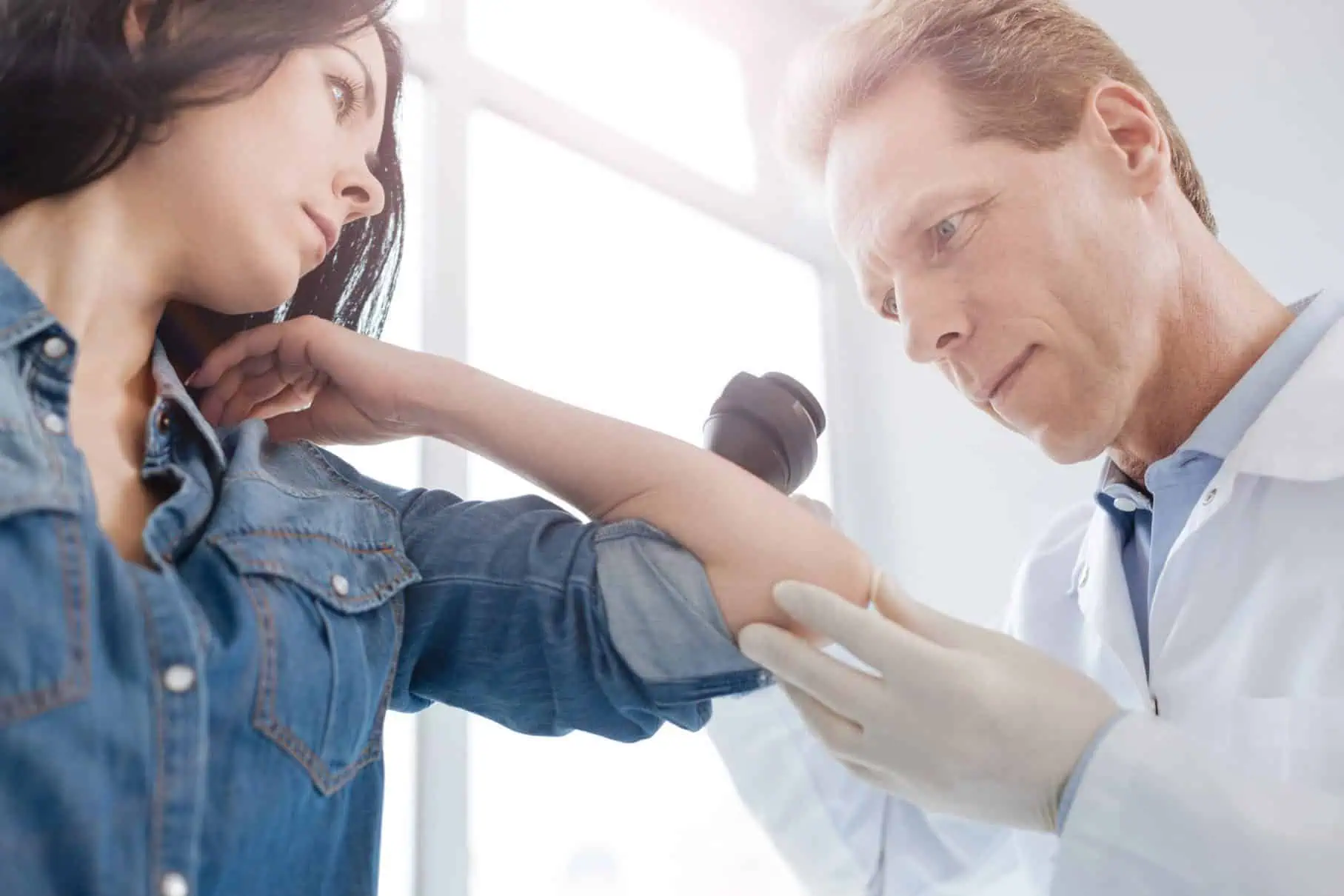
Spotting Skin Cancer
Have you ever looked at a spot on your skin and asked yourself, “Should I be concerned about that?” Most of us have. At Water’s Edge Dermatology, we want to help make everyone smarter about skin cancer diagnosis and treatment.
Skin cancer is the most common cancer in the United States. Early detection is vital. When diagnosed early, skin cancer treatment has a high success rate. Though most skin cancer occurs on the outside of your body, it can appear anywhere – from your scalp to between your toes and even the bottoms of your feet and under your nails.
The American Academy of Dermatology encourages everyone to conduct regular skin self-exams. That way you can be aware of any changes in your skin over time. If possible, have a partner do a skin check with you and help you examine hard-to-see areas like your scalp and back.
What skin cancer looks like
Skin cancer can appear on the body in different ways and can look like:
- A changing mole or mole that appears different from your other moles
- A dome-shaped growth
- A scaly patch
- A non-healing sore or sore that heals and comes back
- A brown or black streak under a finger or toenail
Dermatologists sum it up this way: If you notice a spot on your skin that differs from the others, changes, itches or bleeds, you see your dermatologist and have it checked out.
But I don’t feel sick
You can have skin cancer and feel just fine. In fact, most people who find a suspicious spot on their skin or a streak under a nail report that they don’t feel ill. If you notice a suspicious-looking spot, make an appointment with your Water's Edge Dermatology provider. Remember, when diagnosed early, skin cancer treatment is highly successful. If it is allowed time to grow, treatment can become more difficult.
There are three main types of skin cancer: basal cell carcinoma, squamous cell carcinoma, and melanoma. Basal cell and squamous cell carcinomas are quite common and generally not life-threatening. Often, they can be treated using non-surgical methods such as Electron Beam Therapy. MOHS surgery is sometimes recommended depending on the size and location of the skin cancer.
Melanoma is a more serious type of skin cancer, though when detected early, melanoma is also highly treatable. People with an increased risk of melanoma, including men older than 50, people with more than 50 moles or large or unusual moles, people with fair skin, and those with a history of cancer, should talk to a dermatologist about how often they should schedule a skin exam from their practitioner.
What will the dermatologist do?
When you see your dermatologist for a suspicious spot, the provider will first examine the area. If it looks like it could be skin cancer, your dermatologist will remove all or part of it as part of a skin biopsy. A biopsy of the suspicious growth is the only way to diagnose skin cancer.
The biopsy is reviewed under a microscope by a dermapathologist to see if cancer cells are present. If cancer cells are identified, the biopsy report explain what type of skin cancer cells were found. Following a skin cancer diagnosis, your dermatologist can recommend the best skin cancer treatment for you.
If no cancer cells are found, the biopsy report will explain what was found under the microscope.
Water’s Edge Dermatology recommends that everyone have skin cancer screenings from a board-certified dermatologist, especially in sunny Florida. Schedule an appointment today and enjoy peace of mind. Click here to request an appointment or call 877.533.8214.
New Skin Cancer Research & Treatment: Mid-2018 Update
For millions of Americans living with basal and squamous cell carcinoma, or melanoma, each new breakthrough in skin cancer research & treatment matters deeply.
For some, it can mean the difference between life and death.
Thankfully, there’s a wealth of productive skin cancer research & treatment activity occurring worldwide in 2018. There’s also more effort than ever to educate the public about prevention. More than ever, people understand that un/under-protected sun (or tanning bed) exposure damages the skin, and causes skin cancer.
But while more people are taking preventive measures, skin cancer rates keep rising. And to nobody’s great surprise, Florida leads the nation in annual diagnosed skin cancer cases.
Given these troubling truths, here’s to raising hopes as well. Let’s take a look at some of 2018’s brighter prospects in skin cancer research & treatment.
Breakthrough in Basal Cell Carcinoma Drug Resistance
With about 2 million new cases yearly, basal cell carcinoma is the most common skin cancer in America – and the most common cancer, period. If caught early enough, it can be treated successfully with surgical removal or targeted radiation treatment. If not, it can spread throughout the body. And, it can become notoriously drug-resistant.
That’s why the early-year announcement from Stanford University researchers was so potentially important. They’ve identified the protein behind the drug resistance and have had initial success blocking it. This has “significantly slowed the growth of drug-resistant basal cell carcinoma in mice”. More research and ultimately clinical trials on humans will be needed, but for now, hopeful news.
New Treatment for Advanced Squamous Cell Carcinoma
Cutaneous squamous cell carcinoma is the second most common skin cancer with a million or so new cases a year. As with basal cell carcinoma, most cases can be treated successfully with surgery and/or radiation. But what if the disease progresses, what then?
For these advanced cases, there’s cause for new hope. The University of Texas MD Anderson Cancer Center announced the breakthrough in early June. A relatively new “immunotherapy” (more on that in a moment) drug called cemiplimab successfully shrank the tumors of almost half the patients in the study, by at least 30 percent.
Those are impressive numbers in the world of skin cancer research & treatment. Impressive enough for the FDA to grant “breakthrough therapy” status to the proposed new treatment, fast-tracking approval – and raising the hopes of many.
Focus of Melanoma & Skin Cancer Research & Treatment Shifting to Immunotherapy
The deadliest form of skin cancer, melanoma, kills another American every hour. More than 175,000 new cases will be diagnosed in 2018… and about ten thousand people will lose their lives.
If caught early and surgically removed, treatment is overwhelmingly successful. At more advanced stages, chemotherapy can be used, while newer targeted therapy and also combination therapy drug treatments are showing increasing success.
In recent years though, much of the focus in skin cancer research and treatment of malignant melanoma has shifted to immunotherapy. These are drug therapies intended to stimulate the patient’s own immune system to detect and kill cancer cells.
Immunotherapy can be systemic, traveling the bloodstream through the entire body. Or it can be local, targeted to particular areas of the body, to specific tumors and lesions.
New targeted and combination treatments using different immunotherapy drugs have gained approval in recent years. Still other new drug therapies are in development. Results are promising.
For individuals and their families coping with advanced stage skin cancer, this can be life-changing or life-saving news. It’s especially worth noting that immunotherapy and other clinical trial opportunities are abundant, and available.
Good Bacteria May Help Treat Skin Cancer
You may have heard increasing evidence in recent years, that “good” bacteria (think probiotics) are critical to our intestinal and overall health. In February, new research from the University of California San Diego School of Medicine showed that the same principle may also apply to skin cancer research and treatment.
Initial tests on mice were intended to show whether common, usually harmless Staph bacteria from our skin could kill dangerous group A strep bacteria (strep throat, etc.). What they report finding instead, is big news:
"This unique strain of skin bacteria produces a chemical that kills several types of cancer cells but does not appear to be toxic to normal cell. We showed activity against melanoma, squamous cell carcinoma and ultraviolet-induced precancerous lesions."
Needless to say, there’s much more research and testing to come. But for now, another exciting 2018 development in skin cancer research.
Significant Weight Loss = Significant Skin Cancer Risk Reduction?
Maybe it’s not so surprising, given the role obesity plays in other diseases and cancers. But the world of skin cancer research and treatment was caught a bit off guard recently when Swedish researchers released their report.
The large-scale study examined 2,000+ patients who’d had bariatric surgery for obesity, studying their overall health outcomes for nearly 20 years following the surgery. The results unexpectedly uncovered a skin cancer risk reduction of more than 40 percent. The risk of developing melanoma? Reduced by more than 60 percent.
Much more study is needed to assess all other factors and cement the seemingly causal link. But for now, more reason for optimism.
In general, 2018 is shaping up as a dynamic year for promising and successful new developments in skin cancer research and treatment. We can only hope for the same, and then some, for 2019 and beyond.
Finding the Right Partner in Skin Cancer Prevention, Detection & Treatment
All the best research in the world can't help people who remain beyond the healing reach of professional dermatological education, detection and treatment. Developing an ongoing partnership with a great dermatologist in Arcadia, Jensen Beach, Lighthouse Point, West Palm Beach or any other Florida locality, really is vitally important.
Having an already-established relationship with a top skin care team specializing in skin cancer can be a huge advantage. There’s simply no better way to understand, prevent, detect, and if necessary, treat skin cancer at the very earliest possible stage – when success rates are extremely high.
From comprehensive annual skin cancer screenings and preventive education to raise skin cancer awareness, to state-of-the-art diagnosis and treatment, to the latest word on the newest skin cancer research and treatment therapies… we’re here, all across the Sunshine State, to unite and work with all Floridians in the fight against skin cancer.
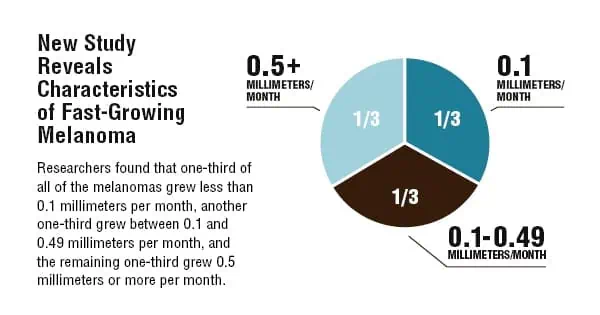
New Study Reveals Characteristics of Fast-Growing Melanoma
No matter what your past experience with skin problems may be, noticing a new growth on your skin is always a cause for concern, particularly if it is a fast-growing skin growth. Whether it looks more like a lesion or a rash, this change in your skin should be examined by the best rated dermatologist in your area immediately. However, this is especially true if the growth resembles an atypical nevus, one of the moles that can signal skin cancer. An Australian study recently revealed that certain characteristics may be a sign that melanoma will develop faster and may become fatal.
Melanoma is the most serious form of skin cancer, marked by the uncontrolled growth of pigment-producing cells. While an estimated one in every five Americans will develop skin cancer at some point in their life, people are more likely to develop melanoma if they have more than 50 moles, or if those moles are large or unusual. However, in an article published in the December edition of the Archives of Dermatology, researchers reported that these risk factors might not accurately determine who will develop fast-developing melanoma. Instead, their study showed that this potentially fatal situation could occur in anyone.
In the study, a team of dermatologists from Melbourne asked 404 patients with invasive melanoma and their families to recall when they first noticed a spot on their skin that eventually became melanoma, and when they saw that the mole had changed. The patients' skin was also examined, and the researchers collected additional data on demographics, skin cancer risk factors, tumor characteristics, and who had first detected the cancer. According to their research, the team determined that fast-growing melanoma is more likely to occur in those without large numbers of moles and freckles, especially the elderly. The moles that develop are more likely to be red than brown and black, symmetrical, elevated and symptomatic. Using their data to determine growth rates, the researchers also found that one-third of all of the melanomas grew less than 0.1 millimeters per month, another one-third grew between 0.1 and 0.49 millimeters per month, and the remaining one-third grew 0.5 millimeters or more per month.
The Australian report draws attention to an important fact about skin cancer and melanoma: anyone can develop these serious conditions, regardless of age, noticeable risk factors and other problems. For this reason, if you notice a fast-growing change in your skin, seek out the best rated dermatologist in your area for a diagnosis. Even if the problem is not melanoma, your health could still be at risk. By making an appointment at the best rated dermatologist clinic near you immediately, you can be sure that you will get the treatment and care you need before serious consequences take effect.
Do You Remember the ABCDEs of Melanoma?
Melanoma is the most deadly form of skin cancer, so it’s important to remember to perform skin mole self-exams regularly.
Melanoma usually develops on the surface of the skin and affects your melanocytes — the cells that give your skin its color. It often begins in or near an existing mole.
Check your moles for the ABCDEs of melanoma warning signs:
A — Asymmetry: One half is unlike the other
B — Border is irregular, scalloped or poorly defined
C — Color is varied from one area to another
D — Diameter: Melanomas are usually greater than 6 mm, or the size of a pencil eraser
E — Evolving: A mole or skin lesion that looks different or has changed
Moles are usually round or oval, have a defined border and are uniform in color. If your skin moles have one or more of the ABCDEs of melanoma traits, make sure you talk to your Water’s Edge medical dermatologist. He or she will help determine if you need mole treatment for your skin moles.
Click here to make your appointment today. You can also follow us on social media for more tips and information about serious medicine for your skin at Water’s Edge Dermatology.
Top Reasons to See a Professional for Mole Removal
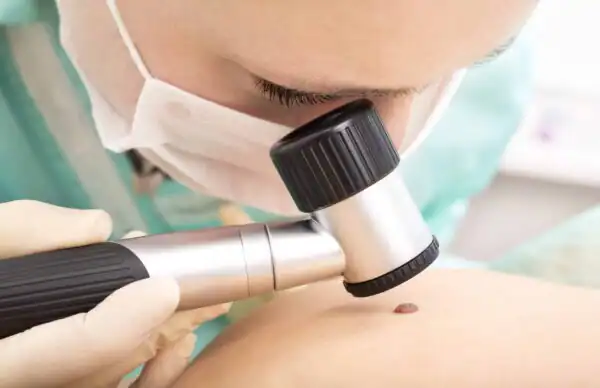
Moles are removed for several reasons, whether medical or cosmetic. If you find your skin mole unattractive, it causes irritation from rubbing against clothing or your dermatologist suspects cancer, removing your mole, or moles, is an option.
There are several at-home and “natural” treatment options available, but these can cause complications if not performed correctly. Let’s talk about the top five reasons to have your skin mole treatment performed by your dermatologist.
- If your mole might be cancerous, or pre-cancerous, your dermatologist can help you begin treatments to prevent the spread of skin cancer. A dermatologist can have a sample of your mole tested when removing it, which cannot be done with at-home treatments.
- Your mole could grow back. Shaving or treating your skin mole at home may not completely remove the mole. If your mole does grow back, that is a possible sign of melanoma, for which you should be treated by a dermatologist.
- You could leave scars on your skin. Especially on the face, it is important to have moles treated properly to avoid unnecessary scarring.
- The treatment site could get infected. A dermatologist can prevent infection from occurring by correctly preparing your skin for the mole treatment and by properly treating and closing the wound.
- Mole removal creams can leave pits in your skin. Some skin mole removal creams are corrosive and can cause damage to healthy skin if used incorrectly. If you want to try this method, it is recommended you discuss it with your dermatologist to minimize potential side effects.
Your Water’s Edge dermatologist can effectively remove your skin moles with one of two skin mole treatments: surgical excision or surgical shaving, both of which can be performed in-office. Make an appointment to discuss your skin mole treatment with your Water’s Edge dermatologist.