
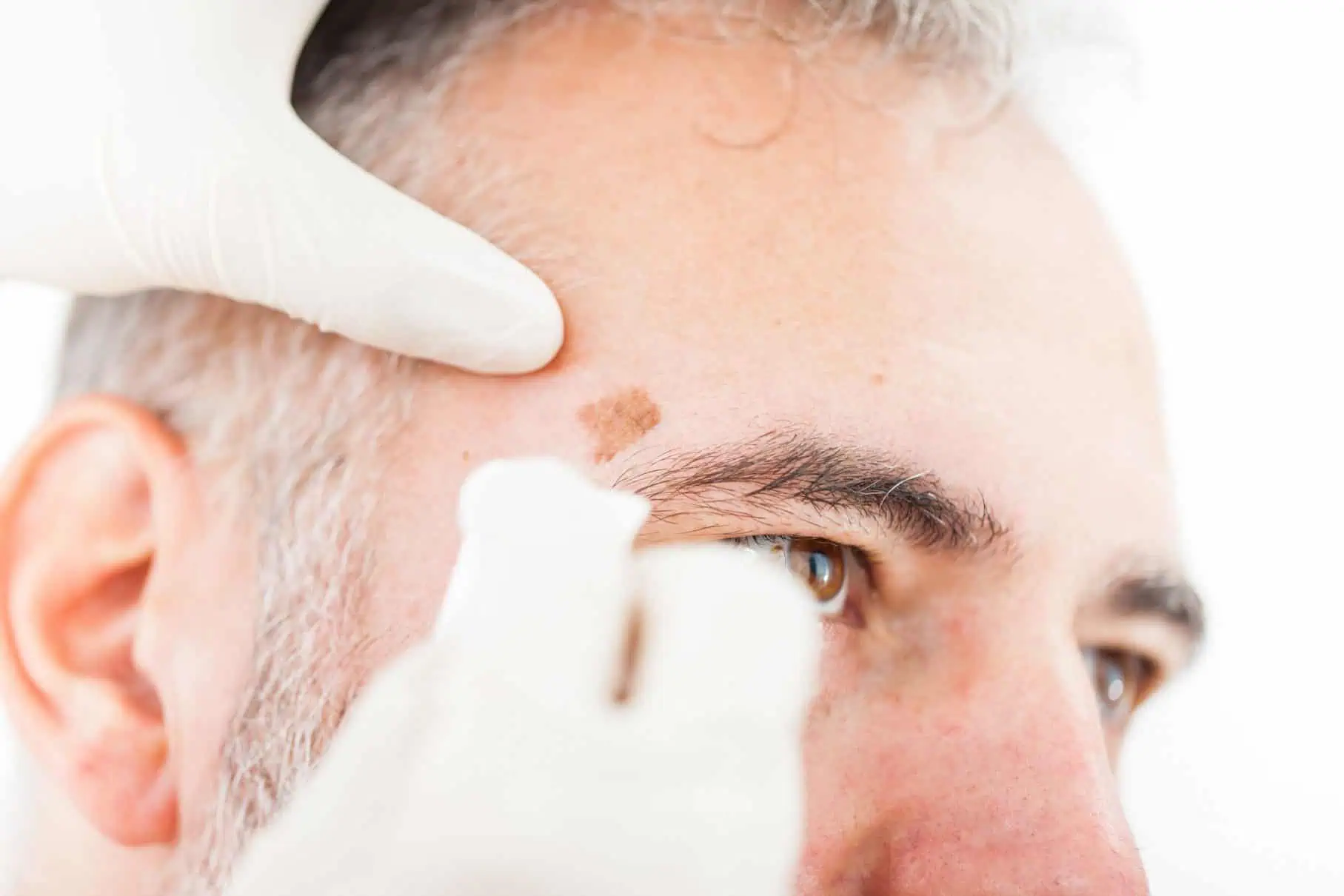
Men 50+ at Higher Risk for Melanoma
A new study reported by CNN found that men are dying at a higher rate than women from melanoma, an aggressive form of skin cancer.
Dr. Dorothy Yang who led the study at the Royal Free London NHS Foundation Trust stated, “Over the past 30 years, mortality trends (for melanoma) have increased in most countries. There is evidence that suggests men are less likely to protect themselves from the sun or engage with melanoma awareness and prevention campaigns.”
Men & Melanoma Risk Factors
The biggest risk factor for developing melanoma is overexposure to ultraviolet radiation from the sun or using tanning beds. The American Academy of Dermatology notes that men can benefit from learning more about skin cancer prevention. According to an AAD survey:
- Only 56% of men know there is no such thing as a healthy tan, compared to 76% of women.
- Just 54% of men know that getting a base tan is not a healthy way to protect your skin from the sun, compared to 70% of women.
- Only 56% of men know that skin cancer can occur on areas of the skin not typically exposed to the sun, compared to 65% of women.
Because men over 50 have a higher risk of developing melanoma, it is especially important for men to be vigilant about their skin. While melanoma is the deadliest form of skin cancer, when detected early it is highly treatable. Dermatologists advise both men and women to perform regular skin self-exams to identify early signs of skin cancer and report suspicious moles or spots to their dermatologist. Unfortunately, studies are finding that men 50 and older are less likely to heed this advice than other population groups.
According to Dr. Laura K. Ferris, MD, PhD, FAAD, a board-certified dermatologist and assistant professor of dermatology at the University of Pittsburgh School of Medicine in Pennsylvania, delayed diagnosis is the reason that older men are the most at risk and are most likely to die from melanoma. Dr. Ferris states, “This should be a wakeup call to men over 50 and their loved ones. It’s vitally important that men check their skin regularly and see a board-certified dermatologist if they notice a spot that is changing, growing or looks unusual.”
Dr. Ferris recommends these tips for performing skin self-exams:
- Use a mirror to examine hard-to-see places.
- Look for the “ugly duckling,” or the one mole that looks different from the rest.
- Pay attention to any mole that is changing or growing rapidly no matter its color, because melanoma may be brown, black or even pink or red.
- If in doubt, get the mole looked at sooner rather than later. When found in its earliest stages, melanoma is highly curable.
The American Academy of Dermatology also recommends that older men take steps to protect their skin by:
- Using a broad-spectrum, water resistant sunscreen with an SPF of 30 or higher.
- Wearing protective clothing when in the sun.
- Seeking shade when outdoors whenever possible.
Early treatment saves lives. Everyone should get a skin cancer screening once or twice a year as your doctor recommends based on your own risk profile, and of course if you have a suspicious mole or spot, schedule a skin assessment today at Water’s Edge Dermatology.

Spotting Skin Cancer
Have you ever looked at a spot on your skin and asked yourself, “Should I be concerned about that?” Most of us have. At Water’s Edge Dermatology, we want to help make everyone smarter about skin cancer diagnosis and treatment.
Skin cancer is the most common cancer in the United States. Early detection is vital. When diagnosed early, skin cancer treatment has a high success rate. Though most skin cancer occurs on the outside of your body, it can appear anywhere – from your scalp to between your toes and even the bottoms of your feet and under your nails.
The American Academy of Dermatology encourages everyone to conduct regular skin self-exams. That way you can be aware of any changes in your skin over time. If possible, have a partner do a skin check with you and help you examine hard-to-see areas like your scalp and back.
What skin cancer looks like
Skin cancer can appear on the body in different ways and can look like:
- A changing mole or mole that appears different from your other moles
- A dome-shaped growth
- A scaly patch
- A non-healing sore or sore that heals and comes back
- A brown or black streak under a finger or toenail
Dermatologists sum it up this way: If you notice a spot on your skin that differs from the others, changes, itches or bleeds, you see your dermatologist and have it checked out.
But I don’t feel sick
You can have skin cancer and feel just fine. In fact, most people who find a suspicious spot on their skin or a streak under a nail report that they don’t feel ill. If you notice a suspicious-looking spot, make an appointment with your Water's Edge Dermatology provider. Remember, when diagnosed early, skin cancer treatment is highly successful. If it is allowed time to grow, treatment can become more difficult.
There are three main types of skin cancer: basal cell carcinoma, squamous cell carcinoma, and melanoma. Basal cell and squamous cell carcinomas are quite common and generally not life-threatening. Often, they can be treated using non-surgical methods such as Electron Beam Therapy. MOHS surgery is sometimes recommended depending on the size and location of the skin cancer.
Melanoma is a more serious type of skin cancer, though when detected early, melanoma is also highly treatable. People with an increased risk of melanoma, including men older than 50, people with more than 50 moles or large or unusual moles, people with fair skin, and those with a history of cancer, should talk to a dermatologist about how often they should schedule a skin exam from their practitioner.
What will the dermatologist do?
When you see your dermatologist for a suspicious spot, the provider will first examine the area. If it looks like it could be skin cancer, your dermatologist will remove all or part of it as part of a skin biopsy. A biopsy of the suspicious growth is the only way to diagnose skin cancer.
The biopsy is reviewed under a microscope by a dermapathologist to see if cancer cells are present. If cancer cells are identified, the biopsy report explain what type of skin cancer cells were found. Following a skin cancer diagnosis, your dermatologist can recommend the best skin cancer treatment for you.
If no cancer cells are found, the biopsy report will explain what was found under the microscope.
Water’s Edge Dermatology recommends that everyone have skin cancer screenings from a board-certified dermatologist, especially in sunny Florida. Schedule an appointment today and enjoy peace of mind. Click here to request an appointment or call 877.533.8214.