
Sunscreen Facts for Smarter Sun Safety
Medical review by Evelina Ingersoll, APRN
Most of us know enough to pack sunscreen before hitting the beach, spending the day at the lake or pool or working outdoors. But which sunscreen should you choose? How should you apply it and how much should you apply? And does it expire?
Read on for answers to frequently asked questions that will help you get the maximum protection from sunscreen.
Does everyone need to use sunscreen?
Yes. Overexposure to ultraviolet (UV) rays from the sun can cause sunburn, dark spots, leathery skin and skin cancer. The risk of developing skin cancer is higher if you have fair skin and burn easily, but anyone can get it, regardless of their skin tone or age. Even young people get melanoma, one of the deadliest types of skin cancer.
Many men are resistant to wearing sunscreen, but they need it too.
How does sunscreen work?
There are two basic types of sunscreens: chemical and mineral.
Chemical sunscreens sink into the skin and absorb the sun’s rays. Those rays are converted into heat, which is released from the body. Mineral sunscreens, also known as physical sunscreens, contain zinc oxide and/or titanium dioxide. They sit on top of the skin and work by deflecting the sun’s rays.
What is SPF and what SPF do I need?
SPF stands for sun protection factor. It’s a measure of how well the product protects against UVB rays (the burning rays). The higher the SPF, the more protection the product offers.
According to the FDA, it’s a common misconception that SPF relates to how much time it takes to get burned (for example, that SPF 15 means you can stay in the sun 15 times longer than you could without sunscreen before you get burned). It’s actually a measure of how much UV radiation it takes to produce a sunburn on protected skin.
The American Academy of Dermatology suggests using sunscreen with an SPF of at least 30, which blocks 97% of UVB rays. You can buy sunscreen with higher SPF, but no sunscreen blocks 100% of the sun’s rays. Also, a higher SPF doesn’t mean you can use less or reapply less often.
When do I need to use sunscreen?
Use it every day that you’ll be outside, however briefly. Sun damage can start after as little as 10 minutes, and the effects are cumulative. Even walking from the car to the office or store without sunscreen can add to the damage.
You’ll also want to wear sunscreen when you’re sitting indoors next to a window, when you’re in the car and when you’re on a plane or train if you have a window seat. Window glass filters some, but not all, UVA rays, which cause premature skin aging as well as skin cancer. (UVB rays, the “burning” rays, don’t pass through windows, which is why you can’t get sunburned through a window.)
RELATED: 4 Surprising Times You Need to Wear Sunscreen
Don’t save the sunscreen for warm, sunny days. Most of the sun’s UV rays pass through clouds. Snow, sand and water all reflect those rays.
How much sunscreen should I use on my body?
Squeeze strips of sunscreen along the lengths of your index finger and middle finger. This should be about the right amount to cover your face, neck and ears.
Don’t rely on the SPF in your moisturizer or makeup for sunscreen protection if you’ll be outside for any significant length of time. It’s unlikely that you can use enough or reapply often enough to get the benefit you’d get from a sunscreen with the same SPF.
Remember that lips get sunburned, too. Use a lip balm with an SPF of 30 or higher.
When should I apply sunscreen?
Chemical sunscreens don’t work until they have been absorbed into the skin, which can take 10 minutes or more. That’s why experts recommend applying sunscreen at least 15 minutes before going outside. Mineral sunscreen stays on top of the skin and starts working right away.
Apply sunscreen after applying your moisturizer, not before.
How often should I reapply sunscreen?
If you’re spending the day outdoors, reapply every two hours or after swimming, sweating or toweling off. Even water-resistant sunscreens can wear off or rub off; there are no totally waterproof sunscreens. Chemical sunscreens are typically more water-resistant than mineral sunscreens.
The FDA requires that sunscreen labels indicate when to reapply, after either 40 or 80 minutes when swimming or sweating.
How do I choose the best sunscreen?
The American Academy of Dermatology recommends that everyone choose sunscreen with:
- Broad-spectrum protection
- SPF 30 or higher
- Water resistance
Sunscreens labeled “broad spectrum” protect the skin from both UVA and UVB rays. Both rays can cause skin cancer.
Beyond these three factors, choosing the best sunscreen is a matter of personal preference. When it comes down to it, the best sunscreen is the one you’re most likely to use.
Lotions, creams and gels all work well. Creams are best for people with dry skin. Because they are thicker, they may be better for the face than lotions. You can also choose sunscreen made specifically for children, for sensitive skin or for faces. You can even use different types of sunscreen for different parts of the body.
Men may prefer a gel sunscreen for hairy areas such as the scalp or chest.
Does sunscreen spray work?
Sprays work only if you’re able to get full coverage, which can be tricky. Follow these tips:
- Hold the can close to your skin and spray generously.
- Rub the spray in, even if the label says you don’t need to. You can’t always tell where you’ve sprayed and where you haven’t.
- When using spray sunscreen for your face, spray it into your hands first, then apply it to your face. Spray sunscreen can irritate the eyes and the lungs if inhaled.
- Be careful when using spray sunscreen on a windy day. Even a slight breeze can redirect the spray, and you’ll end up unprotected.
- There’s also a greater chance of inhaling it or getting it in your eyes. (People nearby may also inhale it.)
- Don’t spray while smoking or near a grill or other source of fire. Aerosol sprays can be flammable.
Does sunscreen expire?
Yes, but it has a long shelf life. The FDA requires sunscreens to post an expiration date unless testing shows that the product will remain stable for at least three years.
Go by the expiration date. If there’s isn’t one, discard the product after three years. If you notice color or consistency changes, it’s best to replace it.
Does sunscreen interfere with vitamin D absorption?
Our bodies produce vitamin D from sunlight that strikes our skin, so daily use of sunscreen may result in decreased vitamin D production. More studies are needed, but most research to date shows no association between sunscreen use and vitamin D deficiency in healthy people.
If you’re concerned about getting enough vitamin D, have a conversation with your doctor. You can get more vitamin D through your diet or dietary supplements.
Does it matter where I store my sunscreen?
Yes. Keep it out of direct sun. If you’re on the beach or by the pool, wrap it in a towel or keep it in the shade. On the hottest days, keep it in your cooler if you have one.
Written by Ann Pietrangelo, an author and freelance writer specializing in health and wellness.
Sun Safety
Summertime is fun time to spend outdoors. But in sunny Florida, that means more exposure to the sun’s ultraviolet (UV) rays. Those UV rays can damage unprotected skin in as little as 15 minutes and even lead to skin cancer. Here are some tips to keep you sun safe all year long.
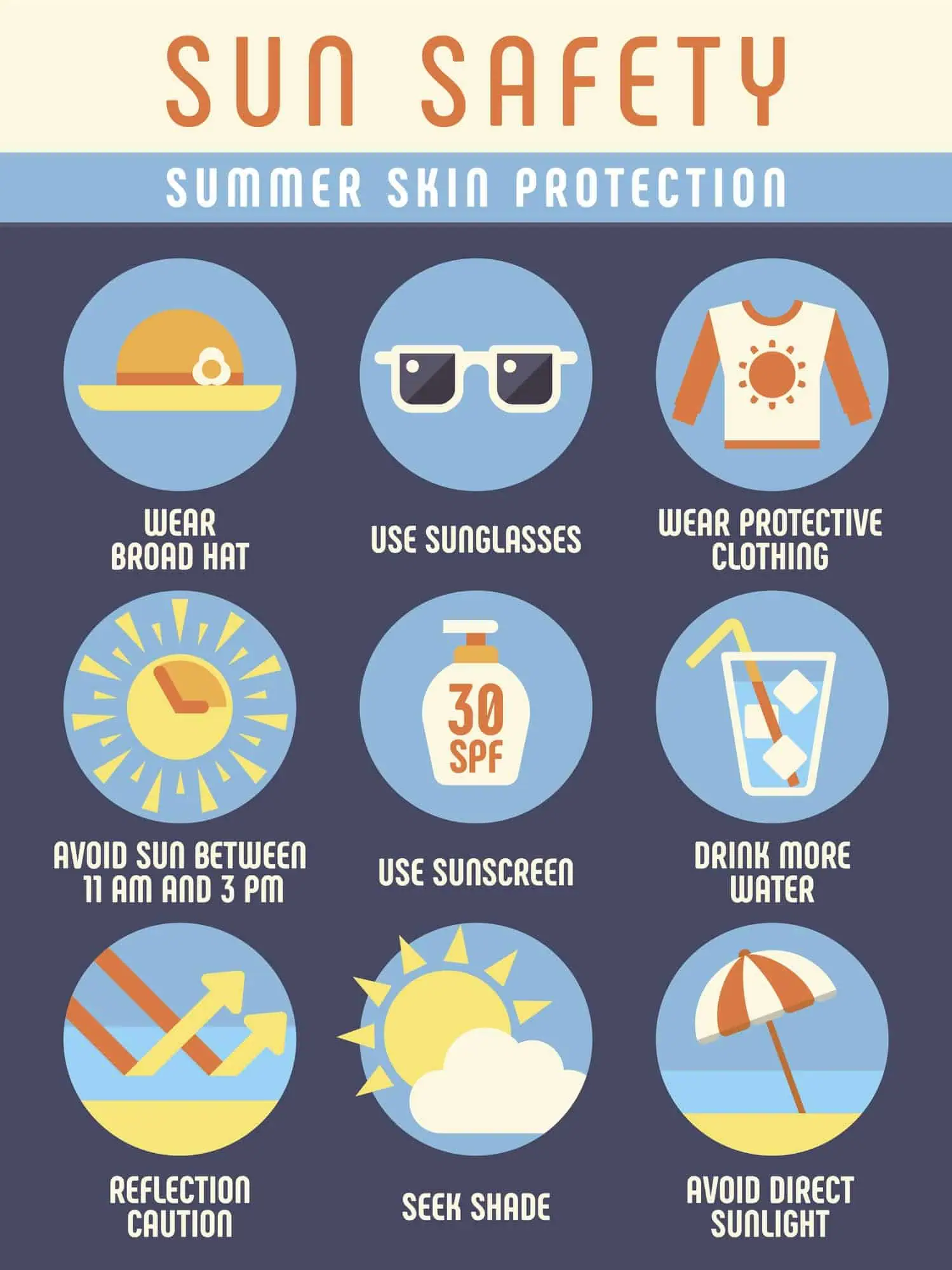
Seek Shade
One of the easiest ways to reduce your exposure to damaging UV rays is to get in the shade. Seek shade under a tree, umbrella or another shelter in order to reduce your risk of sun damage. You’ll help your skin look younger longer and lower your risk of developing skin cancer.
Protective Clothing
Cover up with long-sleeved shirts and long pants when you can to protect your skin from the sun’s harsh UV rays. There are clothing options available that contain a UV protectant built into the fabric. Also, remember that a wet t-shirt provides less UV protection than a dry one, and darker colored clothing protects better than light-colored clothing. Don’t forget to top it off with a hat with a brim all the way around that shades your face, ears, and back of the neck. If you choose a baseball cap instead, be sure to protect your ears and the back of your neck with sunscreen of at least 30 SPF.
Sunglasses
Choose sunglasses that are labeled UV protectant to reduce the risk of developing cataracts. Most of the sunglasses sold in the U.S. block both UVA and UVB rays. Sunglasses also protect the skin around your eyes from sun damage, and wrap-around sunglasses are an excellent option to block UV rays that might sneak in from the side.
Wear Sunscreen
Choosing the right sunscreen can be daunting, so we recommend following these four rules to make it easier:
- Broad-spectrum – Broad-spectrum sunscreen protects the skin from both ultraviolet A (also known as UVA) and ultraviolet B (also known as UVB) rays. Both of these rays can cause skin cancer.
- SPF 30 or higher – The sun protection factor (SPF) rating indicates how well a sunscreen protects you from the sun by blocking harmful UVB rays. Choose a sunscreen with SPF 30 or higher to make sure you are protected.
- Key ingredients – Look for active ingredients like ecamsule, avobenzone, titanium dioxide, sulisobenzone or zinc oxide. Beware of products that include oxybenzone or octinoxate which are harmful to the environment. Some areas of Florida have banned the sale of sunscreen with oxybenzone and octinoxate because these chemicals can damage coral reefs.
- Avoid tanning oils – They generally do not provide enough protection against the harmful effects of the sun.
How to Apply Sunscreen & How Often
To get the maximum protection from your sunscreen, follow these recommendations:
- One ounce of sunscreen is considered the right amount. Cover all exposed areas of the body thoroughly. Don’t skimp. Many people don’t use enough sunscreen.
- Apply sunscreen 15 to 30 minutes before going in the sun. Don’t forget the tips of the ears, feet, back of the legs and bald spot (if you have one). Reapply sunscreen every two hours and use a UV-protective lip balm to cover your lips.
- If you are exercising or are in the water, it’s a good idea to get a sunscreen that is resistant to water and sweat. The FDA defines water resistant to mean that the SPF level stays effective after 40 minutes in the water. Very water-resistant means it is effective after 80 minutes of swimming. These sunscreens are not waterproof, so reapply regularly.
Protecting your skin from the harmful rays of the sun can help you look younger and prevent skin cancer. Just to be on the safe side, be sure to get a skin cancer screening every year, so if you do develop skin cancer, it can be detected and treated early.
Schedule a skin cancer screening at your nearest Water’s Edge Dermatology office.

Top 4 Overlooked Sun Damage Risks
If you’re like millions of other people, you’re probably enjoying as much outdoor fun in the sun as you can with friends and family this summer. And you probably know the basics of Sun Safety and Skin Cancer Prevention:
- Avoiding direct sun exposure (if you can) from 10 am-4 pm, when UV rays are most harmful.
- Using SPF 30+ sunscreen on every inch of exposed skin, even on cloudy days.
- Keeping sunscreen, floppy hat, lightweight, loose-fitting, long-sleeved shirt and pants ready in the car, so you’re prepared for any unexpected, prolonged sun exposure.
But what about situations, when you don’t realize some part of your skin is endangered?
Caution around windows
Though windows offer some protection from UVB rays (chief cause of sunburns), they typically don’t block UVA rays that can cause skin cancer. About 90 percent of all non-melanoma skin cancers are caused by sunlight – including what’s streaming through the windows of your house. It may look great, but don’t get stuck sitting (or napping!) in its direct path for long.
When it comes to the workplace, many newer office buildings have UV blocking windows to protect employees during the workday, but you still need to be careful. If you’re getting direct exposure through untreated windows for more than 15 minutes a day, it’s worth asking your company to explore getting protective shades or other window treatments.
Sun exposure through car windows is also a big problem. That’s why so many skin cancer growths appear on the tops of hands and outer parts of arms of drivers. While not a major risk if you only drive 10-15 minutes or so at a time, those with longer commutes and other long drives need to look, see and understand exactly what part of their bodies are exposed to sunlight – and protect them.
Fortunately, most modern windshields are UV-protected, so it’s your side and rear windows you need to worry about. If needed, consider getting them UV-protected too. Also, consider wearing long-sleeved shirt and pants for longer trips, and applying (and remembering to reapply every 90 minutes) SPF 30+ sunscreen to all exposed skin.
Water/Sand/Snow increase risk of sun damage
Don’t forget that when you’re at the beach or other waterfront, the water, sand and even the sea foam all reflect and intensify damaging UV rays. And because those reflected rays are often bouncing up at you from below, that can cause sunburn damage to unexpected places, including the underside of your chin and nose, and the backs of your ears.
Meanwhile, although you probably won’t be playing in the snow this summer, know that the same goes for snow, with UV rays reflected by snow almost twice as powerful as normal.
Comprehensively applied and repeatedly reapplied sunscreen, protective clothing and shade are your allies in battling these heightened sun exposure risks.
Protection Important on Cloudy Days Too
The shade of clouds certainly can feel good and cool you down on a hot summer day, but don’t be lulled complacency. In fact, 87-percent of UV rays still make their way through clouds, fog and mist. Bottom line? Same risks and sun protection necessities apply on overcast days as do on clear ones. All it takes is one awful, unexpected, cloudy-day sunburn to know that’s true!
Protect all your nooks and crannies
There are some areas on your body you may think don’t need sun protection, or that you overlook when applying sunscreen in too much of a rush. But unfortunately, they’re just as vulnerable to sun damage as the rest of your skin. So fully protect those hands, feet, backs of knees, necks, ears, and underarm areas!
To sum up, you may think it’s tiresome or overly cautious to keep up with all this, and some in your family (hmm, the kids, especially?) may think it’s a pain… but if you make it happen and stick with it, you’ll have the comfort of knowing you’re doing everything possible to prevent skin cancers for yourself and loved ones later in life, and you can continue enjoying the great outdoors in safety, and good health.
To learn more about skin cancer prevention, detection, diagnosis and treatment, please visit the Skin Cancer section of our Water’s Edge Dermatology website.

Effective Sunburn Treatment
If you got a nasty sunburn recently, here are some treatment options, as well as tips to prevent future burns and a warning about the dangers of catching too many rays.
We love this great video as a quick refresher.
Sunburn treatment
The Skin Cancer Foundation recommends these five steps to treat a sunburn:
- Don’t wait to treat. A sunburn can take some time to develop, so you should get out of the sun and follow steps 2-5 as soon as possible if you feel a sunburn coming on.
- Moisturize and repeat. Use a cream or lotion to soothe your burn, and to help prevent peeling. You’ve probably heard that aloe vera is a good treatment for sunburn, and although initial research has shown only that aloe may help heal burns, at the very least, it will soothe the burn’s heat and pain.
- Drink lots of water. One side effect of a sunburn is that the fluid in your body is drawn to the surface, to your skin. To make sure you don’t get dehydrated, drink plenty of water.
- Take an anti-inflammatory. Ibuprofen can help to reduce swelling and redness if taken as soon as you feel the burn coming on.
- Seek medical help if necessary. If you’re experiencing bad blistering, fever or chills, seek the help of a medical professional.