
Study Suggests Possible Treatment for Keratosis Pilaris
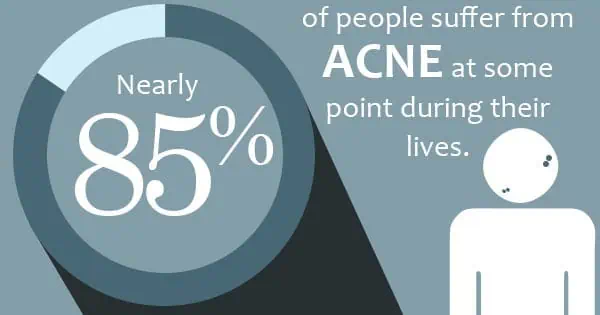
If you have noticed red bumps on your arms and thighs, which tend to become more prominent or itchy when your skin is dry, your first thought is likely that you have a form of acne. This assumption likely isn't too far off base: nearly 85% of people suffer from acne at some point during their lives, including an estimated 40 million to 50 million Americans. However, if you visit a dermatologist clinic seeking an official diagnosis or acne treatment products, you may discover that your condition isn't acne at all.
Instead, you likely have a common problem called keratosis pilaris, which affects nearly 40% of people in varying degrees and tends to run in families. Unfortunately, while scientific research has lead to a number of effective therapies and techniques to treat acne, even the best dermatologists have been unable to correct keratosis pilaris. However, there may be good news: recent research has found a treatment that may successfully reduce some symptoms of this common condition.
Previous studies have shown that keratosis pilaris is resistant to most treatments, and while shorter wavelength laser treatments can treat the erythema (or redness) associated with the treatments, it has no effect on the skin's texture. Because of this, a research team decided to test the effectiveness of a longer wavelength 810-nm diode laser. The researchers recruited 23 patients with keratosis pilaris on both of their arms and Fitzpatrick skin types I to III, defined as light skin tones that tend to burn instead of tanning. The trial lasted from March to October 2011, with a total of three treatment visits for each participant. Each patient only received treatment on one arm.
At the end of the seven month trial, 18 participants had completed the study, while three were unavailable for follow-up appointments and another three had withdrawn due to inflammatory hyperpigmentation. When these 18 participants were examined by dermatologist 12 weeks after the initial visit in a blind review, the doctors found that the treatment had resulted in significant improvements in skin texture. However, the treatment had no effect on the patients' erythema. In a study published in the November issue of JAMA Dermatology, the research team suggested that the longer wavelength treatment could be supplemented with other laser treatments and products to treat both symptoms. Could this therapy be used to address your keratosis pilaris? Contact the best dermatologist in your area today to find out.
Baby Skin Care
There is nothing like a newborn baby’s super smooth skin. No doubt, you have plenty on your mind with a newborn, so the good news is the old adage "less is more” applies to caring for your newborn’s skin. Your baby’s immune system is developing, so stay away from products with chemicals, fragrances, and dyes that may be present in clothing, detergents, and baby products. These things can lead to newborn skin irritation, dryness, chafing, and rashes.
Resist the urge to bathe your baby too frequently. Any more than three times a week will remove the natural oils that protect baby's skin. That leaves baby's skin vulnerable, so it reacts to any potential allergen and may trigger a reaction like eczema.
Don't use baby products in the early months. The immune system is still developing. If you have a family history of skin problems, allergies, or asthma, it's especially important to protect your baby's immune system, and protect baby from irritating allergens.
Wash baby's clothing before it's worn. Use only baby laundry detergents that are fragrance- and dye-free. Wash baby clothes, bedding, and blankets separately from the family's laundry.
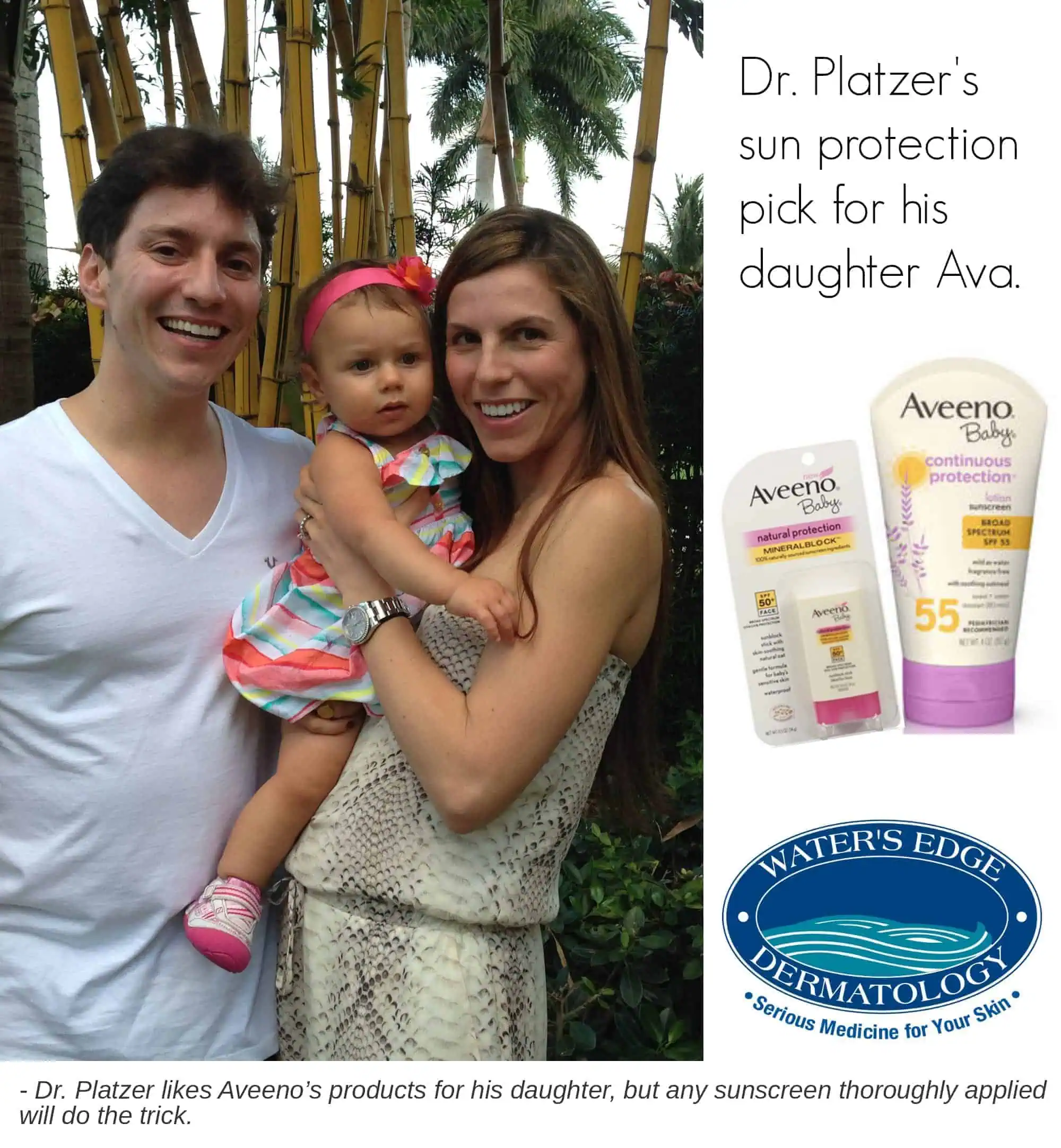
Always protect your baby from the sun. Just a few serious sunburns can increase your baby's risk of skin cancer later in life. The American Academy of Dermatology recommends using a broad-spectrum sunscreen with an SPF of 30 or more.
If your baby is 6 months or older, liberally use sunscreen. Also, avoid exposing your baby to the sun during peak hours — generally 10 a.m. to 2 p.m. — and dress your baby in protective clothing, a hat with a brim and sunglasses.
If your baby is younger than 6 months, keep them out of direct sunlight. Protect your baby from sun exposure by dressing him or her in protective clothing, a hat with a brim and sunglasses.
Treating Adult Acne
Acne is frequently considered a skin disorder of adolescents and teens. Unfortunately, acne can affect adults in their 20s, 30s and beyond. Many factors can contribute to the appearance of acne, including hormones, disorders of the hair follicles and infections. While there is no cure for acne, there are many effective ways to control and treat adult acne.
Adult acne can be divided in two groups of patients. The common acne in children can also occur in an adult, which is known as acne vulgaris. Another form of adult acne is known as acne rosacea. Acne rosacea is commonly recognized by the inflammation and redness of the face, but most often lacks the appearance of blackheads or open comedones.
Acne can be controlled with over-the-counter products as well as prescription medications. Establishing a skin care regimen with a dermatology provider can be very helpful in treating acne. Many treatments are available, including cleansers, topical treatment, oral antibiotic therapy, oral isotretinoin courses and even blue light therapy.
Starting with a mild antibacterial cleanser or benzoyl peroxide wash twice daily keeps the face and body clean and keeps oil to a minimum. Do not scrub the face and body clean as friction can increase the acne lesions.
Prescription treatments available for acne can be topical creams, gels or solutions. The topical medications can include one or more medications. Topical medications should be used consistently and as prescribed by your provider for best results. Topical treatments can be drying, so it is important to speak with your provider about adding a moisturizer or decreasing the frequency of use if this occurs.
Oral antibiotics can be used to treat acne and acne rosacea in adult patients. Oral antibiotic therapy can be given for short-term or long-term treatments, depending on the response to treatment and the medication prescribed by your provider. Low dose, long-term antibiotic therapy is available and effective for many patients.
Oral isotretinoin is an option for severe acne. It was previously marketed under the name Accutane but is available now in generic forms. This particular medication is available if other oral medications have failed. Isotretinoin is closely monitored by a program called iPledge. Blood work is monitored each month by your provider. Two forms of birth control must be in place for female patients as this medication can cause birth defects if pregnancy occurs during the time period the medication is being administered. This medication is generally given for a course of four to six months.
The most important key to the management of acne is to be consistent with your use of medication. Consistency is important.
Finally, even acne prone skin needs sunscreen each day. Finding a sunscreen that is oil-free and non-comedogenic is important. Please visit a Water’s Edge office for EltaMD Shield, which is a zinc sunscreen that is lightweight, absorbs completely and is great for oily skin types.
References: Acne (n.d.) American Osteopathic College of Dermatology. Retrieved from aocd.org.
Itchy, Burning Feet? Could be Athlete’s Foot.
Athlete’s foot. Gross, right? Well, it turns out that it is the most common type of fungal infection.
Athlete’s foot is also known as tinea pedis. It’s similar to ringworm and jock itch. It is contagious, but can be treated with over-the-counter medications. It is caused by mold-like fungi called dermatophytes. They always are living on your skin, but they don’t grow as long as your skin stays dry and clean. When your skin becomes a damp, closed environment, that’s when the problems begin.
These dermatophytes love tight shoes that squish the toes together to create warm, moist areas between them, damp socks and humid conditions. They are partial to plastic shoes. Athlete’s foot is also more common in men.
Anyone can pick up athlete’s foot. It is as easy as coming in contact with an infected person or contaminated surfaces like floors (locker rooms, saunas, pools and showers), clothes, shoes or bed linens.
If you think you have athlete’s foot, you may have the following symptoms:
- Burning, stinging and itching between your toes
- Burning, stinging and itching on the soles of your feet
- Blisters that itch
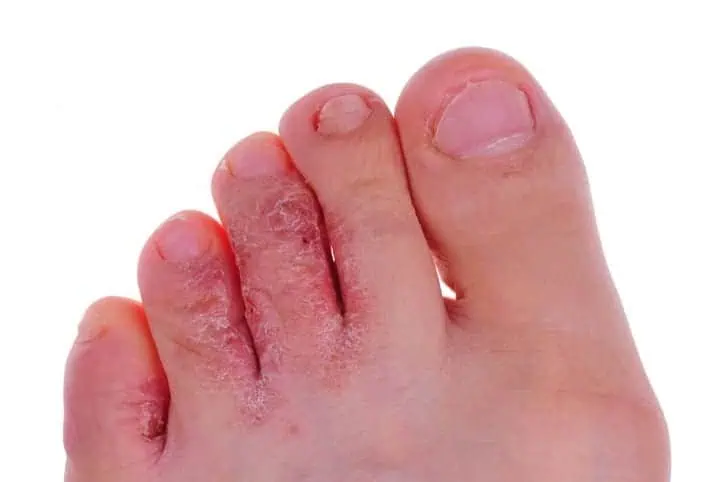
- Peeling and cracking skin between your toes and the soles of your feet
- Vast amounts of dry skin on the bottoms or sides of your feet
- Thick, crumbly, ragged, discolored toenails
If you have been treating athlete’s foot with over-the-counter medications and the symptoms do not improve or worsen, go see your medical dermatologist. You can make an appointment at Water’s Edge Dermatology with one of our clinics.