
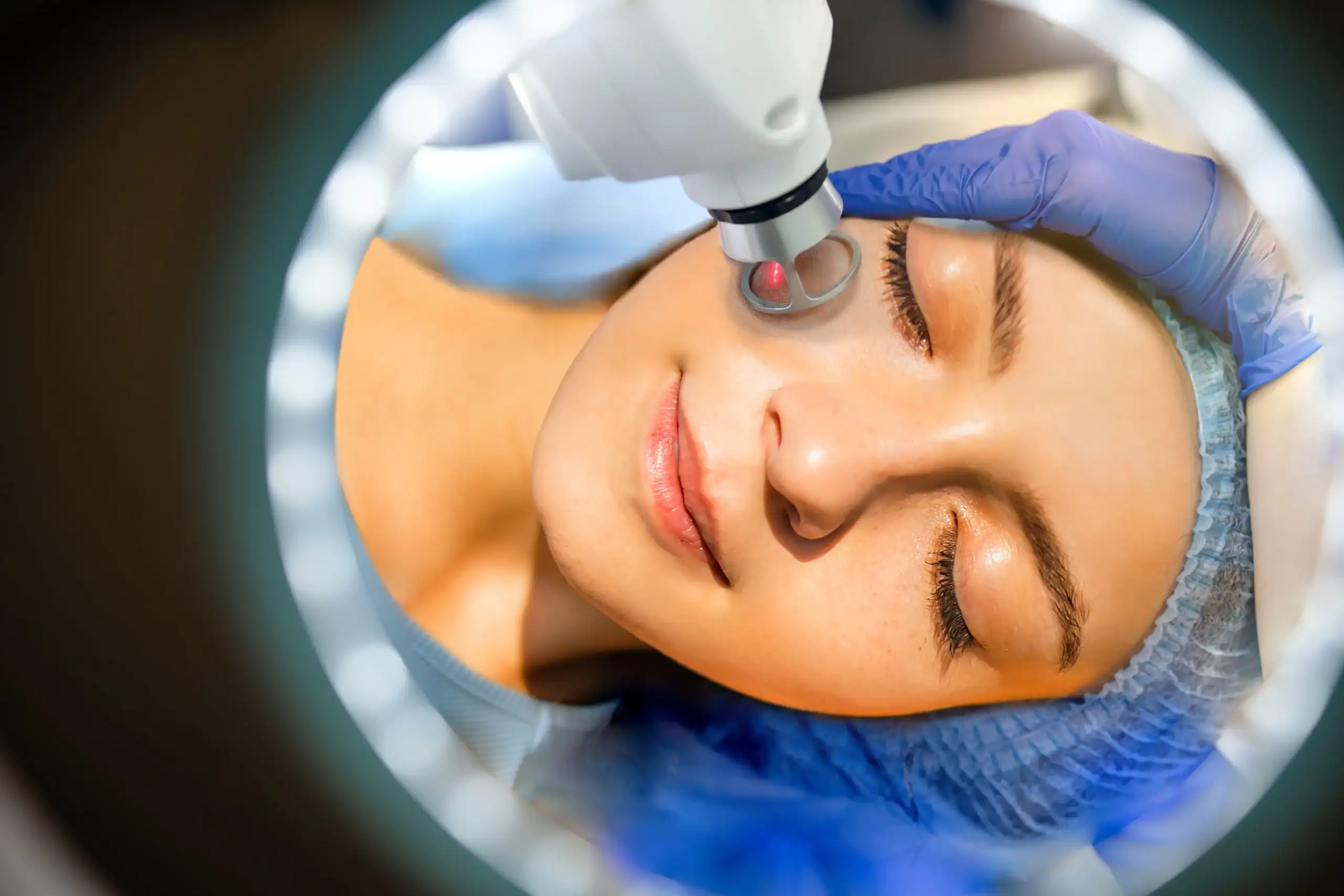
Top 5 Benefits of Laser Skin Resurfacing
Your skin endures exposure to weather, scarring and time, and eventually it starts to show. But, you don’t have to resign yourself to damaged skin. Your cosmetic dermatologist can help you get a fresh start with your skin. Here are the top five reasons to talk to your Water’s Edge Cosmetic Dermatologist about laser skin resurfacing:
- Improve the appearance of sun damaged skin, including sun spots, melasma and other pigmentation troubles
- Smooth wrinkles and lines under and around your eyes or mouth, and on your forehead
- Minimize scarring, such as from acne or chicken pox
- Improve texture and firmness of your skin by stimulating collagen development
- Even skin tone and enhance your complexion
Your Water’s Edge cosmetic dermatologist will use a fractional laser skin rejuvenation procedure called dermal optical thermolysis, or DOT therapy, to create a pattern of microscopic holes in your skin. These DOTs are surrounded by healthy skin, which encourages your skin to heal more quickly. Your cosmetic dermatologist may use the DOT procedure to enhance the appearance of skin, or your medical dermatologist may use it to reduce sun damage to your skin. Make an appointment to talk to your Water’s Edge dermatologist about the benefits of laser skin resurfacing.
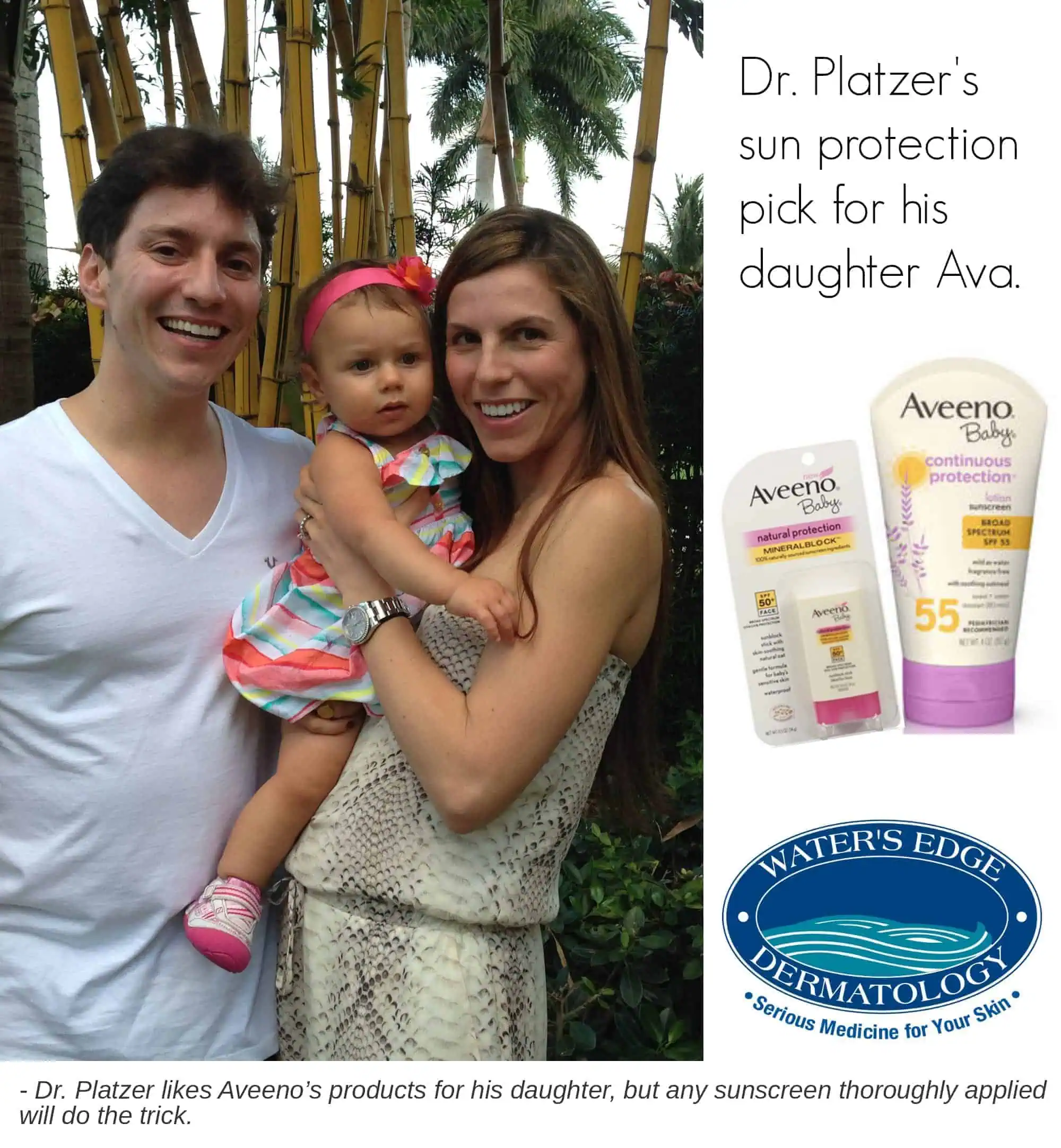
Baby Skin Care
There is nothing like a newborn baby’s super smooth skin. No doubt, you have plenty on your mind with a newborn, so the good news is the old adage "less is more” applies to caring for your newborn’s skin. Your baby’s immune system is developing, so stay away from products with chemicals, fragrances, and dyes that may be present in clothing, detergents, and baby products. These things can lead to newborn skin irritation, dryness, chafing, and rashes.
Resist the urge to bathe your baby too frequently. Any more than three times a week will remove the natural oils that protect baby's skin. That leaves baby's skin vulnerable, so it reacts to any potential allergen and may trigger a reaction like eczema.
Don't use baby products in the early months. The immune system is still developing. If you have a family history of skin problems, allergies, or asthma, it's especially important to protect your baby's immune system, and protect baby from irritating allergens.
Wash baby's clothing before it's worn. Use only baby laundry detergents that are fragrance- and dye-free. Wash baby clothes, bedding, and blankets separately from the family's laundry.
Always protect your baby from the sun. Just a few serious sunburns can increase your baby's risk of skin cancer later in life. The American Academy of Dermatology recommends using a broad-spectrum sunscreen with an SPF of 30 or more.
If your baby is younger than 6 months, keep them out of direct sunlight. Protect your baby from sun exposure by dressing him or her in protective clothing, a hat with a brim and sunglasses.
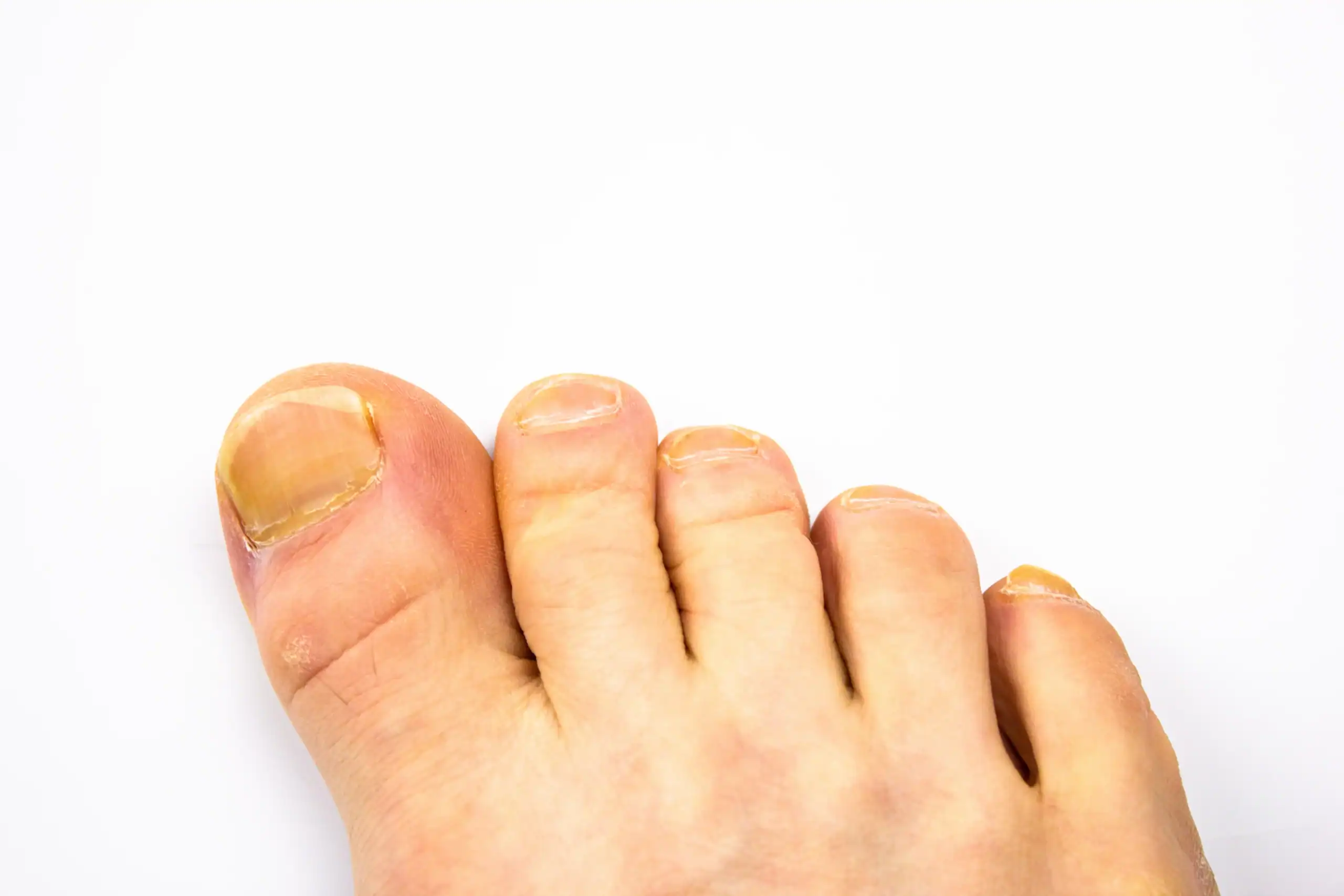
Top 10 Tips to Prevent Toenail Fungus
The organisms that cause toenail fungus infections are nearly impossible to avoid. If you spend time in public areas such as gyms, swimming pools or locker rooms where people are barefoot, you are more likely to pick up toenail fungus.
Here are our top 10 tips to keep your feet fungus-free:
- Always wear shower shoes in the locker room, public showers and at the pool. Fungus thrives in damp, warm places like a wet locker room floor.
- Keep your feet clean and dry. Wearing moisture-wicking socks and changing your socks whenever they get wet prevents toenail fungal infections from taking hold.
- Wear shoes that fit well. Shoes that fit properly give your feet room to breathe and prevent excess moisture.
- Use an anti-fungal spray or powder in your shoes to keep fungus at bay.
- Trim your nails straight across your toes and don’t pick at the skin around your nails. Even small nicks in your skin help toenail fungus take hold.
- Consider replacing your old shoes if you think they might have fungus in them.
- Don’t share towels or shoes with others to prevent accidental fungus sharing.
- Avoid nail trauma to your toenails. A nail injury can give toenail fungus access to the skin under your nails.
- Always clean the tools used on your nails, including nail clippers and pedicure tools. You may want to ask your pedicure salon how they clean their tools, or bring your own.
- Don’t use nail polish or artificial nails to hide your nails. These trap moisture and can make unhealthy nails worse.
If you suspect you have a toenail fungus infection, make an appointment with your Water’s Edge medical dermatologist. He or she will help you get the toenail fungus treatment that works best for you.
Do You Remember the ABCDEs of Melanoma?
Melanoma is the most deadly form of skin cancer, so it’s important to remember to perform skin mole self-exams regularly.
Melanoma usually develops on the surface of the skin and affects your melanocytes—the cells that give your skin its color. It often begins in or near an existing mole.
Check your moles for the ABCDE of melanoma warning signs:
A — Asymmetry: One half is unlike the other
B — Border is irregular, scalloped or poorly defined
C — Color is varied from one area to another
D — Diameter: Melanomas are usually greater than 6 mm, or the size of a pencil eraser
E — Evolving: A mole or skin lesion that looks different or has changed
Moles are usually round or oval, have a defined border and are uniform in color. If your skin moles have one or more of the ABCDE of melanoma traits, make sure you talk to your Water’s Edge medical dermatologist. He or she will help determine if you need mole treatment for your skin moles.
Click here to make your appointment today. You can also follow us on Twitter or Facebook for more tips and information about serious medicine for your skin at Water’s Edge Dermatology.
Treating Adult Acne
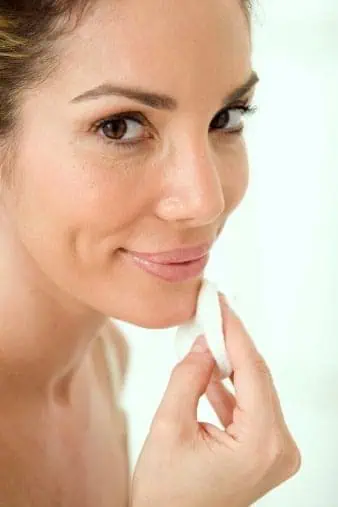
Acne is frequently considered a skin disorder of adolescents and teens. Unfortunately, acne can affect adults in their 20s, 30s and beyond. Many factors can contribute to the appearance of acne, including hormones, disorders of the hair follicles and infections. While there is no cure for acne, there are many effective ways to control and treat adult acne.
Adult acne can be divided in two groups of patients. The common acne in children can also occur in an adult, which is known as acne vulgaris. Another form of adult acne is known as acne rosacea. Acne rosacea is commonly recognized by the inflammation and redness of the face, but most often lacks the appearance of blackheads or open comedones.
Acne can be controlled with over-the-counter products as well as prescription medications. Establishing a skin care regimen with a dermatology provider can be very helpful in treating acne. Many treatments are available, including cleansers, topical treatment, oral antibiotic therapy, oral isotretinoin courses and even blue light therapy.
Starting with a mild antibacterial cleanser or benzoyl peroxide wash twice daily keeps the face and body clean and keeps oil to a minimum. Do not scrub the face and body clean as friction can increase the acne lesions.
Prescription treatments available for acne can be topical creams, gels or solutions. The topical medications can include one or more medications. Topical medications should be used consistently and as prescribed by your provider for best results. Topical treatments can be drying, so it is important to speak with your provider about adding a moisturizer or decreasing the frequency of use if this occurs.
Oral antibiotics can be used to treat acne and acne rosacea in adult patients. Oral antibiotic therapy can be given for short-term or long-term treatments, depending on the response to treatment and the medication prescribed by your provider. Low dose, long-term antibiotic therapy is available and effective for many patients.
Oral Isotretinoin is an option for severe acne. It was previously marketed under the name Accutane but is available now in generic forms. This particular medication is available if other oral medications have failed. Isotretinoin is closely monitored by a program called iPledge. Blood work is monitored each month by your provider. Two forms of birth control must be in place for female patients as this medication can cause birth defects if pregnancy occurs during the time period the medication is being administered. This medication is generally given for a course of four to six months.
The most important key to the management of acne is to be consistent with your use of medication. Consistency is important.
Finally, even acne prone skin needs sunscreen each day. Finding a sunscreen that is oil-free and non-comedogenic is important. Please visit a Water’s Edge office for Elta MD Shield, which is a zinc sunscreen that is lightweight, absorbs completely and is great for oily skin types.
References: Acne (n.d.) American Osteopathic College of Dermatology. Retrieved from www.aocd.org.