

How to Prevent Wrinkles While You Still Can
Medical review by Denise Guevara, DO
If your face is still as smooth as a baby’s bottom, you probably aren’t thinking about wrinkles. Unfortunately, everyone gets them eventually, partly because as the body ages, it produces less collagen and elastin, proteins that keep the skin firm and elastic.
But if you act now, you can delay the development of wrinkles and enjoy young-looking skin longer. Here, Denise Guevara, DO, a board-certified dermatologist at Water’s Edge Dermatology, shares her best tips for staving off these telltale signs of aging.
Use sunscreen daily
You probably know this, but it bears repeating: Wearing sunscreen is one of the best ways to prevent wrinkles.
“Exposure to the sun’s ultraviolet rays is one of the main causes of premature wrinkles because they damage collagen and elastin, among other harmful effects,” said Dr. Guevara.
Sunscreen plays a particularly large role in preventing wrinkles in people with fair skin. A study published in Clinical, Cosmetic, and Investigational Dermatology concluded that UV rays appeared to be responsible for 80% of signs of aging facial skin in Caucasian women. (The sun takes less of a toll on dark skin because the skin contains more melanin, which provides some natural protection.)
Regardless of skin color, everyone should wear a broad-spectrum sunscreen with an SPF of at least 30 every day, both to prevent wrinkles and to reduce the risk of skin cancer, Dr. Guevara noted.
RELATED: A Melanoma Warning for Millennials and Gen Z
Wear sunglasses
Wearing sunglasses protects the skin around your eyes from UV rays and guards against wrinkles by making you less likely to squint.
“Crow’s feet, which are the wrinkles that form at the outer corners of your eye, are dynamic wrinkles, meaning they develop as a result of repetitive facial movements such as squinting,” Dr. Guevara explained.
If you need regular prescription glasses, it’s important to wear those too in order to limit squinting. Be sure to get regular eye exams as well. You may not realize right away that your vision has gotten worse and that you’ve been squinting more than usual.
Quit smoking
Smoking and vaping cause premature facial wrinkling in several ways. They interfere with the body’s ability to produce collagen and cause blood vessels to narrow, which prevents nutrients from being delivered to the skin. Smoking is also a major contributor to dynamic wrinkles.
“When you smoke, you make repetitive facial movements, such as pursing your lips and squinting,” Dr. Guevara said. “Over time, this creates wrinkles around the mouth and eyes.”
Quitting smoking won’t reduce wrinkles that have already appeared, but it can prevent them from deepening.
Sleep on your back
If you regularly sleep on your side or stomach, you may develop more wrinkles than someone who sleeps on their back.
“Resting your face on a pillow creates compression, which reduces blood flow to the areas of your skin and neck that are in contact with the pillow, depriving them of nutrients,” said Dr. Guevara. “This causes wrinkles to develop on the affected areas as time goes by.”
Can’t sleep on your back? You can minimize compression by sleeping on a softer, bouncier pillow.
Use retinoids
These vitamins A derivatives are commonly used to reduce and prevent wrinkles by increasing collagen production.
“Retinoids are like insurance against future wrinkling,” Dr. Guevara said. “You can start using them in your 20s to prevent wrinkles, though some people begin applying them in their teens because retinoids are also an effective treatment for acne.”
Your dermatologist can prescribe a retinoid, or you can use an over-the-counter retinol product. Retinols are weaker versions of retinoids. The option you choose comes down to what your skin can tolerate. Retinoids are very exfoliating, so you may prefer retinol — and lower-concentration retinol at that — if you have sensitive skin.
Apply a moisturizer that contains hyaluronic acid
Almost any moisturizer can temporarily plump the skin and diminish the appearance of fine lines, but using a moisturizer that contains hyaluronic acid can also help prevent wrinkles. Not only is hyaluronic acid particularly effective at drawing moisture into your skin, but it also helps maintain the integrity of the outer layers of skin, but Dr. Guevara also explained. These layers referred to as the skin barrier, provide protection from external factors that contribute to premature aging, such as pollution.
You can start using a moisturizer with hyaluronic acid at any age, but it becomes increasingly important as you get older, as the hyaluronic acid that is naturally present in the skin decreases over time.
Neutrogena’s Hydro Boost products contain hyaluronic acid, as does wederm Pure Hydration hyaluronic acid serum.
Add vitamin C serum to your skincare routine
Vitamin C serum helps prevent wrinkles by protecting skin from damage caused by unstable molecules called free radicals. These are generated when skin is exposed to harmful elements, such as UV rays and pollution.
“Free radicals cause premature aging because they break down collagen and elastin in your skin,” Dr. Guevara said. “This leads to wrinkles as well as other signs of aging, such as sagging skin.”
Ideally, you should start using vitamin C serum when you’re in your early 20s. But if you’re older and have wrinkles already, vitamin C serum is recommended to help diminish their appearance.
Eat a well-balanced diet
Eating fruits and vegetables rich in vitamin C and other antioxidants can help stave off wrinkles.
“In addition to neutralizing free radicals, fruit and vegetables also have a high water content, and hydration plays a key role in making the skin look firm,” Dr. Guevara said.
Limit foods that contribute to premature aging, such as those high in sugar. When sugar combines with fats or protein in the blood, harmful compounds called advanced glycation end products, or AGEs can form. AGEs can accumulate in the skin’s collagen and elastin and interfere with their functioning.
Consider “preventive” Botox
Botox injections treat wrinkles by temporarily paralyzing certain muscles. That effect also helps prevent dynamic wrinkles such as crow’s feet and worry lines on the forehead.
“Even if your skin is still smooth and firm, you may want to consider getting Botox injections by the time you’re in your late 20s in order to start minimizing facial movements that contribute to dynamic wrinkles, such as grimacing and frowning,” Dr. Guevara said.
Written by Jessica Brown, a health and science writer/editor based in Brooklyn, New York. She has written for Prevention magazine, jnj.com, BCRF.org and many other outlets.

How to Embrace Skinimalism, the ‘Less Is More’ Beauty Trend
Medical Review By: Heather Brew, PA-C
Sometimes less is more. Maybe we don’t need to hide our skin under makeup or follow a complicated skin care regimen involving a dozen different products. That’s the thinking behind skinimalism, a minimalist approach to skin care and makeup.
What exactly is skinimalism?
“I think it's about going back to the basics when caring for your skin, but also loving your skin and how it is in everyday life,” said Heather Freeman, PA-C, a board-certified physician assistant at Water’s Edge Dermatology. “I think it's avoiding multiple products and layers of makeup, and being true to your authentic self."
That all sounds well and good, and easier on the piggybank to boot, but how can you feel comfortable enough in your skin to pare down your beauty routine and kiss the heavy foundation goodbye? Freeman offered these tips.
Go back to the big three
Start by going back to basics. A basic skincare routine involves exactly three products: a facial cleanser, a moisturizer and sunscreen.
The cleanser removes dirt, makeup and oil and helps keep breakouts at bay. The moisturizer minimizes water loss, which protects skin from irritants in the environment. Broad-spectrum sunscreen guards against UV damage that can lead to premature aging and skin cancer. (Freeman likes zinc and titanium as active ingredients.)
To fight free radicals caused by sun exposure, also consider a cream or serum containing vitamin C. “I personally like to use a vitamin C serum first and apply my moisturizer on top, then sunscreen,” said Freeman. When it comes to vitamin C, she noted, “You don’t need much.”
From there, you can add products designed to address specific issues that bother you — but there’s value in not going overboard.
“With too many skin care products, we worry about ingredients interacting, and we worry about irritation,” said Freeman.
Signs your skin care routine might be overly elaborate include dryness, redness or burning. “Often, patients come in and I say, ‘You're really irritated, what are you using?’ and they list 20 things. I say, ‘Let's start from the basics again. Let's start with one product at a time to figure out what works best for you.”
Freeman likens using too many skin care products to taking too many medications: Not only are interactions an issue, but some people get overwhelmed and use them incorrectly.
In other cases, she noted, using a multitude of products does work. “Some people do great with a lot of products, as long as they know what they're used for and how to use them.”
Zero in on your skin issues
If you’re concealing your skin because of acne, rosacea, discoloration or some other issue, talk to a qualified skin care provider about what products and treatments to try.
The provider can suggest over-the-counter or prescription topicals that gradually smooth the skin’s texture and improve acne, acne scars and hyperpigmentation (dark spots), three common reasons women wear foundation.
A vitamin C serum, for example, may be ideal for overall texture issues, hyperpigmentation, age spots and fine lines. Prescription glycolic acid or hydroquinone products are used to fight more serious hyperpigmentation. Creams, cleansers, wipes and sprays containing salicylic acid can make pores appear smaller. Certain topicals work to tamp down rosacea symptoms.
A provider can also suggest in-office treatments to help your skin look better bare. A chemical peel, for example, makes skin smoother and softer while minimizing the look of fine lines and brown spots. “Chemical peels have come a long way in the last few years,” said Freeman. Multiple strengths let you choose how aggressive you want to be.
Laser treatments are another option for diminishing wrinkles, discoloration and scars and reducing the appearance of pores. Laser treatment for rosacea is often effective for persistent redness and visible veins.
Get a natural glow
Why use makeup that gives you the look of glowing skin when you can have glowing skin for real?
Start by keeping your skin well moisturized and choosing your moisturizer wisely. A moisturizer that contains hyaluronic acid can plump the skin and give you a fresh, dewy look. Or add a few drops of a hyaluronic acid serum to your regular moisturizer.
Vitamin C, green tea and caffeine are other go-to ingredients. This soothing green tea and witch hazel mist can refresh tired-looking skin and soothe irritation, including irritation from wearing a face mask (wash your face after removing the mask). This multitasking moisturizer, which contains green tea, caffeine and the antioxidant resveratrol, is helpful for calming inflammation as well as diminishing the look of fine lines and pores.
If a healthy glow is your main objective, also consider a chemical peel.
Remember, the goal of skinimalism isn’t flawless skin, it’s natural-looking skin you feel good about.
“People do have imperfections, but we can work through them,” said Freeman. “There are ways to make you feel better about your skin besides covering it with makeup.”
Finally, resist the urge to try every product getting raves on social media. “There are many influencers suggesting different products, and a lot of times they're getting paid to do it,” said Freeman. “Just because a product is trending doesn't mean it's right for everyone.”
Article Written By: Marianne Wait, an award-winning health and wellness writer based in New Jersey.
Sun Safety
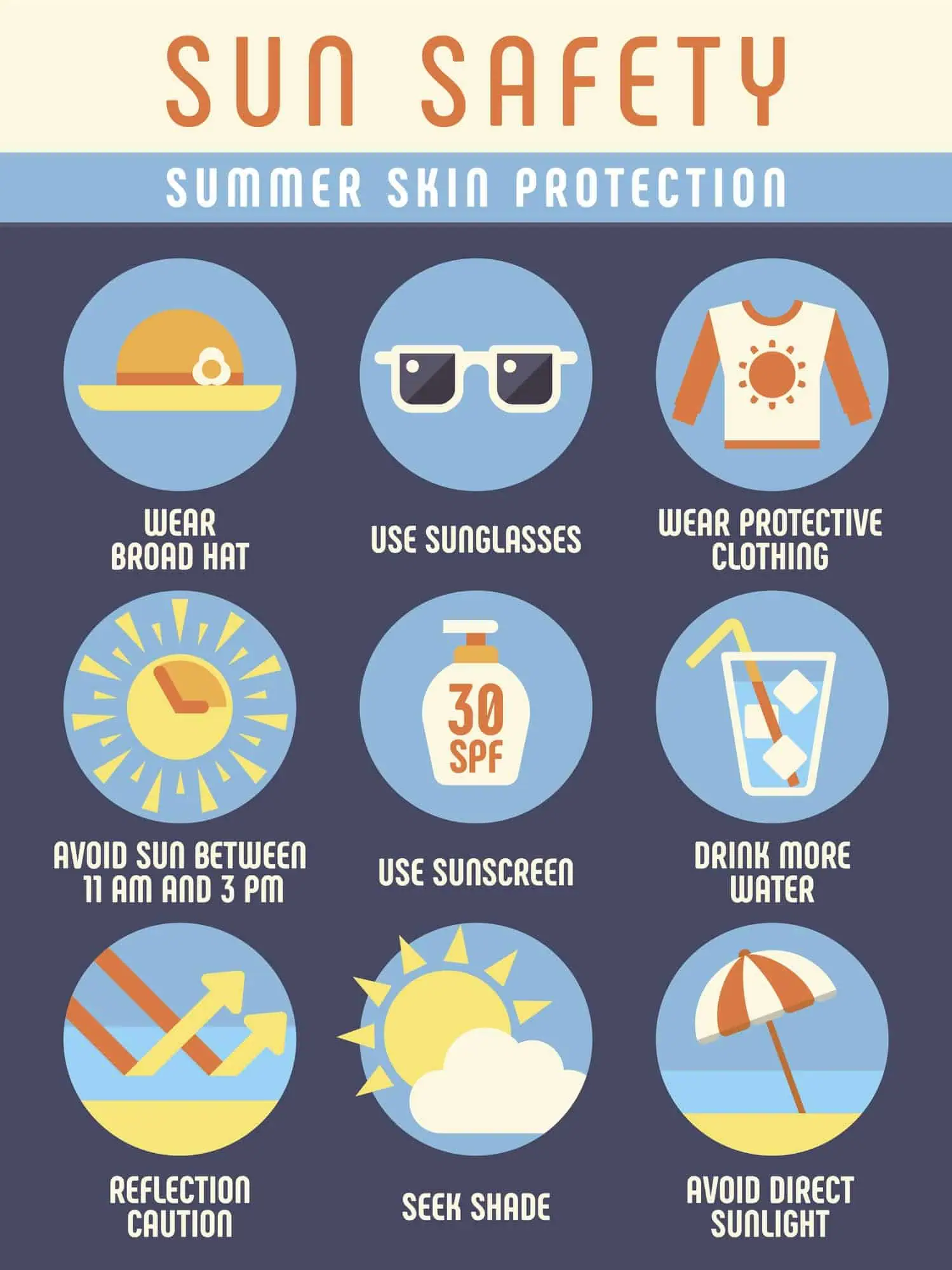
Summertime is fun time to spend outdoors. But in sunny Florida, that means more exposure to the sun’s ultraviolet (UV) rays. Those UV rays can damage unprotected skin in as little as 15 minutes and even lead to skin cancer. Here are some tips to keep you sun safe all year long.
Seek Shade
One of the easiest ways to reduce your exposure to damaging UV rays is to get in the shade. Seek shade under a tree, umbrella or another shelter in order to reduce your risk of sun damage. You’ll help your skin look younger longer and lower your risk of developing skin cancer.
Protective Clothing
Cover up with long-sleeved shirts and long pants when you can to protect your skin from the sun’s harsh UV rays. There are clothing options available that contain a UV protectant built into the fabric. Also, remember that a wet t-shirt provides less UV protection than a dry one, and darker colored clothing protects better than light-colored clothing. Don’t forget to top it off with a hat with a brim all the way around that shades your face, ears, and back of the neck. If you choose a baseball cap instead, be sure to protect your ears and the back of your neck with sunscreen of at least 30 SPF.
Sunglasses
Choose sunglasses that are labeled UV protectant to reduce the risk of developing cataracts. Most of the sunglasses sold in the U.S. block both UVA and UVB rays. Sunglasses also protect the skin around your eyes from sun damage, and wrap-around sunglasses are an excellent option to block UV rays that might sneak in from the side.
Wear Sunscreen
Choosing the right sunscreen can be daunting, so we recommend following these four rules to make it easier:
- Broad-spectrum – Broad-spectrum sunscreen protects the skin from both ultraviolet A (also known as UVA) and ultraviolet B (also known as UVB) rays. Both of these rays can cause skin cancer.
- SPF 30 or higher – The sun protection factor (SPF) rating indicates how well a sunscreen protects you from the sun by blocking harmful UVB rays. Choose a sunscreen with SPF 30 or higher to make sure you are protected.
- Key ingredients – Look for active ingredients like ecamsule, avobenzone, titanium dioxide, sulisobenzone or zinc oxide. Beware of products that include oxybenzone or octinoxate which are harmful to the environment. Some areas of Florida have banned the sale of sunscreen with oxybenzone and octinoxate because these chemicals can damage coral reefs.
- Avoid tanning oils – They generally do not provide enough protection against the harmful effects of the sun.
How to Apply Sunscreen & How Often
To get the maximum protection from your sunscreen, follow these recommendations:
- One ounce of sunscreen is considered the right amount. Cover all exposed areas of the body thoroughly. Don’t skimp. Many people don’t use enough sunscreen.
- Apply sunscreen 15 to 30 minutes before going in the sun. Don’t forget the tips of the ears, feet, back of the legs and bald spot (if you have one). Reapply sunscreen every two hours and use a UV-protective lip balm to cover your lips.
- If you are exercising or are in the water, it’s a good idea to get a sunscreen that is resistant to water and sweat. The FDA defines water resistant to mean that the SPF level stays effective after 40 minutes in the water. Very water-resistant means it is effective after 80 minutes of swimming. These sunscreens are not waterproof, so reapply regularly.
Protecting your skin from the harmful rays of the sun can help you look younger and prevent skin cancer. Just to be on the safe side, be sure to get a skin cancer screening every year, so if you do develop skin cancer, it can be detected and treated early.
Schedule a skin cancer screening at your nearest Water’s Edge Dermatology office.

How to Choose a Sunscreen
Sun and fun. They go together, particularly in the sunshine state. But sun can go with other things that aren’t so fun at all, such as pre-mature aging of your skin and even dangerous skin cancers.
Fortunately, there is a not-so-secret weapon that is easily available and known by just about everyone. It’s called sunscreen but using the wrong sunscreen in the wrong ways is a waste of your time and money, and most importantly can put your health at risk.
With so many options available, choosing the right sunscreen can be overwhelming, which is why we developed the Water's Edge Dermatology guide to selecting the best sprays and creams to protect your skin from harmful UV rays.
What to Look For in a Sunscreen
Water’s Edge Dermatology recommends following these rules for choosing a sunscreen:
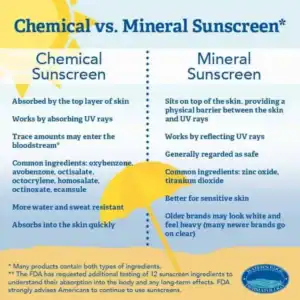
- Broad spectrum – Broad spectrum sunscreen protects the skin from both ultraviolet A (also know as UVA) and ultraviolet B (also known as UVB) rays. Both of these rays can cause skin cancer.
- SPF 30 or higher – The sun protection factor (SPF) rating indicates how well a sunscreen protects you from the sun by blocking harmful UVB rays. Choose a sunscreen with SPF 30 or higher to make sure you are protected.
- Key ingredients – Look for active ingredients like ecamsule, avobenzone, titanium dioxide, sulisobenzone or zinc oxide. Beware of products that include oxybenzone or octinoxate which are harmful to the environment. Some areas of Florida have plans to ban the sale of sunscreen with oxybenzone and octinoxate because these chemicals can damage coral reefs.
- Avoid tanning oils – They generally do not provide enough protection against the harmful effects of the sun.
How to Apply Sunscreen & How Often
If choosing the best sunscreen is half the battle, the other half is using it correctly so you get the maximum protection. Here are a few tips to help:
- One ounce of sunscreen is considered the right amount. Cover all exposed areas of the body thoroughly. Don’t skimp. Many people don’t use enough sunscreen.
- Apply sunscreen 15 to 30 minutes before going in the sun. Don’t forget the tips of the ears, feet, back of the legs and bald spot (if you have one). Reapply sunscreen every two hours and use a UV-protective lip balm to protect your lips.
- If you are exercising or are in the water, it’s a good idea to get a sunscreen that is resistant to water and sweat. The FDA defines water resistant to mean that the SPF level stays effective after 40 minutes in the water. Very water resistant means it is effective after 80 minutes of swimming. These sunscreens are not waterproof, so reapply regularly.
Additional Protection
It’s important to wear sunscreen whenever you are outside during the day. Even on an overcast day, 80 percent of the dangerous UV rays make it through. Though vitally important, sunscreen does not fully protect your skin from the sun’s rays, so also consider these additional precautions to protect your skin from sun damage:
- Stay in the shade when you can.
- Wear sunglasses to protect your eyes, preferably with polarized lenses.
- Stay inside between 10am and 4pm when the UV levels are the highest.
- Wear a hat and sun-protective clothing.
Skin is the largest barrier against infection that we have. Keeping your skin healthy and shielding it from harmful rays of the sun can help you look younger and prevent skin cancer. Also, be sure to get a skin cancer screening every year so if you do have skin cancer, it can be detected and treated early.
Play it safe and smart – sunscreen up and get a skin cancer screening!
Shop our favorite EltaMD sunscreens.
Schedule a skin cancer screening at your nearest Water’s Edge Dermatology office.
First Monday in May is Melanoma Monday
Did you know that skin cancer is the most common cancer? Approximately 9,500 people in the U.S. are diagnosed with skin cancer every day. That means approximately one in five Americans develop skin cancer. While melanoma is not the most common type of skin cancer, it is the most dangerous. It is responsible for 10,000 American lives lost every year and is the second most common form of cancer in females ages 15 to 29. The good news is that skin cancer is also the most preventable cancer.
To raise awareness of melanoma and to encourage annual skin checks to help prevent skin cancer in general, the American Academy of Dermatology designates the first Monday in May as Melanoma Monday.
Who gets melanoma?
People of all colors and races get melanoma. Those with light skin who sunburn easily are at higher risk. If you have any of the following risk factors, you need to take extra caution in protecting your skin from the harmful rays of the sun:
- History of sunburns
- Family history of skin cancer
- Exposure to X-rays
- Use of tanning beds or sunlamps
What does melanoma look like?
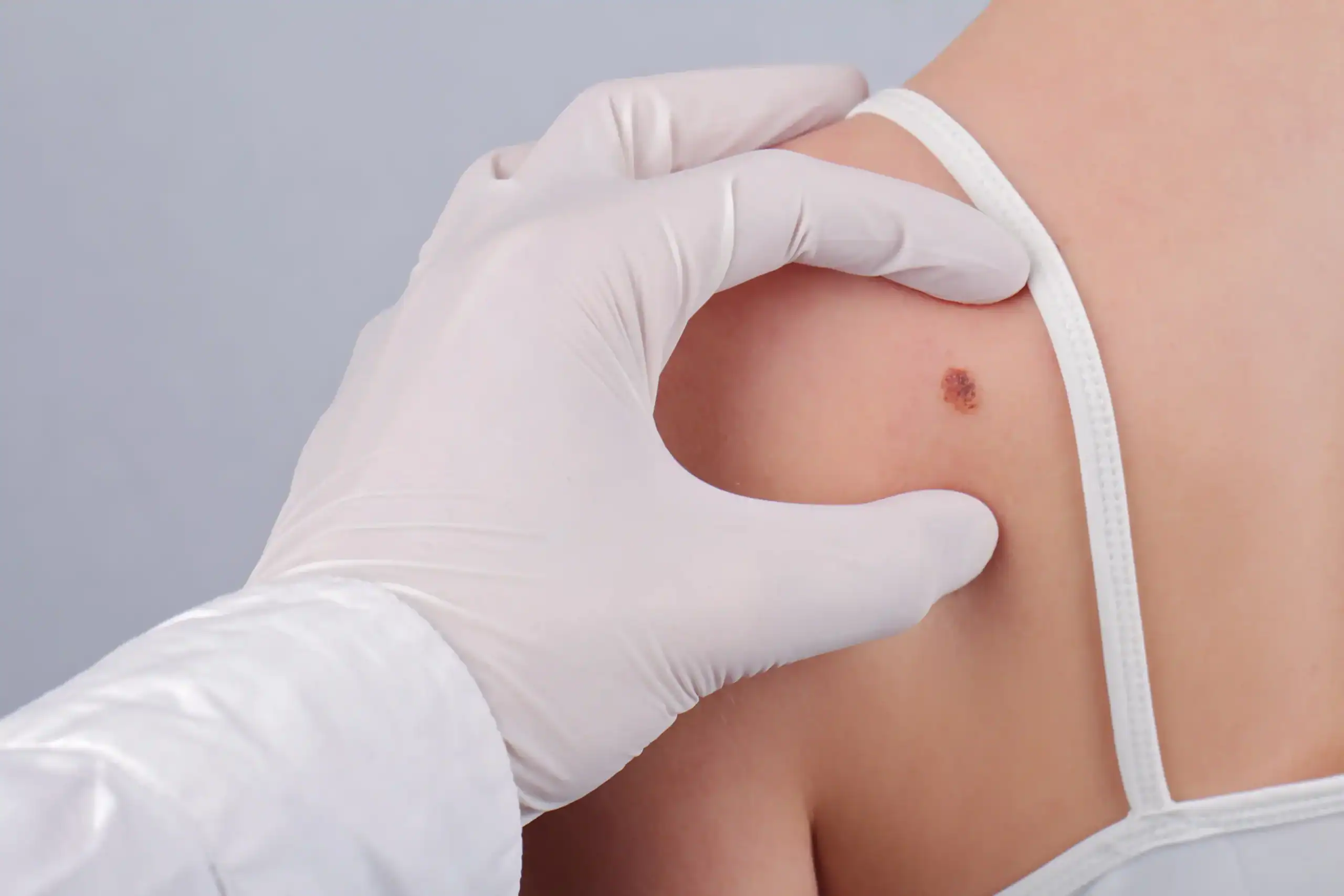
Melanoma often develops in a mole or appears suddenly as a new dark spot on the skin. Be on the lookout for changes in moles, and if you see irregular edges or unusual colors in a mole, schedule a visit with your Water’s Edge Dermatology provider right away. Catching melanoma early (before it can spread) is key to stopping it. Even though melanoma can be deadly, survival rates can be greater than 90% when treated early.
Preventing melanoma
Tips to help prevent melanoma:
- Wear broad-spectrum, water-resistant sunscreen with an SPF of 30 or more on exposed skin
- Cover up with a hat and clothing
- Stay in the shade when possible, especially 10am-4pm when the sun’s rays are the strongest
- Protect children from sun exposure by playing in the shade, wearing protective clothing and applying sunscreen
- Avoid tanning beds, which can cause skin cancer and wrinkling
- Check your birthday suit on your birthday. If you notice any skin changes, skin growths or bleeding on your skin, see a Water’s Edge Dermatology practitioner immediately
In addition to doing self-exams on your birthday, May is a great month to schedule a skin check by a highly specialized skin care expert. At Water’s Edge Dermatology, our providers are experts in spotting melanoma and treating it early with procedures just right for each of our valued patients. Be safe and schedule your skin cancer check now.
Request an appointment with one of our skin care experts at Water’s Edge Dermatology.
Protecting Lighter-Toned Skin from Skin Cancer
St. Patrick’s Day is a great time to remind everyone with lighter-toned skin to take extra precautions in the sun to protect yourself from skin cancer. Most skin cancers develop on areas of the skin that get years of sun exposure, like the face, neck, ears, forearms, hands, and trunk. Basal cell carcinomas and squamous cell carcinomas are the most common, but melanomas are the deadliest. Here’s a quick rundown of the most common skin cancers and what to look for.
Basal cell carcinoma (BCC) looks like a flesh-colored, pearl-like bump, or pinkish patch of skin. BCC frequently develops in people who have light skin, but it can occur in people with dark skin. With early treatment, this type of cancer can be cured. Left untreated, BCC can cause bleeding and severe damage, which can be disfiguring.
Squamous cell carcinoma (SCC) can look like a red scaly patch, raised, firm bump, or a sore that heals and re-opens. People who have light skin are most likely to develop SCC, but it can develop in dark-skinned people, especially those who have scarring.
With early detection and proper treatment, SCC also has a high cure rate. Left untreated, SCC can also be disfiguring. In rare cases, untreated SCC can spread to other areas of the body and can be deadly.
Melanoma may develop in a mole or it can appear on the skin as a new, dark spot. Sometimes melanoma contains shades of red, blue, or white. When found early, melanoma often can be cured. Left untreated, melanoma can spread to other areas of the body and be deadly. In fact, one person dies of melanoma every hour.
Sun Protection Tips
Sun protection helps prevent skin damage and wrinkles, and reduces the risk of developing skin cancer. Newer broad-spectrum sunscreens contain products to block both UVA and UVB rays. To be effective, sunscreen should be reapplied at least every two hours.
The American Academy of Dermatology (AAD) recommends that you seek shade when possible. Avoid sunbathing, wear a wide-brimmed hat, sunglasses, and protective clothing. A typical white tee shirt has an SPF of 3. Colorless dyes that increase the SPF of fabrics to an SPF of 30 are available as laundry products. If you must be in the sun, use a broad-spectrum sunscreen with a sun protection factor (SPF) of at least 30, even on cloudy days.
Melanoma Mondays in May
Mark your calendars for May. We’ll be sharing a wealth of information on protecting your and your family’s skin from the deadliest form of skin cancer. We’ll be giving away t-shirts with UV protection on Facebook and running a “Get Naked…It Saved My Life” promotion with lots of tips on protecting your skin right before the active summer season starts.
Do you have a suspicious spot on your skin that you are concerned about? Water’s Edge Dermatology recommends that everyone have regular skin cancer screenings from a board-certified dermatologist, especially in sunny Florida. Schedule an appointment today and enjoy peace of mind. Click here to request an appointment or call 877.533.8214.

Tanning Safety & Skin Cancer Risk for Young Women
Ask most young women if appearing tanned is important to looking and feeling their best, and the answer will often be yes. Simply put, many still perceive a tanned face as a sign of health and attractiveness. It's a long-standing, common perception that still motivates millions to hit the beach and/or tanning salon, searching for that sun-kissed look. That means we need to do all we can to increase understanding of tanning safety.
Exposure to sunlight and indoor tanning means exposure to damaging UV rays, proven to be the leading cause of skin cancer. The bottom line is, young ladies still pursuing a tan via UV light are at significantly higher risk of getting skin cancer later in life.
Tanning Safety Facts & Figures
As the popularity of the “tanned look” continues, so does the rise in skin cancer cases among young women. Statistics show that more people develop melanoma from tanning than those who develop lung cancer from smoking. And current data from the Skin Cancer Foundation reveals that more than 419,000 cases of skin cancer in the USA are related to indoor tanning.
In fact, anyone under the age of 35 using tanning beds increases their risk of melanoma, the deadliest form of skin cancer, by 75 percent. This has prompted several states to restrict people under age 18 from patronizing businesses and using devices related to indoor UV tanning.
Prevention
Evidently, one effective way for you to prevent skin cancer is by avoiding tanning beds. Usage of them is in fact the leading cause of melanoma in the USA. And because younger women tend to be out in the sun more, here are other tips to keep the UV rays at bay:
- Apply and regularly reapply (every 80-90 minutes) sunscreen with SPF 30 or higher whenever out in sun.
- Start carrying other tanning safety essentials in a bag you leave in your car, or can carry in a shoulder bags items – such as a wide-brim hat, lightweight and long-sleeved shirt and pants, sunglasses, and an umbrella.
- Be sure to schedule a full-body skin exam at the dermatologist’s office at least once a year, more if you and/or your family has a history of skin cancer.
ABCDEs of Melanoma
In between dermatologist skin screenings, it’s important to track the status of any moles and skin spots you may have, especially new ones. You can do that with regular self-exams (or you and your significant other can examine one another), using the simple ABCDE system to look for any of the following characteristics:
- Asymmetrical moles or those with irregular shapes
- Blurry border or jagged edges
- Color not even
- Diameter larger than a pencil eraser
- Evolving or changing moles after weeks, months, or years
If the ABCDEs don't apply to your moles, good news! You may still want to explore paying to have a mole removed, but it likely isn't a health concern. However should any of the above characteristics be found, it’s time to play it safe and find a great dermatologist in Avon Park, Jensen Beach, Lighthouse Point, or any other Florida city you happen to call home.
Getting the tanned look – safely
While being tanned may be an undying – or just a slowly dying – beauty trend that you choose to follow… that doesn’t mean you have to rely on UV rays to do so. The selection of safe, indoor tanning creams and sprays just keeps getting bigger and better. So, if you want that tan… consider getting it from a can (or jar, bottle… you get the point)!
Call Water’s Edge Dermatology at (877) 900-3223 today, or request an appointment online.